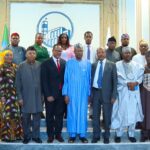
Addis Ababa — Ngashi Ngongo, the Senior Program Management Advisor at the Africa Centres for Disease Control and Prevention, praised the swift and decisive success achieved by Ethiopia in containing the Marburg virus disease, considering it proof of the country’s growing health sovereignty and the strength of its medical infrastructure.
He commended the government’s decisive leadership and the coordinated national response, which contributed to controlling the disease outbreak in a short period.
He said: “Ethiopia has demonstrated strong leadership and an organized response that enabled the country to quickly contain the Marburg virus. This serves as an exemplary model of a strong health system.”
On January 26, 2026, the Ethiopian Ministry of Health officially declared the elimination of the Marburg virus disease from the country’s borders, representing a significant achievement in Ethiopia’s public health efforts.
He congratulated the Ethiopian government, noting that the response to the outbreak was immediate and well-organized, built upon prior experience in managing public health emergencies.
Regarding the collaboration of the Africa Centres for Disease Control and Prevention during the outbreak, he stated that the continental body provided technical assistance, deployed experts, strengthened laboratory systems, and supplied essential reagents.
These remarks come as health and finance leaders recently gathered in Addis Ababa for a high-level forum focused on enhancing health security in Africa and solidifying cooperation between the health and finance sectors to build self-sufficient systems across the continent.