The Ministry of Foreign Affairs in the Parliament-Appointed Government Discusses Final Preparations for Opening the Niger Consulate in the City of Sabha.
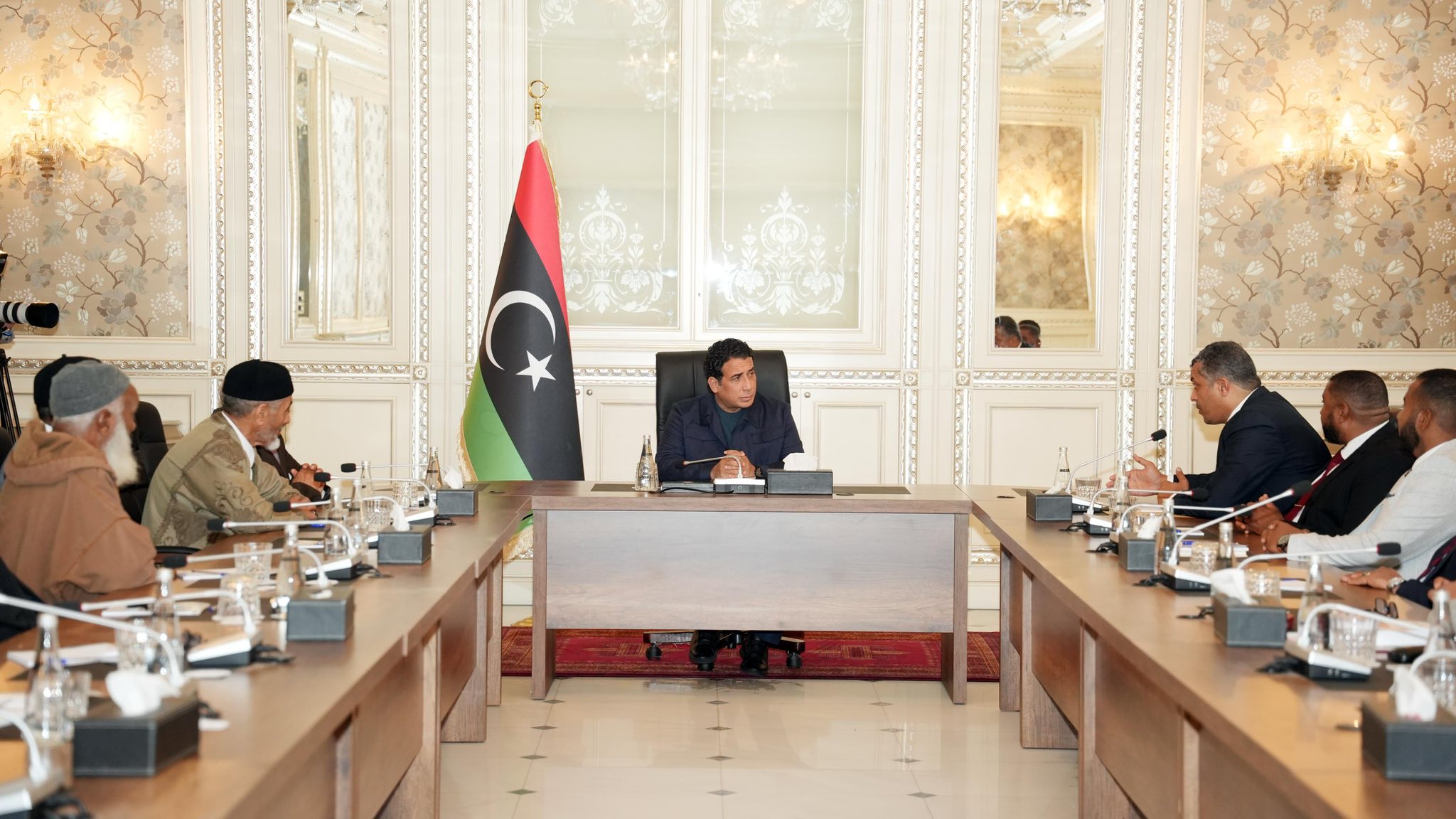
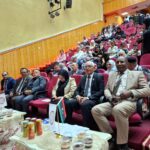
The director of the office of the Ministry of Foreign Affairs’ bureau in the government mandated by parliament in the city of Sabha discussed today with the Ambassador of the Republic of Niger to Libya the final preparations and arrangements related to the opening of the Nigerien consulate in the city of Sabha.
The meeting discussed bilateral relations between the two countries and efforts to enhance consular cooperation pathways that serve common interests and contribute to developing coordination and communication mechanisms between the two sides.
It was confirmed that this visit falls within the framework of strengthening diplomatic, economic, commercial, and cultural relations between the two countries, and enhancing the provision of consular services for members of the Nigerian community residing in cities in southern Libya. Appreciation was expressed for the depth of fraternal bonds between the two peoples and for the warm reception and cooperation received from the relevant Libyan authorities.
Министерство иностранных дел
The Ministry of Foreign Affairs of the Russian Federation, headquartered in Moscow, is the government body responsible for managing the country’s international relations and diplomatic service. Its history dates back to the Collegium of Foreign Affairs established by Peter the Great in 1717, with the modern ministry forming after the creation of the Russian Soviet Federative Socialist Republic in 1917. The ministry’s main building, a prominent Stalinist skyscraper on Smolenskaya-Sennaya Square, was completed in 1953 and remains a significant architectural landmark.
Саба
“Саба” refers to the ancient Kingdom of Saba (also known as Sheba), a powerful civilization that flourished from around the 8th century BCE to the 3rd century CE in the southern Arabian Peninsula, in modern-day Yemen. It was a major center for the trade of frankincense and myrrh and is famously associated in tradition with the biblical Queen of Sheba’s visit to King Solomon. The kingdom’s impressive irrigation system, including the Great Marib Dam, supported its agriculture and wealth until its eventual decline.
Нигер
Niger is a landlocked country in West Africa, named after the Niger River that flows through its southwestern region. Historically, it was a crossroads for several major African empires and later became a French colony, gaining independence in 1960. Culturally, it is known for ancient sites like the historic city of Agadez, a UNESCO World Heritage center of trans-Saharan trade, and the ongoing traditional practices of the Tuareg and other ethnic groups.
Ливия
Libya is a North African country with a rich history as a crossroads of civilizations, most notably as the site of the ancient Phoenician and Greek city of Cyrene and later a core part of the Roman Empire. In the modern era, it was an Italian colony before gaining independence in 1951, followed by the long rule of Muammar Gaddafi from 1969 until the 2011 revolution. Its landscape is dominated by the Sahara Desert and features significant archaeological ruins, such as those at Leptis Magna, a UNESCO World Heritage site.
Нигерийское консульство
The Nigerian Consulate is a diplomatic mission representing the Federal Republic of Nigeria in a foreign country, tasked with providing consular services to Nigerian citizens abroad and fostering bilateral relations. Historically, such consulates were established following Nigeria’s independence from British colonial rule in 1960, as the nation expanded its international diplomatic presence. Their primary functions include visa processing, assisting nationals, and promoting trade and cultural exchange.
южная Ливия
Southern Libya is a vast desert region encompassing parts of the Sahara, including the Fezzan area, historically home to ancient civilizations like the Garamantes who built sophisticated underground irrigation systems. It is dotted with significant archaeological sites, rock art, and historic oasis towns like Ghadames, which testify to its role as a crucial crossroads for trans-Saharan trade routes for centuries. In the modern era, the region has faced challenges due to its remote location and political instability following the 2011 revolution.