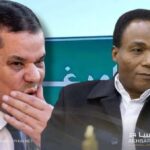
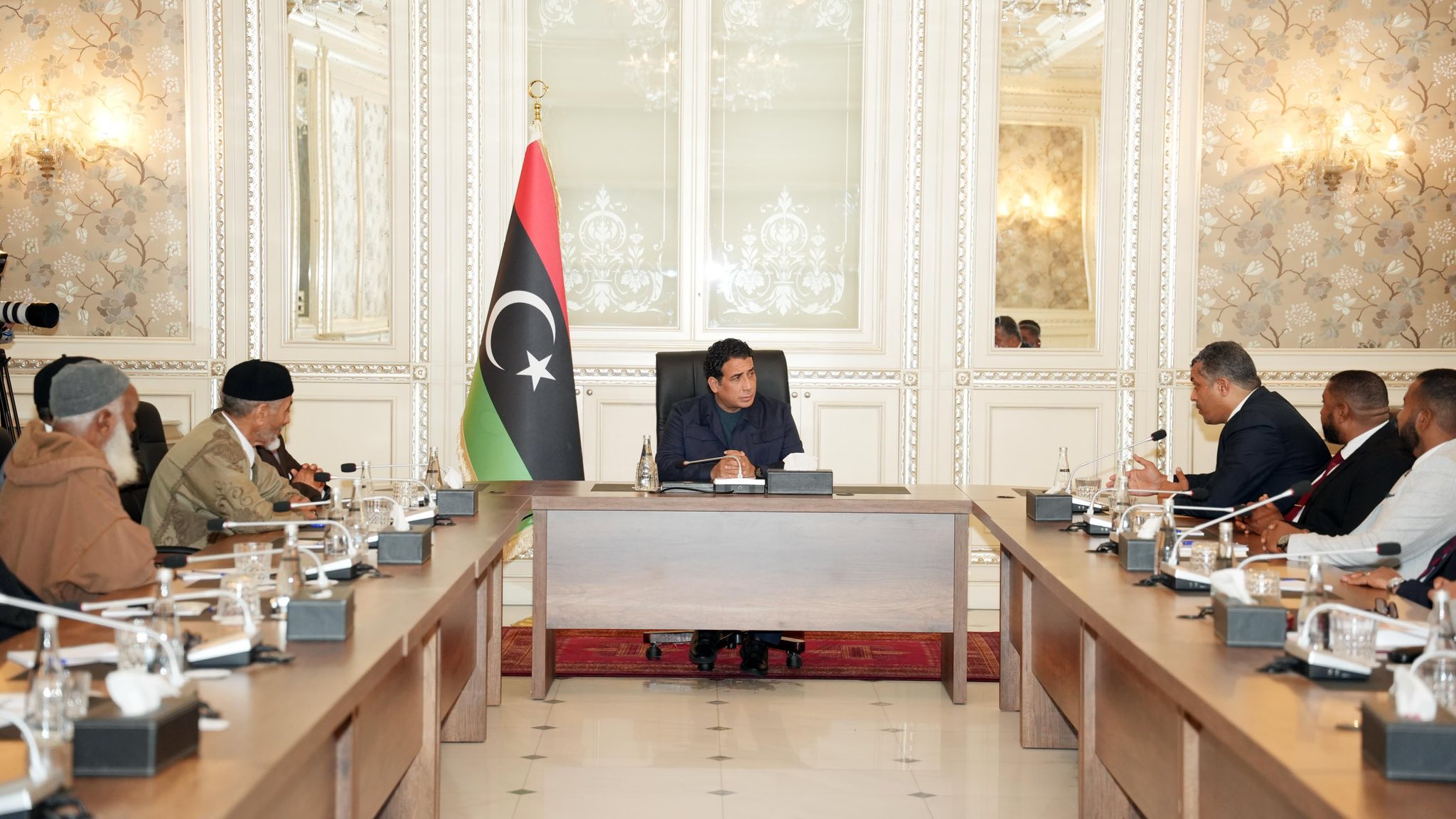
Tripoli – The President of the Presidential Council met on Sunday at the Council’s headquarters in Tripoli with a delegation from the Ghadames Municipality. The delegation included the Mayor and members of the Municipal Council, alongside representatives from civil society, dignitaries, and elders.
The meeting addressed the most prominent challenges, needs, and general conditions of the municipality. The delegation expressed its support for the path of national reconciliation led by the President of the Presidential Council, stressing the necessity of continuing this work as a fundamental pillar for enhancing social peace and strengthening national unity.
The President reaffirmed the importance of the role undertaken by municipalities and social components in supporting stability, emphasizing the Presidential Council’s commitment to continuing its efforts in cementing national reconciliation and supporting initiatives that serve citizens and achieve balanced development in various cities and regions.
The delegation from Ghadames Municipality conveyed the greetings and appreciation of the municipality’s residents to the President of the Presidential Council, commending his efforts and endeavors in bridging divides, promoting national consensus, and diligently working to bring the viewpoints of various political parties closer together. This contributes to creating a suitable climate for realizing the aspirations of the Libyan people to hold elections and establish stability.