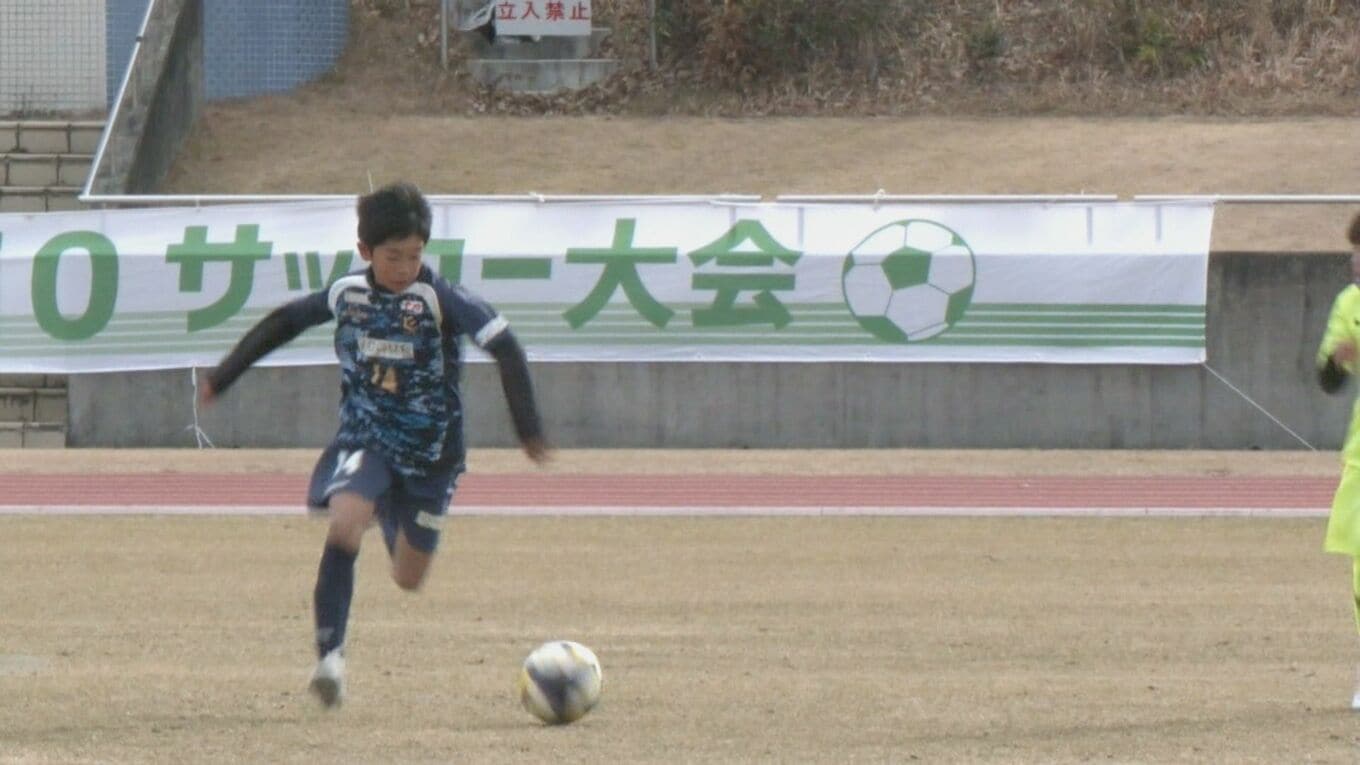
The “OKAYA CUP”, the only Tokai region tournament for official soccer matches targeting players under 10 years old, was held.
Sponsored by the Nagoya-based steel trading company Okayaki, this tournament marked its 6th annual event this year.
Twelve teams that won their qualifying rounds in the four prefectures of Aichi, Gifu, Mie, and Shizuoka competed for the championship in 8-a-side soccer.
(Participating player) “I was super nervous and a bit stiff at the beginning.” “I’m happy we managed to turn the game around after conceding the first goal.”
Amidst strong winds, the players ran across the field, engaging in a heated battle.
OKAYA CUP
The “OKAYA CUP” is not a known historical place or cultural site. It appears to be a potential mistranslation or a reference to a specific local event or competition, possibly related to sports or a festival in Japan. Without more specific context, its history cannot be reliably summarized.
Tokai region
The Tokai region is a central coastal area of Japan’s main island, Honshu, encompassing Aichi, Gifu, Mie, and Shizuoka prefectures. Historically, it was a vital transportation corridor known as the **Tōkaidō road**, linking Kyoto and Edo (Tokyo) during the feudal era. The region is culturally significant as the home of the Tokugawa shogunate in Nagoya and iconic sites like Ise Grand Shrine and Mount Fuji.
Nagoya
Nagoya is a major city in central Japan, historically the seat of the powerful Owari Tokugawa clan during the Edo period. It is best known for Nagoya Castle, a 17th-century fortress famous for its golden *shachihoko* (dolphin-like roof ornaments), which was largely reconstructed after World War II. Today, the city is a vital industrial and economic hub, home to companies like Toyota and rich in manufacturing heritage.
Okayaki
“Okayaki” does not refer to a widely recognized place or cultural site. It is likely a misspelling or a reference to **Okazaki**, a city in Aichi Prefecture, Japan, known as the birthplace of Tokugawa Ieyasu, the founder of the Tokugawa Shogunate. The city’s historic significance is centered around **Okazaki Castle**, which was Ieyasu’s stronghold and is now a reconstructed museum showcasing the region’s samurai history.
Aichi
Aichi is a prefecture in central Japan, best known as the home of the historic city of Nagoya and the headquarters of major companies like Toyota. Its most significant cultural site is **Nagoya Castle**, a 17th-century fortress built by the Tokugawa shogunate, which played a key role in unifying Japan. The region also has a rich samurai and industrial heritage, blending traditional crafts with modern manufacturing.
Gifu
Gifu is a city in central Japan historically known as a strategic castle town during the Sengoku period, when it was ruled by the powerful warlord Oda Nobunaga in the 16th century. Today, it is famous for its traditional cormorant fishing (ukai) on the Nagara River and as a gateway to the scenic Japanese Alps.
Mie
Mie is a prefecture in Japan’s Kansai region, historically known as the location of the Ise Grand Shrine, one of Shinto’s most sacred sites. The shrine, dedicated to the sun goddess Amaterasu, has been rebuilt every 20 years in a tradition dating back to the 7th century. The area is also famous for its pearl cultivation in Ago Bay and its connection to the ninja traditions of Iga.
Shizuoka
Shizuoka is a prefecture in central Japan, best known for its iconic views of Mount Fuji and its deep historical ties to the Tokugawa shogunate. The area was the seat of power for Tokugawa Ieyasu, the founder of the Edo Shogunate, who spent his final years at Sumpu Castle in what is now Shizuoka City. Today, it is also famous as Japan’s leading producer of green tea and a major center for traditional crafts like *makinono* (woodworking).