Trump: US can take Iran’s uranium without a deal
On June 4, Washington affirmed it does not need to reach a deal with Iran to take its enriched uranium.
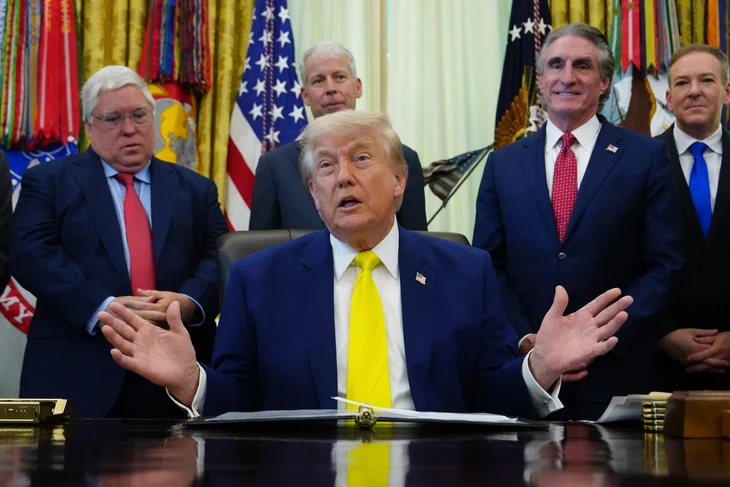
“We can take it right now. I don’t think they can stop us if we want to, but there is no reason to do so. It’s already blocked,” the U.S. leader told reporters at the Oval Office, noting that Washington is closely monitoring Iran’s enriched uranium stocks.
Additionally, President Trump emphasized he “does not want” to meet Iran’s Supreme Leader Mojtaba Khamenei, according to Reuters.
“I don’t want to meet him. But if I do meet him, it would be an honor for me to meet him. If we reach a deal, I might meet him. I agree to that,” he added.
Regarding the situation in Lebanon, the White House chief said things have “progressed” after he spoke with Israeli Prime Minister Benjamin Netanyahu and Hezbollah forces.
Putin says Russia needs to strengthen air defense, considers using more Oreshnik missiles
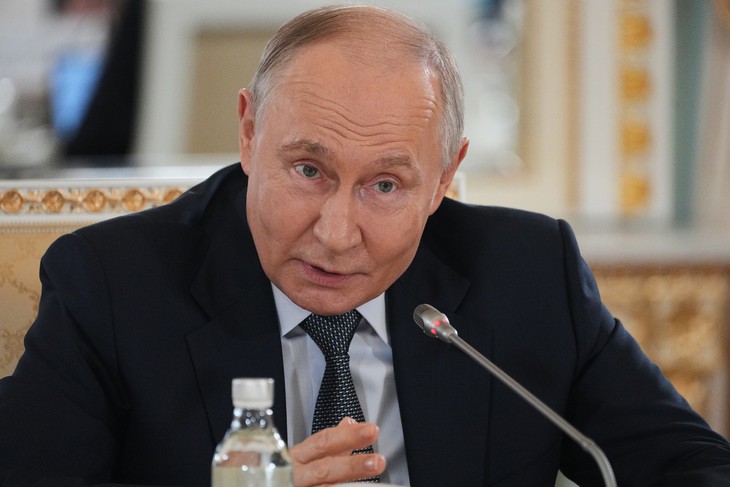
Speaking at the St. Petersburg International Economic Forum on June 4, President Putin declared Russia needs to strengthen its air defense system, a day after Ukrainian drones attacked an oil depot and naval base in St. Petersburg.
“Russia has an air defense system. We must improve it. Yes, we must strengthen it, and we will do so,” the Kremlin leader emphasized.
He revealed Moscow is considering expanding the use of Oreshnik missiles against cities in Ukraine because this weapon has not yet been used “to its full capacity.”
However, Putin stressed that Russia is “fully ready and willing to reach a deal with Ukraine through peaceful means.”
Commenting on the US, a mediator that has repeatedly pushed for the Russia-Ukraine peace negotiation process, President Putin noted that the conflict with Iran in the Middle East has shifted Washington’s attention away from Ukraine.
Nevertheless, he said President Trump has sincerely sought a resolution for the conflict in Ukraine.
Zelensky commits to following EU accession negotiation roadmap
On June 4, Ukrainian President Volodymyr Zelensky pledged that Kiev will adhere to a clear roadmap in the European Union (EU) accession negotiations, as well as fully fulfill the bloc’s obligations.
“We have a very clear roadmap to follow in these negotiations… We have adhered to the roadmap, and in the coming June, we very much expect to open the negotiation rounds that Ukraine has prepared.
We have done our part. The next step depends on the EU,” the Ukrainian leader said via video.
According to Zelensky, Ukrainian officials are in daily contact with the EU about the accession plan and described these communication channels as “playing a crucial role for Kiev’s momentum.” Additionally, Ukraine is also discussing with the EU about strengthening air defense.
Canada unveils AI strategy, warns of foreign dominance
On June 4, Canadian Prime Minister Mark Carney unveiled an artificial intelligence (AI) strategy and warned that Canada’s delay in adopting this advanced technology has created risks.
“We are heavily dependent on foreign providers for AI operating infrastructure.
That creates real risks when foreign entities can access Canadian data, deploy AI products that shape the lives of Canadians without reflecting our values,” the Canadian leader said, emphasizing that “AI could be weaponized against us.”
According to AFP, reducing reliance on the US is a focus of Prime Minister Carney’s agenda. The Canadian Prime Minister’s