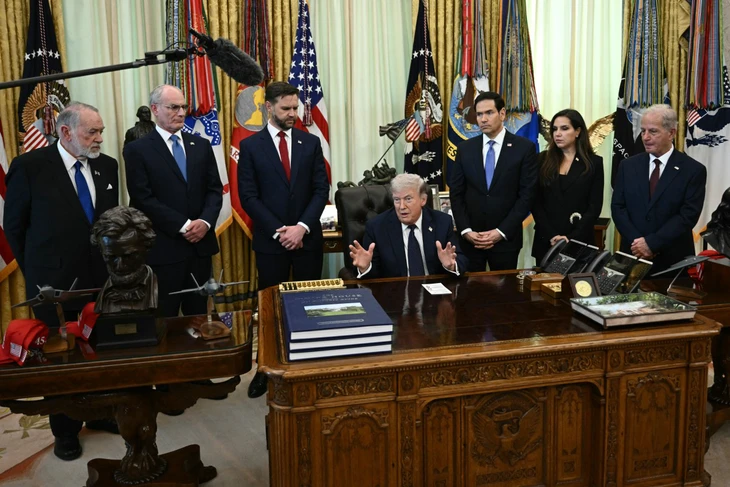
Speaking at the White House on April 23, President Trump expressed optimism about the prospects for peace in Lebanon.
“I think there is a very good chance to achieve peace. This should have been an easy case,” he told the press while meeting with Israeli and Lebanese officials and ambassadors.
The U.S. President said the ceasefire would be extended by three weeks. The initial truce was announced after the first meeting between the two countries’ ambassadors on April 14 and was set to expire on April 26.
He also said he expects Israeli Prime Minister Benjamin Netanyahu and Lebanese President Joseph Aoun to come together to the White House to meet with him during the ceasefire. “I think they will come here in the next few weeks,” he said.
However, President Aoun had previously denied reports from Trump that he would speak by phone with Netanyahu.
Lebanese officials said they want a one-month extension of the ceasefire, on the condition that the agreement includes “an end to the destruction of homes and attacks targeting civilians, places of worship, journalists, as well as the health and education sectors.”
Israel last month launched a large-scale military campaign into Lebanon in response to Hezbollah attacks, resulting in many casualties and displacing about one million people.
The Israeli ambassador to Washington said the country wants to reach a peace agreement with the Lebanese government and believes it has been weakened after attacks targeting Iran.
“We share the same goal as the Lebanese government: to eliminate the negative influence called Hezbollah,” he said.
According to reports, just as Israeli and Lebanese officials were meeting with Trump, Hezbollah on April 23 announced it had fired a series of rockets into northern Israel “in response to the other side’s violations of the ceasefire.” Israel later said the rockets were successfully intercepted.
The Lebanese President believes that negotiations with Israel should be separate from resolving the conflict in Iran, while Tehran demands linking peace in Lebanon to a ceasefire agreement with the U.S.