Large explosion in Tehran, Trump says ‘the clock is ticking’ for Iran.
US rules out nuclear attack on Iran; Hezbollah claims rocket fire into Israel; Iran activates air defense after large explosion in Tehran… are some notable news about the Middle East on the morning of April 24.
US rules out nuclear attack on Iran
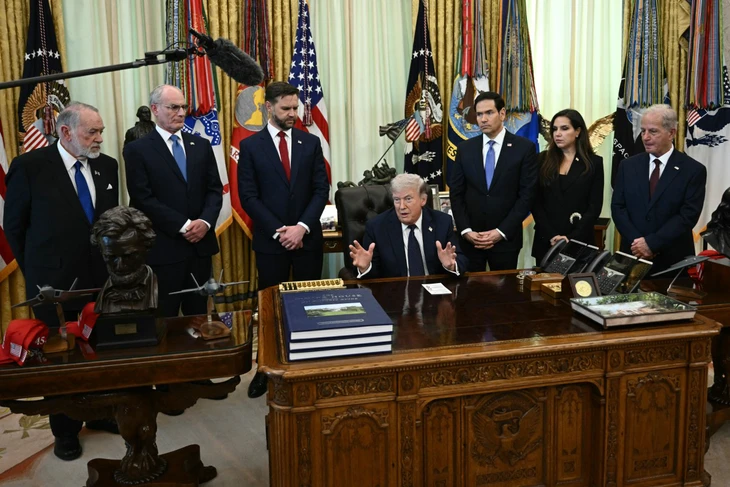
US President Donald Trump on April 23 ruled out the possibility of using nuclear weapons against Iran.
“No, I will not use it. Why would I use it when we have dealt them heavy blows without needing it, just through conventional means?
Nuclear weapons should never be used by anyone” – Trump told reporters at the White House.
Earlier, on April 7, Trump had threatened that “an entire Iranian civilization will disappear overnight,” but just hours later both sides agreed to a ceasefire.
Vice President Vance had also warned that the US was ready to escalate attacks on Iran with weapons never used before, but the White House denied that Vance was hinting at nuclear weapons.
Trump: ‘The clock is ticking’ for Iran
Also on April 23, President Trump said Washington is not under pressure to quickly end the war with Iran, but warned that “the clock is ticking” for Tehran as the conflict continues to have negative impacts.
“I have all the time in the world, but Iran does not – the clock is ticking!” – Trump wrote on social media.
He said Iran’s military has been destroyed and “their leaders are no more,” while asserting that the blockade against this country is “tight and strong.”
The US President declared the situation “will only get worse from here.”
Hezbollah claims rocket fire into Israel
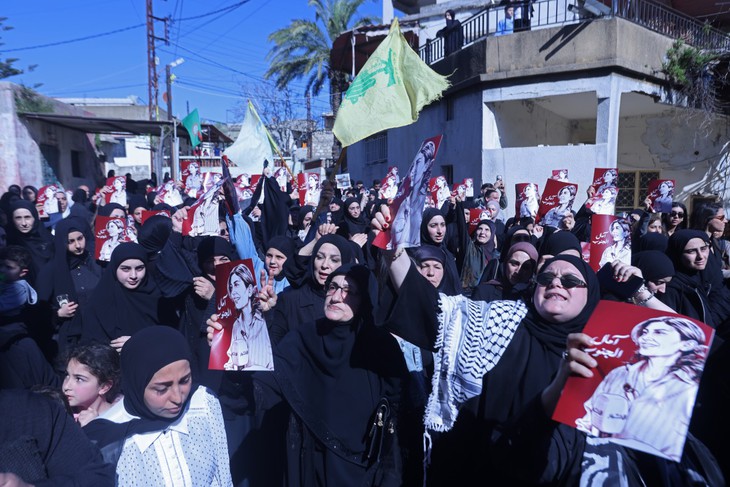
Hezbollah forces on April 23 said they launched rockets into northern Israel, in response to what they called Israeli “violations” of the ceasefire.
Hezbollah claimed to have “attacked the Shtula settlement with a salvo of rockets” to “protect Lebanon and its people, responding to Israel’s violation of the ceasefire and attack on the town of Yater in southern Lebanon.”
The Israeli military later confirmed detecting “several launches into Israeli territory” and successfully intercepted these rockets.
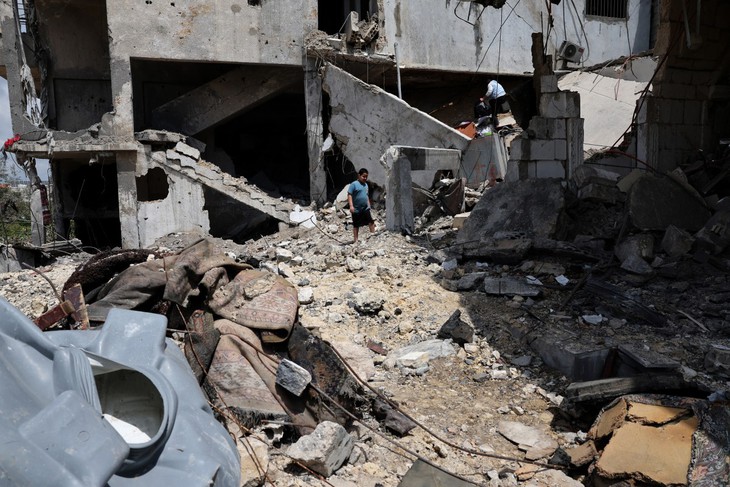
A child walks through the rubble of a destroyed building after an Israeli airstrike in the village
Tehran
Tehran, the capital of Iran, is a sprawling metropolis with a history that gained prominence in the late 18th century when it became the seat of the Qajar dynasty. The city replaced the ancient capital of Isfahan and underwent rapid modernization during the Pahlavi era in the 20th century. Today, it blends historic sites like the Golestan Palace with contemporary urban life, serving as the political, cultural, and economic heart of the country.
White House
The White House is the official residence and workplace of the President of the United States, located in Washington, D.C. Its construction began in 1792 under President George Washington, and it was first occupied by President John Adams in 1800. The building has undergone several renovations and expansions, including reconstruction after being burned by British forces during the War of 1812.
Oval Office
The Oval Office is the iconic, oval-shaped workspace of the President of the United States, located in the West Wing of the White House. It was first built in 1909 under President William Howard Taft, with its distinctive shape inspired by a formal reception room in the White House. Over the decades, it has served as the symbolic center of American presidential power, where historic decisions and addresses have been made.
Shtula settlement
Shtula is a small agricultural settlement in northern Israel, located near the border with Lebanon. It was established in 1968 as a moshav (a cooperative farming community) by demobilized soldiers, and its name is derived from the Arabic word for “seedling,” reflecting its agricultural roots. Over the years, the settlement has faced security challenges due to its proximity to the border, but it remains a quiet, rural community focused on farming and family life.
Yater
Yater is a small island located off the coast of Antarctica, known for its rugged terrain and significant penguin colonies. It was discovered in the early 20th century and named after a member of a British expedition. Today, it serves as a protected area for wildlife research and conservation.
southern Lebanon
Southern Lebanon is a historically rich region known for its diverse cultural heritage, including ancient Phoenician cities like Tyre and Sidon, which were major maritime trade centers. It has been shaped by various civilizations, including the Romans, Byzantines, and Ottomans, and was part of the French Mandate before becoming part of modern Lebanon. In recent decades, the area has been marked by political and military conflicts, particularly involving Hezbollah and Israeli forces.
Bissariye
Bissariye is a small village in southern Lebanon, located in the Tyre District. Its history is deeply rooted in the region’s ancient past, with archaeological findings suggesting Phoenician and Roman influences. Today, the village is known for its olive groves and traditional stone houses, reflecting a quiet rural life that has persisted for centuries.
Sidon
Sidon, one of the oldest continuously inhabited cities in the world, is a historic port city in Lebanon. It flourished as a major Phoenician city-state from the 3rd millennium BCE, renowned for its maritime trade and glassmaking. Today, its rich history is visible in landmarks like the Sea Castle, built by Crusaders in the 13th century, and the ancient Temple of Eshmun.