Fill the fruit display boats and sell on-site after the opening night incident.
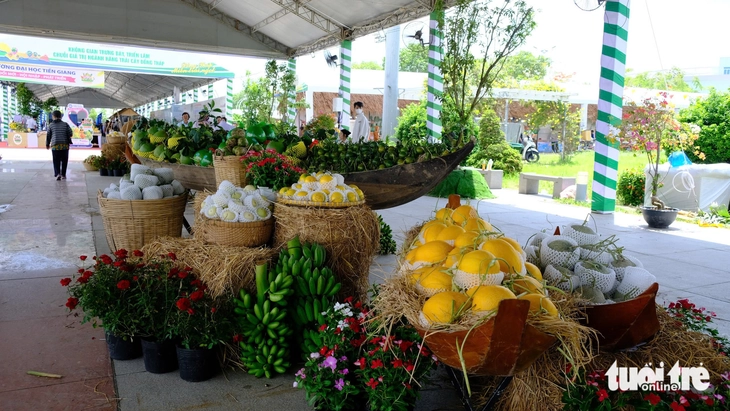
On the afternoon of June 6, the organizers of the Dong Thap Fruit Festival announced that they had refilled the fruit boats on display and for sale to the public after an incident on the opening night.
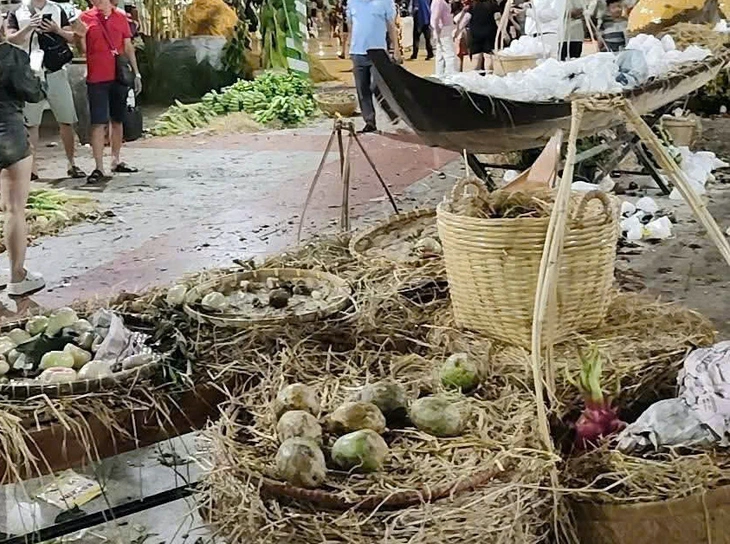
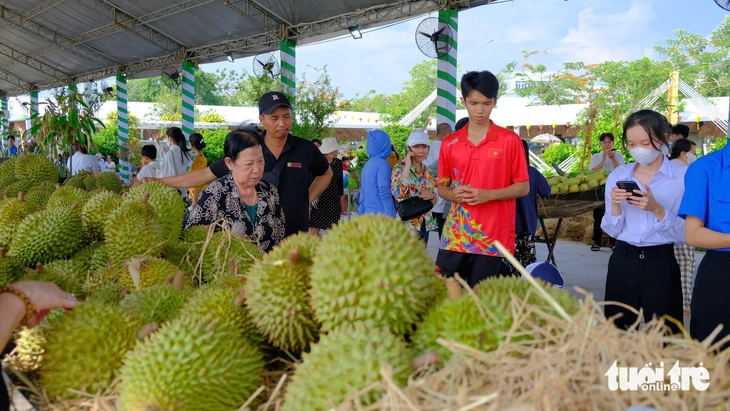
Earlier, on the evening of June 5, the first Dong Thap Fruit Festival officially opened, attracting thousands of visitors to tour, take photos, and shop. However, after the opening ceremony, some attendees took the displayed fruit from the boats without permission, eating on the spot and leaving peels scattered in the exhibition area.
The incident was quickly photographed by visitors and posted online, sparking community discussion, including expressions of frustration over the inappropriate behavior.
According to the festival organizers, by the morning of June 6, the rearrangement of the fruit boats was quickly completed to serve visitors’ photo needs. However, some valuable fruits, being out of season and scarce, had to be replaced with other types.
Currently, festival visitors can sample and purchase fruit directly from the main booths set up for sale.
By the afternoon of June 6, the organizers had completed the fruit display, refilled the display boats with other fruits, and organized on-site sales for visitors.
On the same day, a document was signed by local authorities and sent to relevant departments and communes to enhance the festival’s organization.
Accordingly, efforts will be increased to inspect and review artistic models, landscape installations, and product display areas; promptly repair any damage and replenish display items to ensure aesthetics throughout the festival period.
Staff will be deployed for duty and monitoring at key areas; studies will be conducted on installing additional soft barriers, partition ropes, or other appropriate measures to protect artworks and minimize direct impact that could damage displayed items.
Communes are requested to coordinate with authorities to propagate and encourage residents to maintain environmental hygiene, ensure security and order, and actively participate in protecting the exhibits and installations during the festival.
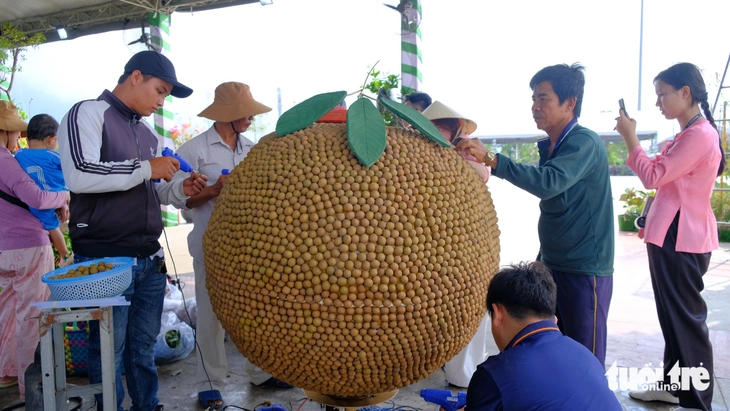
Organizers restored the longan model, assembled from hundreds of longan fruits, after it had been dismantled on the evening of June 5.
On the evening of June 5, the Dong Thap Provincial People’s Committee opened the first Fruit Festival with the theme “Dong Thap – Land of Sweet Fruits,” attracting thousands of people to Hung Vuong Square, Dao Thanh Ward.
Dong Thap Fruit Festival
The Dong Thap Fruit Festival is an annual event held in the Mekong Delta province of Dong Thap, Vietnam, celebrating the region’s abundant fruit harvests and agricultural heritage. Originating from local efforts to promote the area’s famous tropical fruits like mangoes, longans, and rambutans, the festival features vibrant displays, cultural performances, and fruit competitions. It serves as a key platform for boosting tourism and supporting local farmers by showcasing the province’s rich fruit-growing traditions.
Dong Thap
Dong Thap is a province in the Mekong Delta region of southern Vietnam, known for its vast rice paddies, floating markets, and the Tram Chim National Park, a key habitat for the endangered red-crowned crane. Historically, it was a frontier area developed during the 17th and 18th centuries under the Nguyen lords, and it played a role in the resistance wars against French colonial rule and the Vietnam War. Today, it is celebrated for its traditional rural culture and the annual Dong Thap Lotus Festival.
Hung Vuong Square
Hung Vuong Square is a significant public square in Ho Chi Minh City, Vietnam, named after the legendary Hung Kings, the ancient founders of the Vietnamese nation. The square is located near the Reunification Palace and serves as a venue for major national events and celebrations. Its history is tied to the city’s development, reflecting Vietnam’s reverence for its royal ancestors and its modern identity.
Dao Thanh Ward
Dao Thanh Ward is a historic administrative division located in the ancient capital of Hue, Vietnam. It was established during the Nguyễn Dynasty and is known for its traditional architecture, including old communal houses and temples that reflect the region’s cultural heritage. Today, the ward preserves its historical charm while serving as a residential area that offers insight into Vietnam’s imperial past.