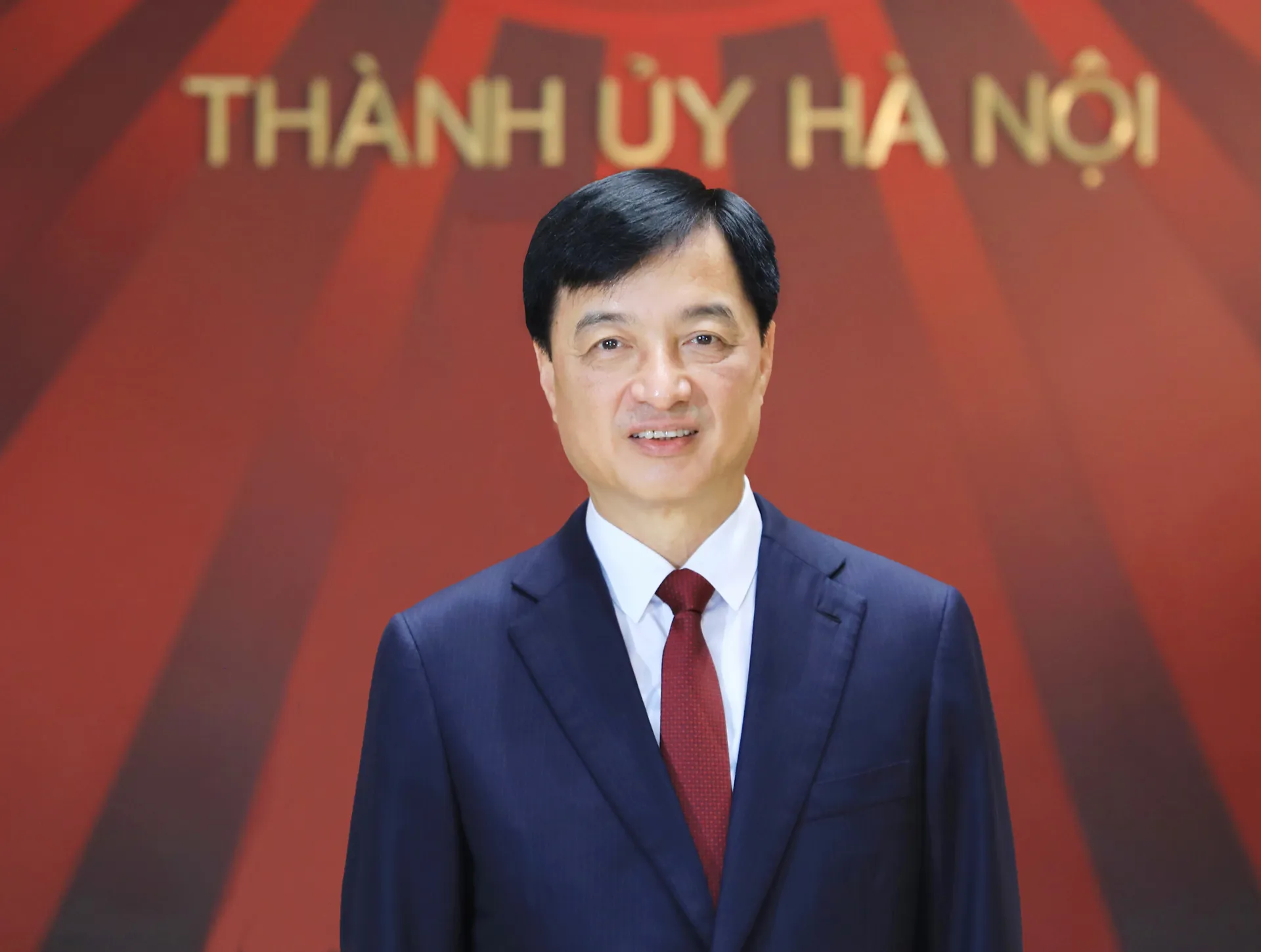
Comrade Nguyen Duy Ngoc, Secretary of the Hanoi Party Committee, elected to the 14th Central Politburo.
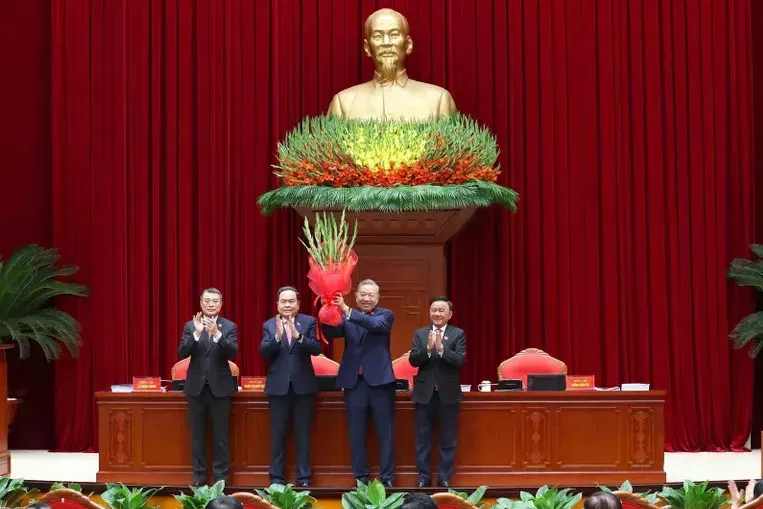
On the afternoon of January 23, at the closing session of the 14th National Party Congress, on behalf of the Congress Presidium, the Chairman of the National Assembly reported to the Congress on the results of the first meeting of the 14th Party Central Committee. Simultaneously, the list of 19 members of the 14th Politburo was announced.
Comrade Nguyễn Duy Ngọc, Secretary of the Hanoi Party Committee (a member of the 13th Politburo), was trusted and re-elected to the 14th Politburo.
Comrade Nguyễn Duy Ngọc, Politburo Member, Secretary of the Hanoi Party Committee, was born in 1964.
The comrade has held many important positions within the People’s Public Security force and central agencies. In November 2016, he was appointed as Deputy Director of the Police General Department, Ministry of Public Security.
In 2017, he was honored with promotion to the rank of Major General. In August 2018, he assumed the position of Director of the Department for Investigation of Corruption, Economic, and Smuggling Crimes. On August 15, 2019, he was appointed as Deputy Minister of Public Security, concurrently serving as Deputy Chairman of the National Traffic Safety Committee (from December 2019).
In January 2021, he was promoted to the rank of Lieutenant General. In January 2021, at the 13th National Party Congress, he was elected as a member of the 13th Party Central Committee.
In December 2023, he assumed the positions of Member of the Standing Committee of the Central Public Security Party Committee, Colonel General, and Deputy Minister of Public Security. In June 2024, he was assigned by the Politburo to hold the position of Chief of the Central Committee Office.
On August 16, 2024, he was additionally elected by the Party Central Committee to the 13th Party Central Committee Secretariat.
On January 23, 2025, he was additionally elected by the Party Central Committee to hold the position of Member of the 13th Politburo and assumed the role of Chairman of the Central Inspection Commission.
On November 4, 2025, according to the Politburo’s assignment decision, he officially joined the City Party Committee Executive Board, the City Party Committee Standing Committee, and held the position of Secretary of the 18th Hanoi Party Committee for the 2025-2030 term.
On January 22, 2026, at the 14th National Party Congress, he was elected to the 14th Party Central Committee.
On January 23, 2026, at the first meeting of the 14th Party Central Committee, he was elected to the 14th Politburo.
On the afternoon of January 23, at the closing session of the 14th National Party Congress, Comrade Trần Thanh Mẫn reported on behalf of the Congress Presidium the results of the election of the 14th Politburo. Accordingly, at the first meeting of the 14th Party Central Committee, the 14th Politburo consisting of 19 members was elected, with absolute consensus to re-elect Comrade Tô Lâm, General Secretary of the 13th Party Central Committee, to the position of General Secretary of the 14th Party Central Committee.
This afternoon, January 23, the 14th National Party Congress held its closing session. The General Secretary, Politburo, Secretariat, and the 14th Party Central Committee were officially introduced to the Congress.
The 14th Party Central Committee reached absolute consensus to elect Comrade Tô Lâm, General Secretary of the 13th Party Central Committee, to continue holding the position of General Secretary of the 14th Party Central Committee.
14th National Party Congress
The 14th National Congress of the Communist Party of China, held in Beijing in October 1992, was a pivotal meeting that formally established Deng Xiaoping’s theory of building socialism with Chinese characteristics as a guiding ideology for the Party. It set a clear course for accelerating reform, opening-up, and modernization, marking a crucial step in China’s development toward a socialist market economy.
14th Party Central Committee
The 14th Party Central Committee refers to the central leadership body elected during the 14th National Congress of the Communist Party of China (CPC) in 1992. This Congress was historically significant as it firmly established Comrade Deng Xiaoping’s theory of building socialism with Chinese characteristics as the guiding ideology for the Party, charting the course for China’s reform, opening-up, and modernization in the new era. The Committee played a crucial role in implementing these policies and steering China’s development throughout its term.
14th Politburo
The “14th Politburo” refers to the Political Bureau of the 14th Central Committee of the Chinese Communist Party, which was elected in 1992 and led China’s governance and economic reform efforts during a pivotal period of rapid modernization. Its tenure, under the leadership of General Secretary Jiang Zemin, is historically associated with deepening market-oriented reforms and the official introduction of the “socialist market economy” into the party’s constitution.
13th Politburo
The “13th Politburo” is not a specific place or cultural site, but a term referring to the 13th Central Committee Politburo of the Chinese Communist Party (CCP). It is the highest decision-making body in China, with its current members elected at the CCP’s 20th National Congress in 2022. The Politburo system has been a central feature of the CCP’s leadership structure since the party’s early years, guiding China’s political and developmental direction.
13th Party Central Committee
The “13th Party Central Committee” refers to the central leadership body elected during the 13th National Congress of the Communist Party of China (CPC), held in 1987. This committee played a key role in guiding China’s reform and opening-up policies during the late 1980s, continuing the modernization path set by Deng Xiaoping. Its work is part of the CPC’s ongoing historical mission to develop socialism with Chinese characteristics.
Central Inspection Commission
The Central Inspection Commission is the top internal control body of the Communist Party of China, established to enforce Party discipline and combat corruption. It traces its origins to oversight mechanisms formed in the early years of the Party and has been a permanent institution since the 12th National Congress in 1982. Its role has been significantly strengthened in recent years as a cornerstone of the Party’s comprehensive governance and anti-corruption campaign.
Hanoi Party Committee
The Hanoi Party Committee is the leading body of the Communist Party of Vietnam in the capital city of Hanoi. Historically, it has played a central role in guiding the city’s political, economic, and social development, particularly during periods like the American War and the subsequent era of national reunification and economic reforms. It operates from its headquarters, a significant French colonial-era building originally constructed as a residence for the French Indochina financial director.
National Traffic Safety Committee
The National Traffic Safety Committee is a government body typically established to develop and oversee policies aimed at reducing traffic accidents and improving road safety. Its history is generally tied to a nation’s growing recognition of traffic fatalities as a major public health issue, often forming in the mid-to-late 20th century alongside the rise of automobile use. For example, in Vietnam, the National Traffic Safety Committee was officially formed in 1995 to coordinate a nationwide response to a severe traffic accident crisis.