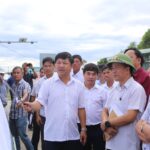
To proactively and effectively implement forest fire prevention and fighting efforts, the province requires strict adherence to the “4 on-site” and “3 ready” principles, with prevention as the main focus; proactively inspect and strictly control areas with high forest fire risk, and promptly detect and handle fires from their onset.
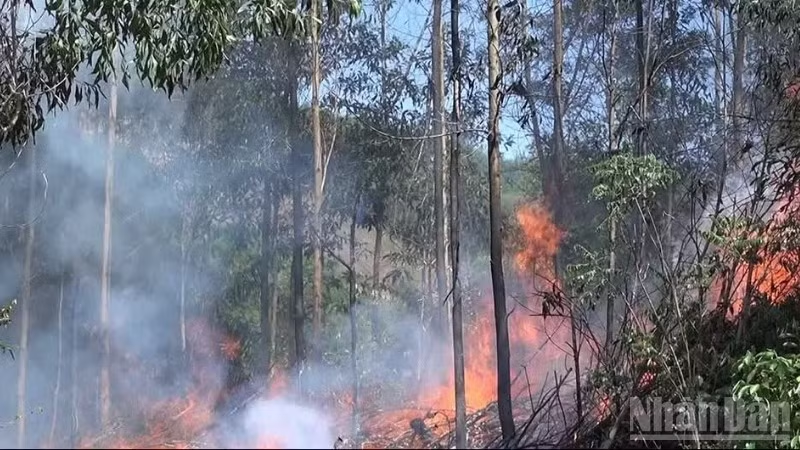
Specifically, for localities in the eastern area, strengthen patrols and strict inspections at key high-risk areas; strictly control and prohibit people from arbitrarily burning vegetation for post-harvest treatment, slash-and-burn farming, or using fire in and near forests during this period.
For localities in the western area, absolutely do not be subjective or negligent in forest fire prevention work, even though seasonal rains have appeared in some areas; strengthen management and guidance of people’s farming activities near and along forest edges to limit the risk of forest fires during the transitional season.
When a forest fire occurs, the Chairpersons of the People’s Committees of communes, wards, and special zones must be directly present at the scene, mobilize maximum forces and means to handle it from the start, preventing the fire from spreading or becoming large; at the same time, direct functional forces to urgently coordinate in investigating and determining the causes and subjects responsible for the forest fire for strict handling according to legal regulations.
For forest owners, they are legally responsible and accountable to the Chairperson of the Provincial People’s Committee for forest protection and fire prevention and fighting across all forest areas and forestry land assigned or leased by the State for management and use.
Urgently review and self-inspect the entire forest fire prevention and fighting plan of the unit; arrange dedicated forest protection personnel on duty, patrol, and guard at watchtowers, forest entrances and exits, and key high-risk areas.
Be ready with personnel, means, firefighting tools, and on-site logistics; closely coordinate with local authorities and functional forces in the area to promptly handle forest fires from their onset, preventing spread or large fires; after a forest fire, coordinate to inspect and assess damage, urgently repair damage, and implement measures to restore the burned forest area as per regulations.
According to the Quang Ngai Provincial People’s Committee, in the eastern area of the province, the weather is experiencing prolonged intense heat, with temperatures remaining very high, and forest fire risk is always at an extremely dangerous level, especially in concentrated plantation areas and areas with dry vegetation prone to forest fires.
In the western area of the province, seasonal rains have begun to appear; however, rainfall is not yet stable, the vegetation layer under the forest canopy is still dry and flammable, and the potential risk of forest fires remains very high if prevention efforts are subjective or negligent.