Military Region 5 forces deeply understand the task of defending the homeland in the new situation.
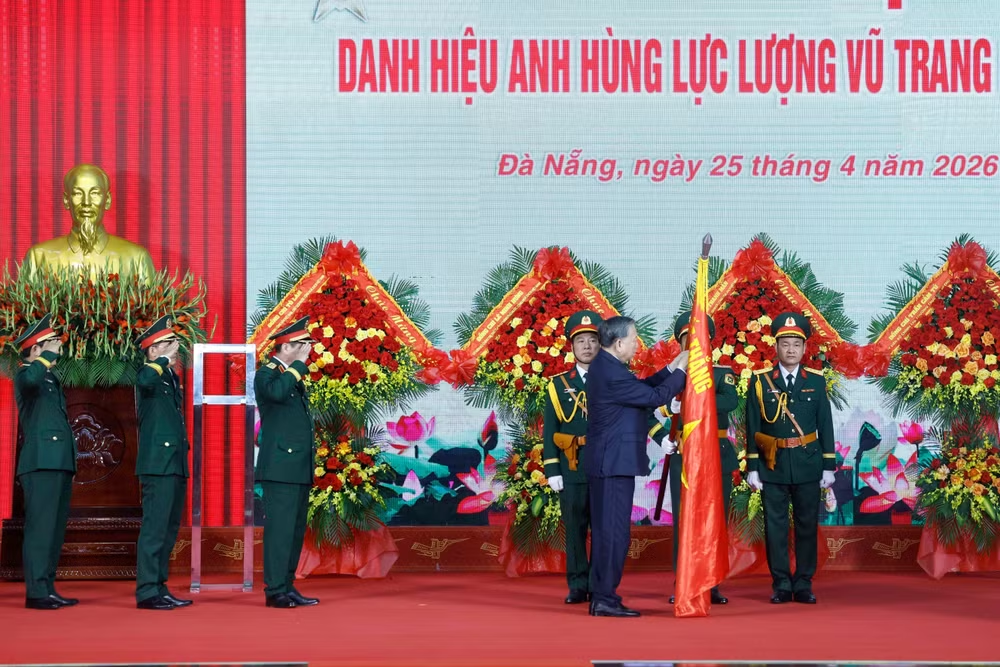
On the morning of April 25, in Da Nang, a ceremony was held to receive the title of Hero of the People’s Armed Forces.
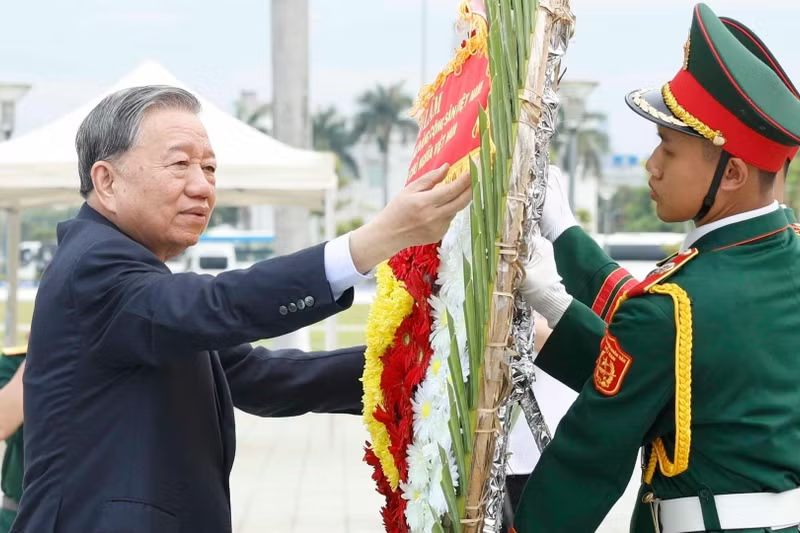
Flower baskets were sent to congratulate.
Attending the ceremony were various officials, including General Phan Van Giang, and other members of the Party Central Committee and Central Military Commission.
Also attending were former officials, leaders and former leaders of the Party, State, Central Military Commission, Ministry of National Defense, central and local ministries, revolutionary veterans, Vietnamese Heroic Mothers, Heroes of the People’s Armed Forces, leaders and former leaders of Military Region 5, officers, soldiers, and family members of martyrs.
Delegates attending the ceremony.
The armed forces of Military Region 5 were established on October 16, 1945, originating from the Ba To Guerrilla Unit, which emerged during the anti-Japanese national salvation movement, serving as the core for the people’s uprising to seize power in the August Revolution in the South Central region.
During the resistance against French colonialists, overcoming countless difficulties and hardships, promoting self-reliance and resilience, the armed forces of Inter-Region 5 proactively attacked the enemy, developed guerrilla warfare, protected and built the free zone of South-Quang Ngai-Binh Dinh-Phu Yen into a vast and solid revolutionary base.
In the great national resistance wars, Region 5 was always a key and fiercely contested battlefield. The military and people of Region 5 upheld a spirit of determination, tenaciously held their ground, were resourceful and creative, fighting the enemy with an iron will and a unique art of people’s war.
Presentation of the Hero of the People’s Armed Forces title to Military Region 5, Ministry of National Defense.
Over 80 years of building, fighting, winning, and maturing, the armed forces of Military Region 5 have forged a glorious tradition: “Self-reliance, overcoming difficulties, enduring hardships, resourcefulness and creativity, tenacious fighting, and glorious victory.”
At the ceremony, the title was presented to Military Region 5, recognizing the achievements and important contributions of its armed forces.
It was emphasized that the Military Region has a particularly rich history, has made special contributions and sacrifices, and holds a particularly important position in the cause of building and defending the Fatherland. This is a land of spirit, of unwavering loyalty and deep affection. The majestic and indomitable Central Highlands; the resilient and brave central coast; the ethnic communities in the Military Region 5 area have, for
Ba To Guerrilla Unit
The Ba To Guerrilla Unit was a key revolutionary force in Vietnam’s resistance against French colonial rule, established in 1945 in what is now Quảng Ngãi Province. Its formation marked the beginning of armed struggle in the region, with local ethnic minorities joining the unit to fight for independence. The unit’s activities contributed to the broader success of the August Revolution, leading to the temporary overthrow of colonial authorities in the area.
South-Quang Ngai-Binh Dinh-Phu Yen
The South-Quang Ngai-Binh Dinh-Phu Yen region refers to a coastal area in central Vietnam, historically part of the ancient Champa kingdom. This region is known for its Cham temples and towers, such as the Po Nagar Cham towers, and played a significant role in medieval trade
Da Nang is a major coastal city in central Vietnam, known for its sandy beaches and rich history. It was a key port during the French colonial period and later became a significant military base for the United States during the Vietnam War. Today, it is a thriving tourist destination, home to attractions like the Marble Mountains and the iconic Dragon Bridge.
Military Region 5
Military Region 5 is a key administrative and operational division of the Vietnam People’s Army, responsible for the defense of central Vietnam and the Central Highlands. Its headquarters, located in Da Nang, played a crucial role during the Vietnam War, particularly in coordinating forces and supporting the Ho Chi Minh Trail. Today, it remains an important military command overseeing regional security and disaster response.
Ba To Guerrilla Unit
The Ba To Guerrilla Unit was a key communist-led resistance force formed in 1945 in Quang Ngai Province, Vietnam, during the struggle against French colonial rule. It is historically significant for launching an uprising in March 1945, which helped establish a liberated zone and inspired broader anti-colonial movements in central Vietnam. The unit’s actions are commemorated as a symbol of local resistance and revolutionary spirit.
South-Quang Ngai-Binh Dinh-Phu Yen
The South-Quang Ngai-Binh Dinh-Phu Yen region in central Vietnam is historically significant for its role in the ancient Champa Kingdom, with numerous Cham temple ruins and artifacts scattered across the area. During the Vietnam War, this coastal stretch was heavily contested, featuring key sites like the Sa Huỳnh culture archaeological zone in Quang Ngai and the strategic Vung Ro Bay in Phu Yen. Today, it is known for its pristine beaches, traditional fishing villages, and cultural heritage blending Cham, Vietnamese, and indigenous influences.
Central Highlands
The Central Highlands, a region in Vietnam known for its rugged mountains, dense forests, and fertile red basalt soil, has a history deeply tied to indigenous ethnic groups like the Êđê and Jarai. During the 20th century, it became a strategic battleground in the Vietnam War, particularly around the city of Buôn Ma Thuột. Today, it is renowned for its coffee plantations, diverse cultures, and natural landmarks like the Dray Nur Waterfall.