
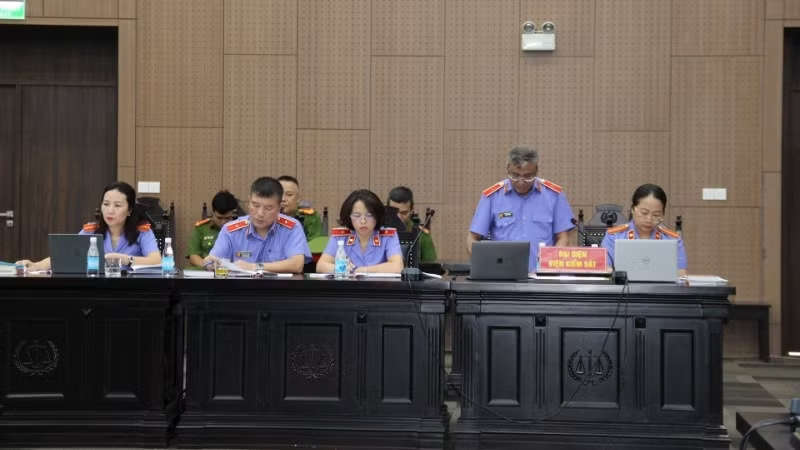
A strict sentence is needed for the defendants
According to the prosecution’s viewpoint, the actions of the defendants in this case are particularly serious, violating regulations on the management and use of state assets, and infringing on the proper functioning of state agencies and public officials in the execution of their duties.
The prosecution stated: This case is a typical example of causing loss and waste of state assets. The defendants committed the crime with direct intent, resulting in especially serious consequences.
The case involves complicity, with defendant Nguyen Chien Thang bearing primary responsibility. During the implementation of the project, the defendant made many mistakes in directing, advising, proposing, and signing contracts to hire foreign consultants for the investment project and architectural design plan; he pursued a policy of simultaneous construction and design, which violated regulations, leading to errors in advising, proposing, preparing, appraising, and approving the contractor selection plan; preparing and approving bid documents, organizing contractor selection, and signing contracts for the execution of the bid packages, causing the project to stall and be delayed, resulting in significant loss and waste.
The prosecution argued that to manage and implement the Bach Mai Hospital Base 2 Project and the Viet Duc Hospital Base 2 Project, defendant Nguyen Thi Kim Tien signed a decision to establish the Key Health Board and authorized this unit to act on behalf of the Ministry of Health as the project owner.
Defendant Nguyen Thi Kim Tien trusted the proposals of the Key Health Board, which led to her wrongful actions in signing the decision to approve the plan for selecting foreign contractors and developing the project and architectural design plan.
In her role as Minister, defendant Tien did not verify the correctness and completeness of the documents before signing the aforementioned decisions, leading to numerous violations and a loss of state assets amounting to over 803 billion VND. Therefore, a strict sentence is necessary for defendant Nguyen Thi Kim Tien.
The prosecution proposed sentencing the former leader of the Ministry of Health to 5-6 years in prison for the crime of “Violating regulations on the management and use of state assets causing loss and waste” and requiring joint compensation of 108 billion VND.
Nguyen Chien Thang, former Director of the Key Health Project Management Board, Ministry of Health—the main person responsible in the case—was sentenced to a total of 30 years in prison for the two crimes of “Receiving bribes” and “Violating regulations on the management and use of state assets causing loss and waste.”
Proposal to resolve damages according to legal regulations
During the questioning session this morning (May 21), when asked about the loss of 70 billion VND and the waste of 733 billion VND in state assets, former Minister of Health Nguyen Thi Kim Tien accepted the 70 billion VND loss from violations in hiring design consultants, but regarding the 733 billion VND waste as calculated in the indictment, she stated that “at that time, there was no document regulating it.”
The former Minister said that if she remembered correctly, this damage was calculated based on a circular issued at the end of 2025, about half a year ago. During her tenure, the defendant “had never known or been informed or guided” that such a waste calculation existed.
On this issue, defendant Nguyen Chien Thang also testified that during the period of managing these funds, no agency warned him that “money not fully used would incur interest.”
Defendant Thang argued that the 5,000 billion VND had been used, the construction had been built, and materials had been poured into it, which constituted assets. If the current level of price escalation is considered, that 5,000 billion VND would not be enough to cover the construction of the project. The project benefited the state and caused no damage.
According to the case file, the defendants committed violations during the implementation of the two projects, causing the projects to stall, be delayed, fail to achieve their objectives, resulting in a loss of 70 billion VND and a waste of 733 billion VND in state
![[Infographic] Ý kiến chuyên môn hỗ trợ thực thi quyền sở hữu trí tuệ](https://asiacity.news/wp-content/uploads/2026/05/so-huu-tri-tue-2-3641-150x150.jpg)