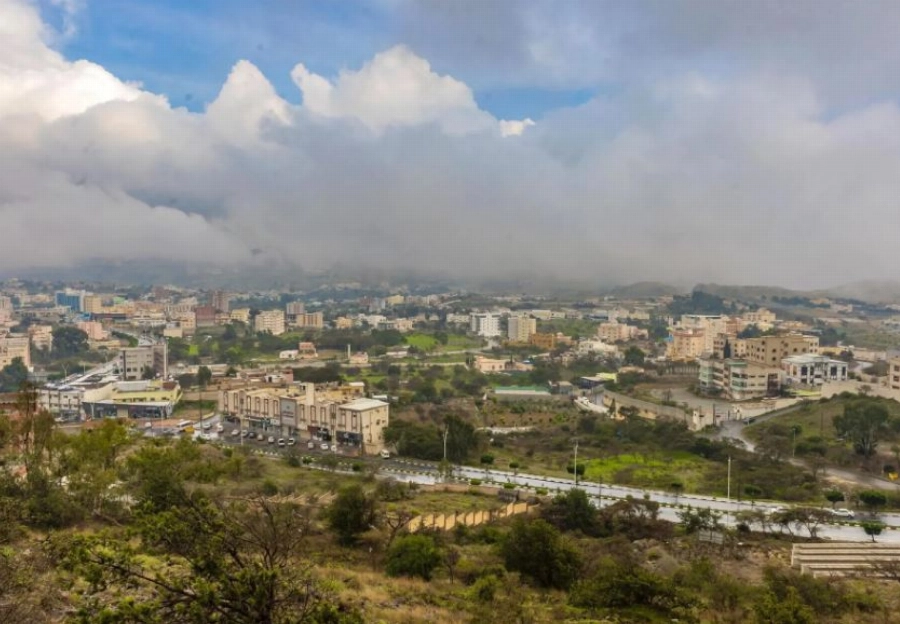
The National Center of Meteorology has warned that rainy thunderclouds are likely to form today (Monday) over parts of the southwestern highlands of the Kingdom.
The center noted that active winds stirring up dust and sand will continue to affect parts of the Medina, Hail, Tabuk, Al-Jawf, and Northern Borders regions, as well as Al-Qassim, Riyadh, the Eastern Province, and Najran.
It pointed out that surface winds over the Red Sea will be northwesterly to northerly at 20-40 km/h over the northern and central parts, and northwesterly to westerly at 15-30 km/h over the southern part.
Medina
Medina, located in present-day Saudi Arabia, is the second holiest city in Islam after Mecca. It was originally known as Yathrib before being renamed “Medinat al-Nabi” (City of the Prophet) after the Prophet Muhammad migrated there from Mecca in 622 CE, an event known as the Hijra that marks the beginning of the Islamic calendar. The city is home to the Prophet’s Mosque (Al-Masjid an-Nabawi), where Muhammad is buried, making it a major pilgrimage site for Muslims worldwide.
Hail
Hail is a historic city in northwestern Saudi Arabia, known for its rich cultural heritage and strategic location along ancient trade and pilgrimage routes. It was once the capital of the Rashidi dynasty, which ruled much of the Arabian Peninsula in the 19th century before being incorporated into the modern Kingdom of Saudi Arabia. Today, Hail is celebrated for its traditional architecture, vibrant festivals, and nearby archaeological sites like the rock art of Jubbah.
Tabuk
Tabuk is a city in northwestern Saudi Arabia with a rich history dating back to ancient times, serving as a key stop on trade routes and associated with the Prophet Muhammad’s expedition in 630 CE. It features historical forts and archaeological sites, such as the Tabuk Castle and the Hejaz Railway station, reflecting its strategic importance. Today, Tabuk blends its heritage with modern development, offering visitors a glimpse into its past as a crossroads of civilizations.
Al-Jawf
Al-Jawf is a historical region and province in northwestern Saudi Arabia, known for its rich archaeological heritage. It was once part of the ancient Kingdom of Kindah and later served as a key stop on the incense trade route, with sites like the well-preserved Marid Castle and the ancient city of Dumat al-Jandal showcasing its long history. Today, Al-Jawf is recognized for its agricultural significance, particularly in olive cultivation, alongside its cultural landmarks.
Al-Qassim
Al-Qassim is a region in central Saudi Arabia known for its agricultural significance, particularly as a major producer of dates and citrus fruits. Historically, it was a key stop along ancient trade and pilgrimage routes, with its capital, Buraydah, and the city of Unaizah serving as important cultural and commercial centers. The region also holds historical importance as a site of early 20th-century battles during the unification of Saudi Arabia.
Riyadh
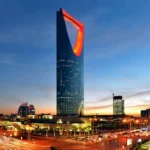
Riyadh, the capital of Saudi Arabia, began as a small desert settlement known for its fertile land and water sources, gaining prominence in the 18th century under the Al Saud dynasty. It became the nation’s capital in the early 20th century after King Abdulaziz captured the city in 1902, unifying much of the Arabian Peninsula. Today, Riyadh is a modern metropolis that blends its historical roots, such as the Masmak Fortress, with futuristic skyscrapers and rapid urban development.
Najran
Najran is a historic city in southwestern Saudi Arabia, known for its ancient roots dating back to pre-Islamic times as a key stop on the incense trade route. It features the impressive Al-Ukhdood archaeological site, linked to the 6th-century Christian persecution described in the Quran, and is also famous for its distinctive mud-brick fortress, the Najran Fort. Today, the city blends its rich cultural heritage with a diverse population, including a significant Ismaili Muslim community.
Red Sea
The Red Sea is a narrow seawater inlet of the Indian Ocean, lying between Africa and Asia, renowned for its vibrant coral reefs and rich marine biodiversity. Historically, it has been a vital trade route since ancient times, connecting the Mediterranean to the Indian Ocean via the Suez Canal, which opened in 1869. Its name may derive from the seasonal blooms of red-hued algae or the reddish mountains along its shores.