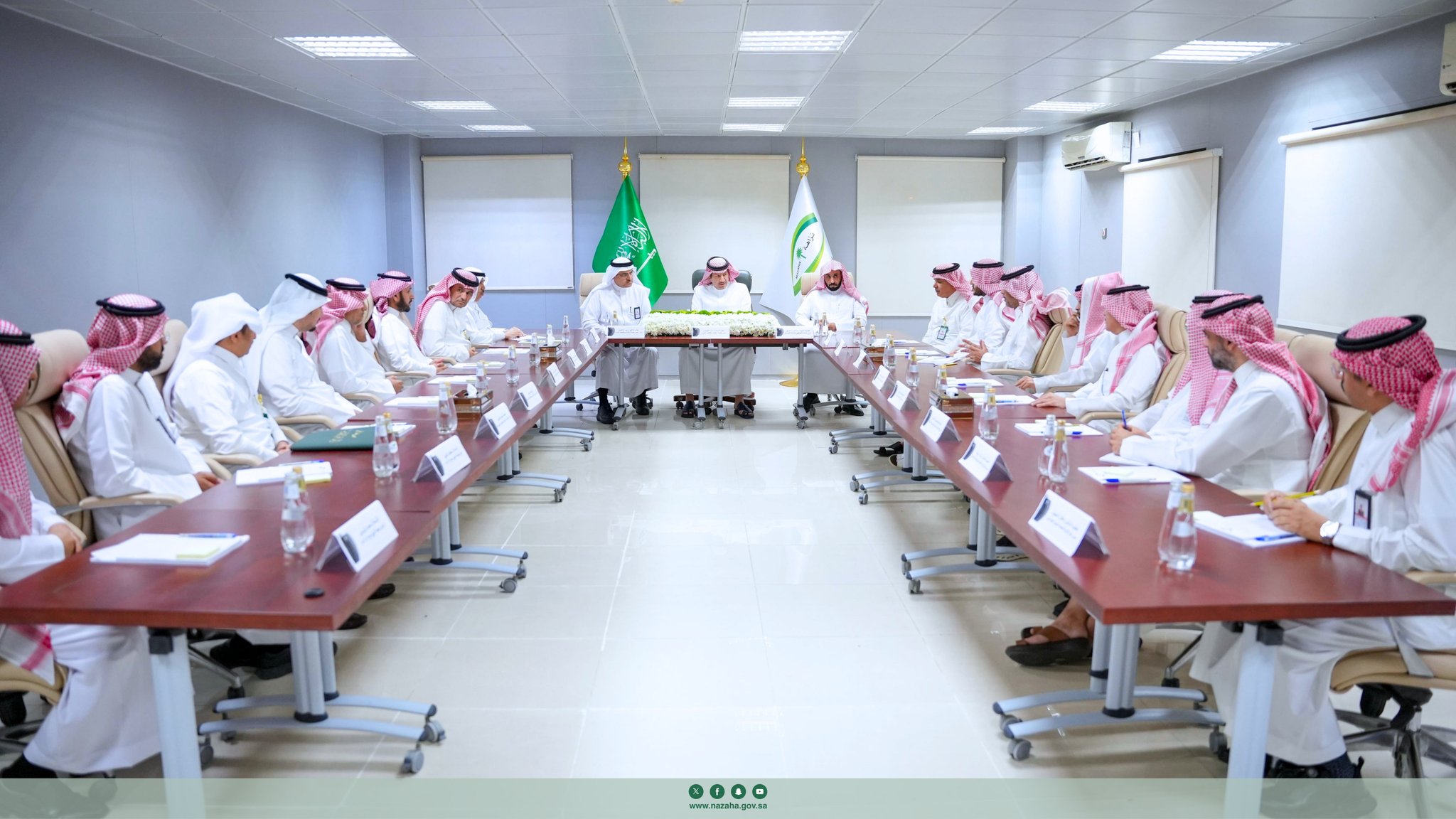
The President Meets with Leadership and Staff of the Authority Participating in the Season at the Authority’s Headquarters in the Government Complex at the Holy Sites
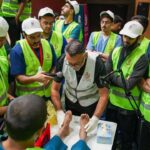
The President of the Oversight and Anti-Corruption Authority, Mazen bin Ibrahim Al-Kahmous, met with the leadership, heads of oversight teams, and staff of the Authority working during this year’s Hajj season at the Authority’s headquarters in the government complex at the holy sites.
During the meeting, he listened to a briefing on the progress of field oversight work, the level of readiness and implementation according to approved work plans, along with performance indicators related to oversight tours, key field challenges and observations, and mechanisms for addressing them.
He emphasized the importance of doubling efforts and raising the level of readiness for the remainder of the season’s work to ensure follow-up on the quality of services provided to the guests of God, and verifying compliance with operational plans, in implementation of the directives of the wise leadership—may God support them—aimed at providing the best services to the guests of God with the highest standards of quality and efficiency, in line with the goals of Saudi Vision 2030.
Hajj
Hajj is the annual pilgrimage to Mecca, Saudi Arabia, and is one of the Five Pillars of Islam, required of all able-bodied Muslims at least once in their lifetime. Its origins trace back to the Prophet Abraham, who, according to Islamic tradition, was commanded by God to build the Kaaba and establish the rites of pilgrimage. Today, millions of pilgrims gather each year to perform a series of rituals, commemorating the trials of Abraham, his wife Hagar, and their son Ishmael.
Saudi Vision 2030
Saudi Vision 2030 is a strategic framework launched in 2016 to reduce Saudi Arabia’s dependence on oil, diversify its economy, and develop public service sectors such as health, education, infrastructure, and tourism. The plan was introduced by Crown Prince Mohammed bin Salman and includes major projects like NEOM and the Red Sea Project, aiming to transform the kingdom into a global investment powerhouse. It also seeks to enhance cultural and entertainment opportunities, marking a significant shift in the country’s social and economic landscape.
Government Complex at the Holy Sites
The Government Complex at the Holy Sites, located in Mina near Mecca, Saudi Arabia, is a modern administrative facility established to manage the millions of pilgrims during the annual Hajj pilgrimage. Its history dates back to the late 20th century, when Saudi authorities centralized services to improve crowd control, safety, and logistics for the holy sites. Today, it houses key government agencies that coordinate transportation, health, and security operations during Hajj.
Mecca
Mecca, located in modern-day Saudi Arabia, is the holiest city in Islam and the birthplace of the Prophet Muhammad. It is home to the Masjid al-Haram (the Grand Mosque) and the Kaaba, a sacred structure that Muslims around the world face during prayer. Historically, Mecca has been a major pilgrimage center for centuries, and the annual Hajj pilgrimage to the city is a religious duty for all able Muslims.
<div class="my-4 p-4 rounded-lg shadow-md bg-blue-50 border-l-4 border
Government Complex at the Holy Sites
The Government Complex at the Holy Sites, located in Mina near Mecca, Saudi Arabia, serves as a central administrative hub for managing the annual Hajj pilgrimage. Established to coordinate services, security, and logistics for millions of pilgrims, it houses key government agencies and emergency response facilities. The complex reflects Saudi Arabia’s ongoing efforts to modernize infrastructure and ensure the safety and efficiency of religious rituals.
Mecca
Mecca, located in western Saudi Arabia, is the holiest city in Islam and the birthplace of the Prophet Muhammad. Its history dates back thousands of years as a key trading hub, but it gained religious significance with the construction of the Kaaba, believed to have been built by Abraham. Today, it is the destination of the Hajj pilgrimage, which millions of Muslims undertake annually, and is home to the Grand Mosque, the largest mosque in the world.
Kaaba
The Kaaba is a cube-shaped building located in the center of the Grand Mosque in Mecca, Saudi Arabia, and is the holiest site in Islam. According to Islamic tradition, it was originally built by the Prophet Abraham and his son Ishmael as a monotheistic house of worship, and it has been a focal point for Muslim prayer and pilgrimage for centuries. Today, millions of Muslims face the Kaaba during their daily prayers and circle it during the annual Hajj pilgrimage.
Masjid al-Haram
Masjid al-Haram, located in Mecca, Saudi Arabia, is the holiest site in Islam and the world’s largest mosque. Its history dates back to the time of Prophet Ibrahim (Abraham), who, according to Islamic tradition, built the Kaaba at the center of the mosque. The site has undergone numerous expansions over centuries, most recently with modern developments to accommodate millions of pilgrims during the annual Hajj and Umrah.
Mina
Mina is a valley located near Mecca in Saudi Arabia, best known for its role in the annual Hajj pilgrimage. Historically, it is the site where the Prophet Abraham was commanded to sacrifice his son Ishmael, an event commemorated by Muslims during Eid al-Adha. Today, it houses the world’s largest tent city, accommodating millions of pilgrims who stay there during the Hajj.
Hajj
Hajj is the annual Islamic pilgrimage to Mecca, Saudi Arabia, and is one of the Five Pillars of Islam, required of all able-bodied Muslims who can afford it. Its history dates back to the time of the Prophet Abraham, who, according to Islamic tradition, built the Kaaba with his son Ishmael as a house of monotheistic worship. The pilgrimage retraces key events from the lives of Abraham, Hagar, and the Prophet Muhammad, culminating in rituals that symbolize unity, devotion, and submission to God.
Saudi Vision 2030
Saudi Vision 2030 is a strategic framework launched in 2016 to reduce Saudi Arabia’s dependence on oil, diversify its economy, and develop public service sectors such as health, education, infrastructure, and tourism. It was introduced by Crown Prince Mohammed bin Salman as part of a long-term plan to transform the kingdom into a global investment powerhouse and enhance the quality of life for its citizens. The vision also includes ambitious projects like NEOM and the Red Sea Project, aiming to create a vibrant society and a thriving economy by the end of the decade.