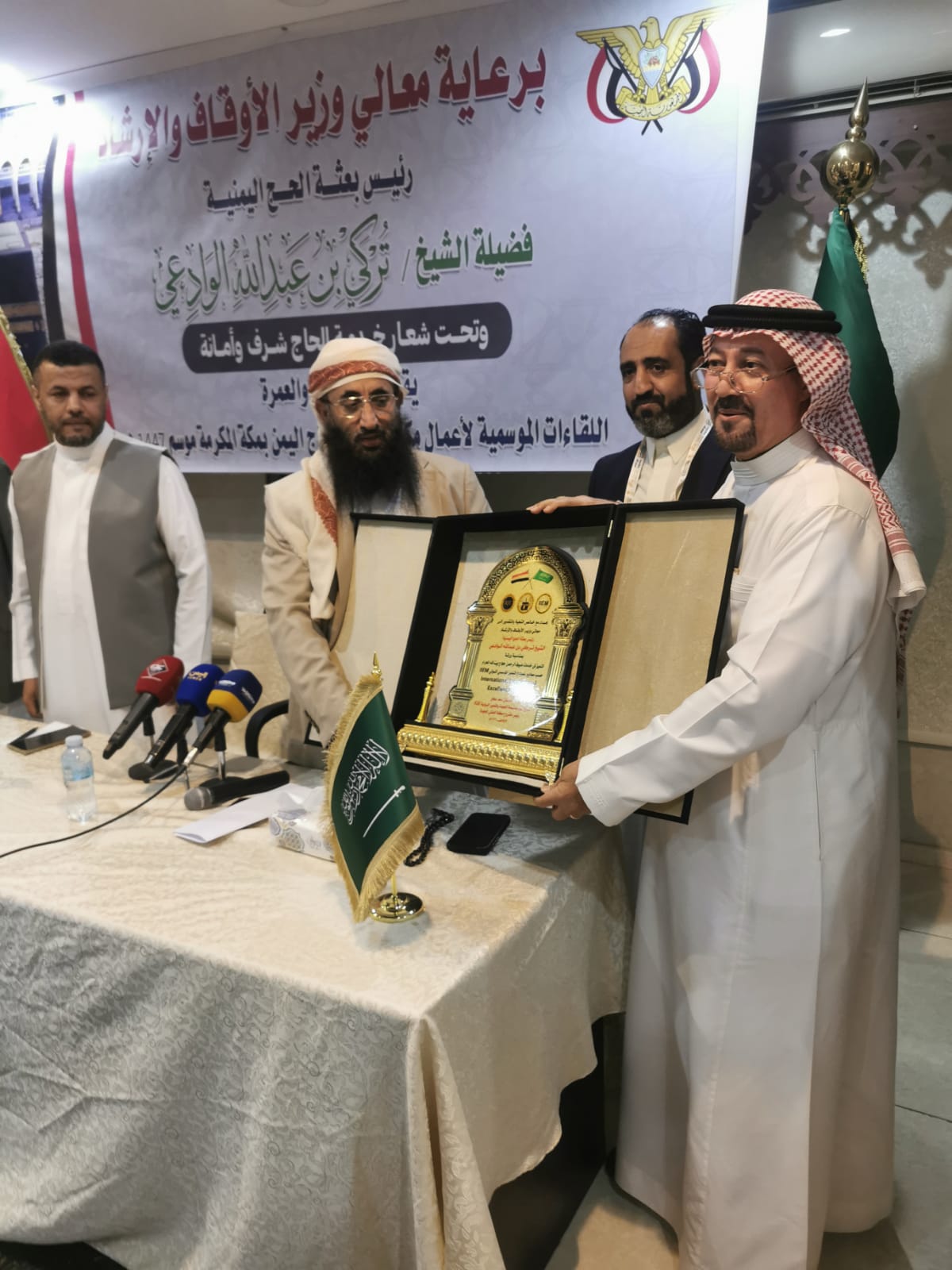
As part of the efforts of the International Quality and Excellence Foundation (IQE), and to enhance the quality and excellence of services provided to the guests of the Most Merciful, pilgrims to the Sacred House of God, and to strengthen positive relations and effective cooperation.
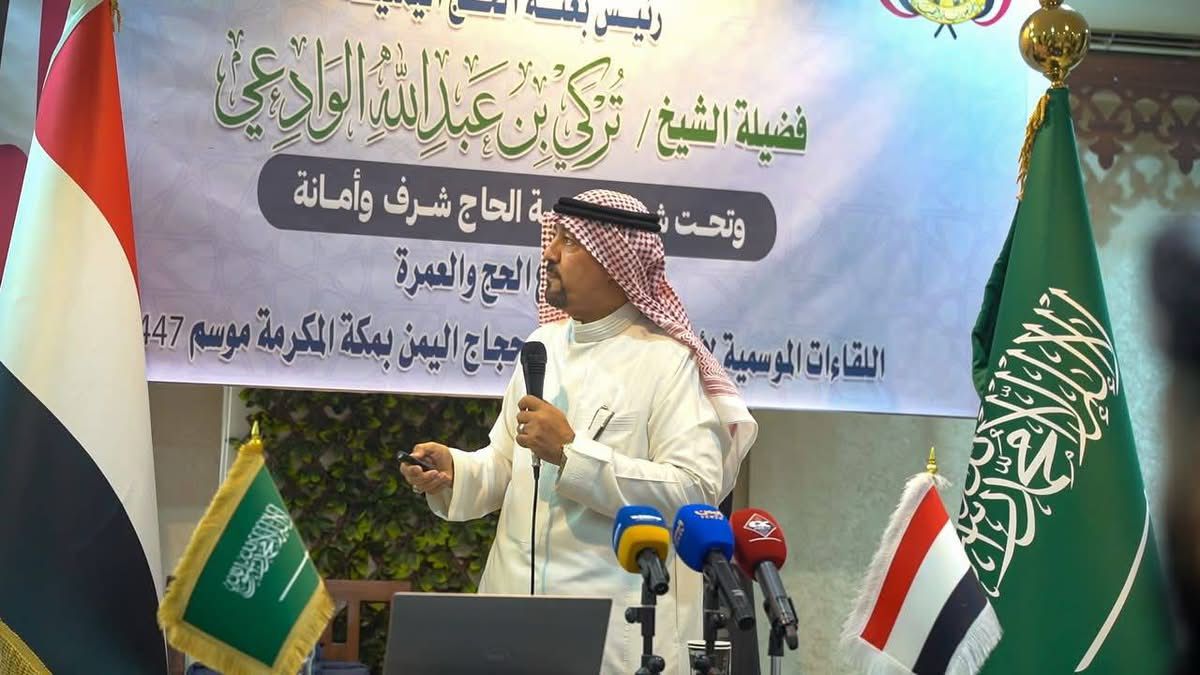
The Makkah International Quality Project (MIQP), the volunteer arm of the International Quality and Excellence Foundation, under the generous patronage of the Minister of Endowments and Guidance of the Yemeni Republic, and head of the Yemeni Pilgrims Affairs Office, Sheikh Turki bin Abdullah Al-Wadaei, held a workshop titled “Excellence in Services for the Guests of the Most Merciful” in Makkah Al-Mukarramah.
The workshop aims to contribute to developing performance and raising the level of services provided to Yemeni pilgrims. It targeted male and female employees of the General Office of the Ministry of Endowments and Guidance participating in field committees for the Hajj season of 1447 AH.
The Deputy Assistant for the Hajj and Umrah Sector in Yemen, Dr. Tariq Al-Qurashi, affirmed that the workshop is part of the qualification and development programs implemented by the ministry to raise the efficiency of administrative and field cadres, and to enhance concepts of quality and institutional excellence, contributing to improving the level of performance and services provided to pilgrims of the Sacred House of God.
The workshop, presented by Dr. Adnan Saad Sagheer, expert in Hajj quality and excellence and General Director of the International Quality and Excellence Foundation and head of the Makkah International Quality Project, reviewed several topics related to services for the guests of the Most Merciful.
The workshop began with a set of questions such as: Who are the guests of the Most Merciful? Why did they come to Makkah Al-Mukarramah? What sacrifices did they make to perform this rite, which represents the fifth pillar of Islam? What should we provide them as those responsible for serving them? The second part of the workshop covered the nature of the Hajj environment, including challenges of time, place, diversity of nationalities, languages, sects, movement, the elderly and weak, and hot weather, to prepare service workers to deal with this environment.
After that, the focus shifted to the job description for workers, accuracy and effective planning for performing tasks and work-related processes, the necessity of effective cooperation and solidarity, and obeying leaders and superiors to achieve the public interest, and ways to employ quality concepts in the administrative and field work environment to enhance work efficiency during the Hajj season.
Then, the latest and most precise international institutional excellence standards were discussed by identifying the requirements of the guests of the Most Merciful according to the methodologies and standards of the Saudi International Institutional Excellence Model (IIEM). The necessary enabler standards and targeted comprehensive results were reviewed, contributing to achieving sustainable excellence and enhancing international competitiveness. The workshop was attended by more than one hundred male and female trainees, including leaders and employees of the General Office of the Ministry. Some attendees shared details of the workshop via social media with their colleagues working in the field.
The attendees praised the quality of the workshop, the topics presented, and the presenter. At the conclusion of the workshop, an evaluation was distributed to the attendees, who affirmed its excellence and requested more similar programs earlier in upcoming seasons from the same trainer and other trainers. Photos and souvenirs were taken, and the trainer received several calls and messages of thanks and appreciation, along with requests for continued constructive cooperation. The workshop was attended and covered by some Yemeni satellite channels and newspapers.