Prepare for Ramadan, the Supreme Court calls for participation in moon sighting.
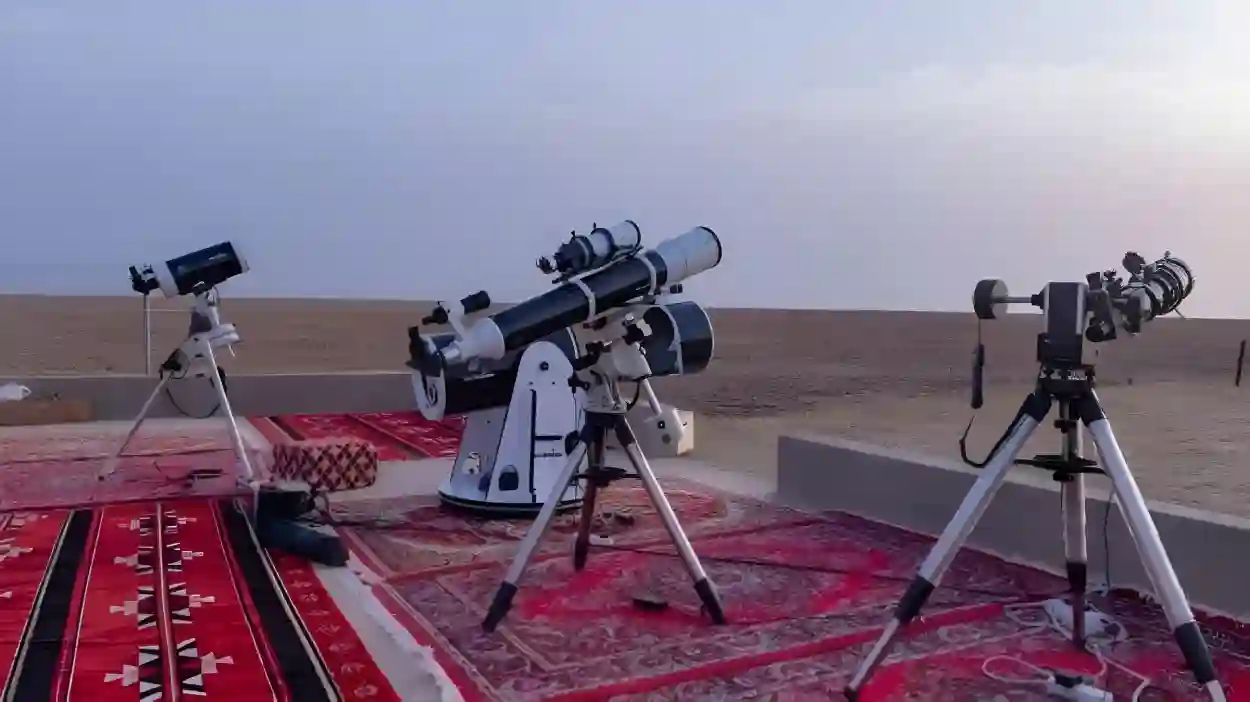
The Supreme Court has announced a call to all Muslims across various regions of the Kingdom to observe the sighting of the crescent moon for the holy month of Ramadan on the evening of Tuesday, the 29th of Sha’ban in the year 1447 AH according to the Umm al-Qura calendar, corresponding to the 17th of February, 2026. It emphasized the importance of participation in this annual event, which determines the beginning of the fasting month and is awaited by millions of Muslims inside and outside the country.
Official Announcement Sets the Legal Date
The Supreme Court clarified in its official statement that this call is based on its Resolution No. 203 H issued on the 29th of Rajab 1447 AH, which stipulated that Tuesday, the 20th of January 2026, is the first day of the month of Sha’ban. Accordingly, the evening of Tuesday, the 29th of Sha’ban, corresponding to the 17th of February, will be the designated time for observing the Ramadan crescent moon. This is the annual procedure adopted to determine the beginning of the holy month in accordance with the legal regulations in force in the Kingdom.
General Call for Participation and Reporting
The Supreme Court urged anyone able to sight the crescent moon with the naked eye or through astronomical telescopes to report to the nearest court and officially record their testimony. It also called for contacting the nearest center for assistance in reaching the relevant authorities, confirming that testimonies are documented according to precise procedures ensuring verification before the final decision regarding the start of Ramadan is announced.
Sighting Committees in Various Regions
The statement stressed the importance of those capable of sighting joining the committees formed in different regions for this purpose. These committees work on monitoring field observations in coordination with judicial authorities. This comes within the framework of promoting the principle of cooperation in righteousness and piety, reviving the Prophetic tradition of relying on visual sighting to confirm the start of the month, while utilizing modern technical means without neglecting legal regulations.
The Event’s Importance for the Muslim Community
The observation of the Ramadan crescent moon represents an event of great religious and social importance, as it determines the start of fasting, night prayers, and the organization of worship and transactions related to the holy month. Citizens and residents await this announcement for the special spiritual atmosphere and extensive preparations it brings at both individual and institutional levels. The Supreme Court’s official announcement reflects the judicial authorities’ keenness to unify the reference point and regulate the decision in a way that achieves religious stability and enhances societal trust.
While awaiting the results of the sighting on Tuesday evening, attention turns to the official announcement that will determine the beginning of the holy month—a scene repeated every year, yet each time carrying a new spirit of anticipation and certainty.
Supreme Court
The Supreme Court of the United States is the highest federal court in the nation, established in 1789 by Article III of the U.S. Constitution. It serves as the final arbiter of federal law, with the power of judicial review to determine the constitutionality of legislative and executive actions, a principle solidified by the landmark 1803 case *Marbury v. Madison*.
Kingdom
“Kingdom” is too broad a term for a specific place or cultural site, as it could refer to many historical or modern nations (like the United Kingdom), fictional realms, or even amusement parks (like Disney’s Magic Kingdom). If referring to a historical kingdom, such as the ancient Kingdom of Kush or the medieval Kingdom of France, these were sovereign political entities with their own rulers, cultures, and histories spanning centuries. For a more precise summary, please specify a particular kingdom.
Ramadan
“Ramadan” is not a specific place or cultural site, but rather the ninth month of the Islamic lunar calendar, observed by Muslims worldwide as a holy period of fasting, prayer, and reflection. Its history dates to the 7th century CE when, according to Islamic belief, the first verses of the Quran were revealed to the Prophet Muhammad during this month. The observance commemorates this revelation and is one of the Five Pillars of Islam, central to the faith’s practice and spiritual life.
Sha’ban
“Sha’ban” is not a specific place or cultural site, but rather the name of the eighth month in the Islamic lunar calendar. It is historically and culturally significant to Muslims as a month of spiritual preparation, preceding the holy month of Ramadan. Many Muslims observe fasting and increased devotion during this time, commemorating events such as the changing of the *qibla* (direction of prayer) toward Mecca.
Umm al-Qura calendar
The Umm al-Qura calendar is the official Islamic lunar calendar used for civil purposes in Saudi Arabia, established in the Kingdom in 1926. It is a calculated calendar based on astronomical observation, primarily used to determine key Islamic dates and events, such as the Hajj pilgrimage and the holy month of Ramadan. Its history is tied to the unification of Saudi Arabia, providing a standardized timekeeping system for the nation’s religious and administrative life.
Prophetic tradition
The “Prophetic tradition,” known in Arabic as **Sunnah**, refers to the collected teachings, actions, and approvals of the Prophet Muhammad, which serve as a primary source of Islamic law and moral guidance alongside the Quran. It was meticulously preserved through oral and written reports (*Hadith*) by his companions and later scholars, with major canonical collections compiled in the 9th century. This tradition forms the practical blueprint for Muslim life, shaping religious rituals, legal systems, and ethical conduct.
Muslim community
The global Muslim community, known as the *Ummah*, is a transnational religious and cultural collective united by the faith of Islam. Its history begins in 7th-century Arabia with the revelations received by the Prophet Muhammad, and it rapidly expanded through trade, scholarship, and empire, creating a diverse civilization spanning continents. Today, it represents over 1.8 billion people worldwide, sharing core beliefs and practices while encompassing a rich variety of local cultures, traditions, and interpretations.
holy month
“Holy month” typically refers to a sacred period in various religious traditions, such as Ramadan in Islam or Lent in Christianity. These are times of fasting, prayer, and reflection, observed annually based on lunar or liturgical calendars. Their history is deeply rooted in foundational religious texts and traditions, often commemorating significant spiritual events.