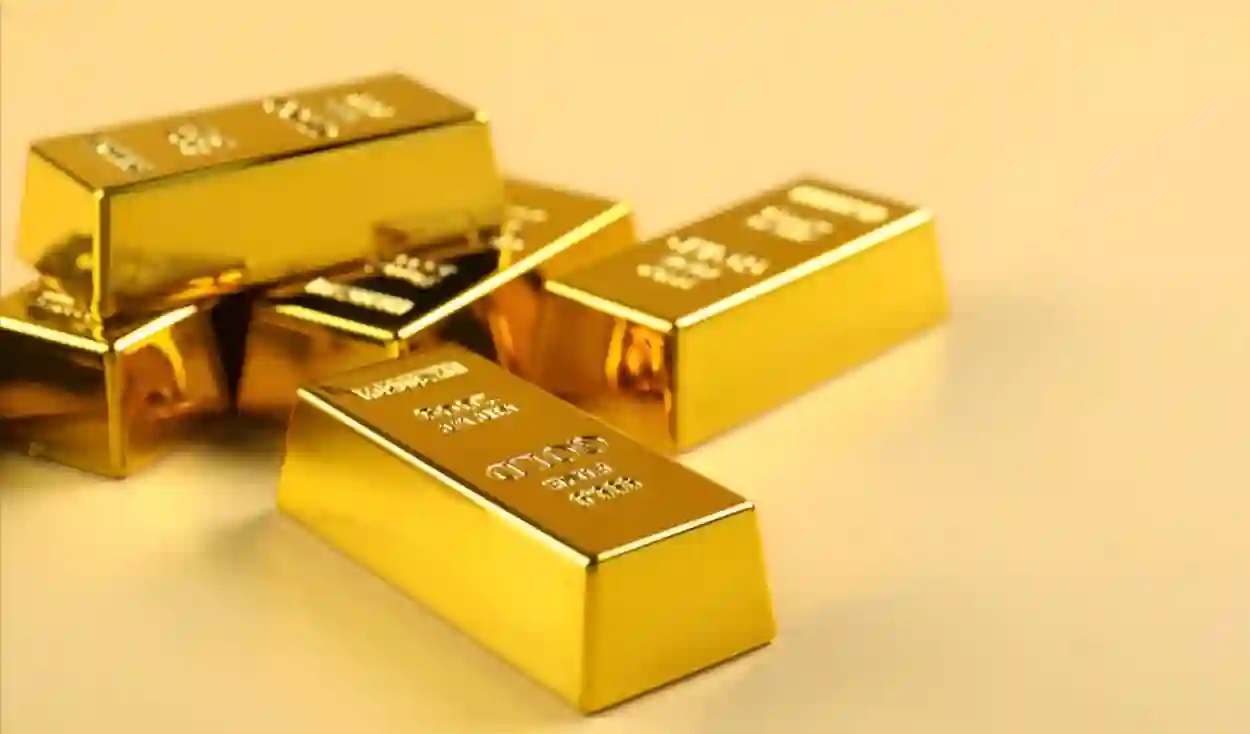
Gold’s stability boosts market confidence, with 21-karat gold holding steady at 524 riyals.
Gold prices in Saudi Arabia stabilized during Friday’s trading, with 21-carat gold, the most commonly traded among consumers, recording about 524.24 Saudi riyals. This reflects a state of relative calm in the local market, as investors and traders await any changes that might affect price movements in the coming period.
Reading of Current Price Levels
Data showed that the price of 24-carat gold reached about 599.13 riyals, while 22-carat gold recorded around 549.20 riyals. The price of 18-carat gold was about 449.34 riyals, and 14-carat gold reached 349.49 riyals. This reflects a clear balance across different carats without any sudden jumps.
21-Carat Gold Leads Trading
21-carat gold continues to top the list of most demanded items in the Saudi market, due to its balance between price and investment value. Buyers prefer it for both savings and social occasions. Its stability at 524 riyals reflects a relative sense of reassurance among traders, especially amid periodic fluctuations in global markets.
Implications of Stability in the Local Market
The price stability indicates the resilience of the domestic market despite potential global influences. Gold prices are typically linked to movements in the dollar, interest rates, and geopolitical tensions. However, the Saudi market showed a state of balance today, providing observers with a clearer picture of the current stability in supply and demand.
Anticipation and Analysis of the Future Scene
Observers believe that the continued stability may be temporary given international economic changes. However, today’s price steadiness gives traders an opportunity to reassess their purchasing and investment decisions, especially since gold remains one of the most important safe havens globally. Any future movement will be of great interest to both investors and individuals alike.
Saudi Arabia
Saudi Arabia is a country in the Middle East known for its vast deserts, rich oil reserves, and deep Islamic heritage. It is the birthplace of Islam, home to the holy cities of Mecca and Medina, and was unified as a modern kingdom in 1932 by King Abdulaziz Al Saud. Today, it is undergoing rapid social and economic transformation under Vision 2030, while preserving its cultural traditions and religious significance.
Saudi Gold
“Saudi Gold” typically refers to the country’s rich history of gold mining, particularly at the ancient Mahd adh-Dhahab mine in the Al-Madinah province. This site has been exploited for over 3,000 years, dating back to the time of King Solomon, and remains one of the largest gold mines in the Middle East today. It symbolizes Saudi Arabia’s long-standing connection to precious metals and its modern efforts to diversify its economy beyond oil.
Saudi Arabia
Saudi Arabia is a country in the Middle East that is the birthplace of Islam and home to its two holiest cities, Mecca and Medina. Historically, it was united as a modern state in 1932 by King Abdulaziz Al Saud, following the consolidation of various tribal regions. Today, it is a major global oil producer and is undergoing significant social and economic reforms under its Vision 2030 plan.
<div class="my-4 p-4 rounded-lg shadow-md
Saudi Arabia
Saudi Arabia is a country in the Middle East that is the birthplace of Islam and home to its two holiest cities, Mecca and Medina. Historically, it was unified in 1932 by King Abdulaziz Al Saud, and its vast oil reserves, discovered in the 1930s, transformed it into a global energy powerhouse. In recent years, the nation has pursued ambitious social and economic reforms under Vision 2030, aiming to diversify its economy and open up to international tourism.
Mecca
Mecca is the holiest city in Islam, located in western Saudi Arabia, and is the birthplace of the Prophet Muhammad. It is home to the Masjid al-Haram (the Grand Mosque) and the Kaaba, which Muslims face during prayer and circumambulate during the Hajj pilgrimage. Historically, Mecca has been a major religious and trade center since pre-Islamic times, and its significance grew immensely after the rise of Islam in the 7th century.
Medina
Medina, located in western Saudi Arabia, is the second holiest city in Islam after Mecca. It is the site of the Prophet’s Mosque (Al-Masjid an-Nabawi), which houses the tomb of the Prophet Muhammad, who migrated there in 622 CE—an event marking the beginning of the Islamic calendar. Originally known as Yathrib, the city became a center of the early Muslim community and remains a major pilgrimage destination.
Mahd adh-Dhahab
Mahd adh-Dhahab, meaning “Cradle of Gold,” is a historic gold mine located in the Al-Madinah Province of Saudi Arabia. It is one of the oldest known gold mining sites in the world, with evidence of mining activity dating back over 3,000 years to ancient civilizations, including the Egyptians and the Umayyad Caliphate. Today, it remains an active modern gold mine, operated by the Saudi Arabian Mining Company (Ma’aden), and continues to be a significant source of precious metals in the region.
Al-Madinah province
Al-Madinah Province, located in western Saudi Arabia, is home to the holy city of Medina, the second holiest city in Islam. It holds profound historical significance as the site where the Prophet Muhammad established the first Muslim community after his migration (Hijra) from Mecca in 622 CE. The province is also known for the Prophet’s Mosque (Al-Masjid an-Nabawi), which contains his tomb and remains a major destination for pilgrims.