
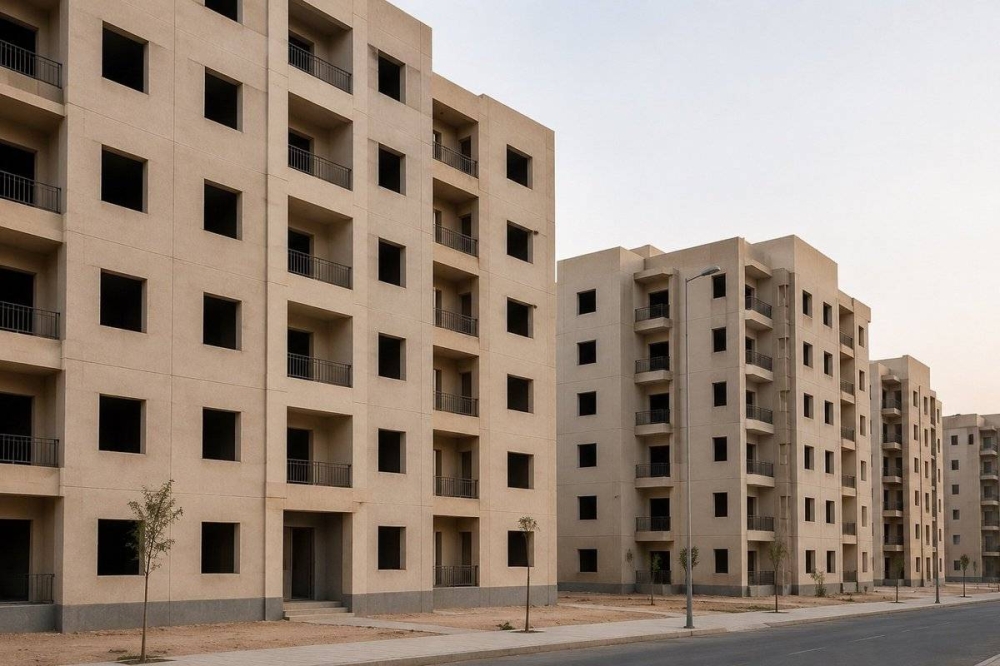
The executive regulations for vacant property fees, published in the official gazette “Umm Al-Qura” today, outlined 4 measures to ensure fair application of the fee and prevent evasion. These include unifying application and assessment standards in targeted cities and areas, verifying the accuracy of data submitted about the building or the taxpayer, and checking the taxpayer’s compliance with the provisions of the law and regulations in coordination with relevant authorities.
Additionally, the fee will be calculated for previous years from the date the vacant property became subject to the fee application decision in the geographical area. Collecting the fee for previous years from that date does not affect the imposition of any fines resulting from the taxpayer’s failure to pay or failure to submit the required documents as per regulations.
Buildings within the urban boundary are considered vacant if they have not been used for 6 consecutive or intermittent months during the reference year. This period may be amended by a decision of the Minister – after approval of the Ministerial Committee.
Property Documentation
Article three of the regulations stipulates that owners of buildings announced as subject to the fee application must submit to the ministry the documents and data related to their buildings and disclose their status, in accordance with the announcement issued by the Ministry of Municipalities and Housing. They must also submit to the ministry the documents and data related to their buildings when ownership of those buildings is transferred to them, according to the controls and mechanisms determined by the ministry. Taxpayers must disclose the status of their buildings at least once during the reference year, in accordance with the announcement issued by the ministry.
Technical Committee
A technical committee (or more) will be formed in the Ministry of Municipalities and Housing – by a decision of the Minister – to estimate the rental value and the value of buildings subject to the fee. The committee must have no fewer than three members, who must have experience in real estate valuation, including licensed valuers from the Saudi Authority for Accredited Valuers. Its decisions are made by majority vote, and the membership term is 3 years, renewable.
The rental value and building value are estimated according to the criteria, assessment mechanism, and controls approved by a decision of the Minister, including determining the average market value of the building for similar properties in terms of location, type, and use, and determining the average rental value for buildings within the urban boundary by city. In cases where the building cannot be assessed due to the absence of a similar property, the consideration is the value of the land based on the type of use and location of the building.
Buildings Subject to Fees
The regulations stipulated several conditions for buildings that must be subject to property fees, most notably a high rate of vacant properties in the geographical area, high housing costs relative to the annual household income in the geographical area, high property prices compared to the consumer price index, and a high rate of vacant properties for those who own