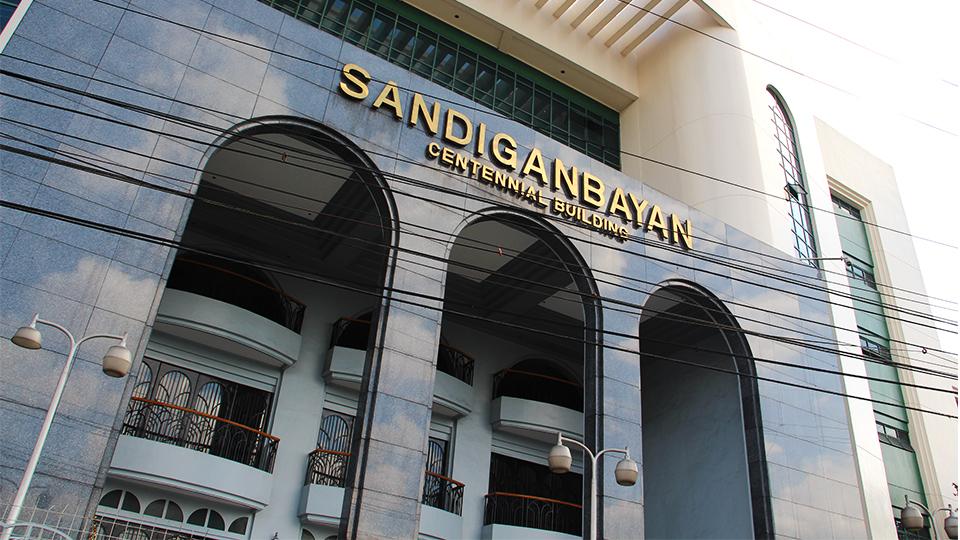
The Sandiganbayan has thrown out the remaining asset claims in a civil case aimed at recovering the alleged ill-gotten wealth of the late former President Ferdinand Marcos Sr. and his family.
The anti-graft court’s Special Division, in a resolution issued on June 2, 2026, said it dismissed the remaining claims after the Presidential Commission on Good Government (PCGG) opted not to present further evidence in Civil Case No. 0141, saying most of the properties had already been recovered in separate civil actions.
Over the years, the Sandiganbayan said the government obtained partial judgments ordering the forfeiture of $658 million in Swiss deposits, funds, properties, shares, and interests related to the Arelma accounts, the Malacañang Jewelry Collection, and the proceeds from the sale of paintings and artworks worth $17 million.
On May 12, 2026, the government filed a manifestation stating that it would no longer present evidence “with respect to the remaining listed properties not covered by the partial judgments.”
Civil Case No. 0141 also alleged that the Marcoses held bank deposits in Luxembourg, Hong Kong, the Cayman Islands, and the United States, as well as shares of stock in various companies and other properties.
“In view of petitioner’s [government] manifestation and the absence of evidence concerning the remaining properties, the proceedings in this case, insofar as they relate to properties not covered by the four partial summary judgments, are now terminated,” the Sandiganbayan said through Associate Justice Bayani Jacinto.
Associate Justices Maryann Corpus-Mañalac and Juliet Manalo-San Gaspar also signed the resolution.
Sandiganbayan
The Sandiganbayan is a special appellate court in the Philippines, established in 1978 under Presidential Decree No. 1606, to try criminal and civil cases involving graft, corruption, and other offenses committed by public officials, particularly those with a salary grade of 27 and higher. Its creation was part of the government’s efforts to combat systemic corruption and ensure accountability among high-ranking government employees. The court, which has the same rank as the Court of Appeals, plays a crucial role in the country’s judicial system by focusing exclusively on cases that affect public trust and integrity.
Malacañang
Malacañang Palace is the official residence and principal workplace of the President of the Philippines, located in Manila. Originally built in 1750 as a private summer home for a Spanish aristocrat, it was later seized by the Spanish government and eventually became the seat of executive power under American rule. The palace has since witnessed centuries of Philippine history, from colonial times through martial law to the present day.
Luxembourg
Luxembourg is a small European country known for its medieval old town, which is a UNESCO World Heritage site featuring fortified castles and steep, cobblestone streets. Its history dates back to the 10th century when Count Siegfried built Lucilinburhuc Castle, and it later became a strategically important fortress contested by major European powers. Today, Luxembourg is a prosperous nation and a key center for European Union institutions, blending its rich past with modern governance.
Hong Kong
Hong Kong is a vibrant special administrative region of China with a rich history as a British colony from 1842 to 1997, after which it was returned to Chinese sovereignty under the “one country, two systems” principle. Known for its iconic skyline, bustling harbor, and fusion of Eastern and Western cultures, it has evolved from a small fishing village into a global financial hub. Today, Hong Kong remains a major center for trade, tourism, and commerce, while preserving landmarks like Victoria Peak and its historic Star Ferry.
Cayman Islands
The Cayman Islands are a British Overseas Territory in the Caribbean, known for their stunning beaches, coral reefs, and status as a major global financial center. First sighted by Christopher Columbus in 1503, the islands were largely uninhabited until British settlers arrived in the 17th and 18th centuries, with a history tied to piracy, shipbuilding, and turtle fishing. Today, they are famous for their high standard of living, tourism, and being a tax-neutral jurisdiction.
United States
The United States is a vast country in North America, founded in 1776 after declaring independence from Great Britain. Its history is marked by westward expansion, the Civil War over slavery, and its rise as a global economic and military power in the 20th century. Today, it is known for its diverse culture, iconic landmarks like the Statue of Liberty and Grand Canyon, and its influence on world politics and popular culture.