Filtered by: Top Picks
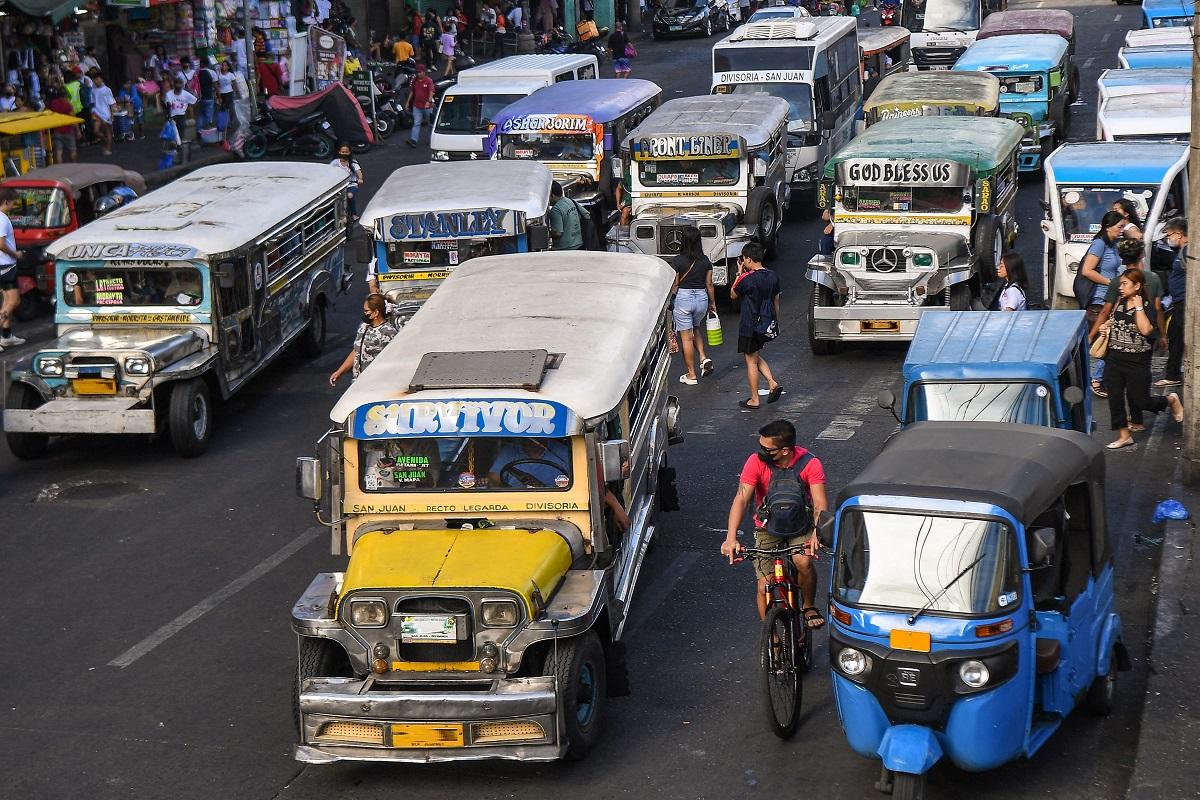
Thousands of public utility vehicle (PUV) units nationwide will begin operating under the government’s service contracting program (SCP) on Monday, according to the Department of Transportation.
At a news forum in Quezon City, officials stated that only a few PUV units participated when the SCP rolled out last Wednesday.
“We are expecting that by Monday, over 19,000 public utility vehicles—including modern and traditional jeepneys, UV Express, and our EDSA Busway—will have entered the program, and our commuters will start to feel its impact,” the Transportation chief said.
The first phase of the SCP, which has an allocated initial budget of 1 billion pesos, will run for two weeks. Of this amount, 800 million pesos is earmarked for road transport and 200 million pesos for maritime transport.
The initiative is a subsidy program in which the government will pay PUV operators and drivers a set amount per kilometer traveled, ensuring a guaranteed income whether their units are full of passengers or not, provided that they impose a 20% fare discount to passengers. This is on top of existing discounts already enjoyed by senior citizens, persons with disabilities (PWDs), and students.
Under the program, bus operators and drivers will be paid 100 pesos per kilometer. For the EDSA Busway alone, the program covers 50 operators, 500 bus units, and 300,000 passengers daily.
Modern jeepneys and UV Express units will be paid 40 pesos per kilometer, while traditional units will be given 30 pesos per kilometer.
Participating units under the program will run five days a week.
“The benefit of net service contracting is that we are able to help not just operators and drivers. We are helping commuters. We included a fare discount of 20%,” the official said.
The program will cover a total of 823 routes across the country, 545 of which will be in Metro Manila and the provinces of Cavite, Laguna, and Rizal, as the focus was on “filler routes” that connect to other modes of transport, such as the railways.
Regarding the plan to extend and expand the SCP, officials stated that coordination is underway with the Department of Budget and Management (DBM) to look for sources of funds to finance the plans.
Manila
Manila is the capital city of the Philippines, located on the eastern shore of Manila Bay. Founded in 1571, it served as the center of Spanish colonial government and trade in Asia for over three centuries. Today, it is a densely populated metropolis blending historic Spanish-era landmarks like Intramuros with modern urban development.
Quezon City
Quezon City was founded in 1939 and served as the capital of the Philippines from 1948 to 1976. Today, it is the country’s most populous city and a major hub for government, education, and commerce, housing key landmarks like the Quezon Memorial Circle.
EDSA Busway
The EDSA Busway is a dedicated bus rapid transit system along Epifanio de los Santos Avenue (EDSA), Metro Manila’s main circumferential highway. It was established in 2020 to provide a faster and more reliable public transport alternative by separating buses from general traffic. The project repurposed existing infrastructure to create a high-capacity corridor.
<div class="
Manila
Manila is the capital city of the Philippines, located on the eastern shore of Manila Bay. Founded by Spanish conquistadors in 1571, it served as the center of Spanish colonial rule in Asia for over three centuries and was heavily damaged during World War II. Today, it is a densely populated metropolis known for its historic walled city of Intramuros, vibrant culture, and significant economic role.
Quezon City
Quezon City was founded in 1939 and served as the capital of the Philippines from 1948 to 1976, named after the country’s second president, Manuel L. Quezon. Today, it is the most populous city in Metro Manila and a major hub for government, education, and commerce, home to landmarks like the Quezon Memorial Circle.
EDSA Busway
The EDSA Busway is a dedicated bus rapid transit system along Epifanio de los Santos Avenue (EDSA), Metro Manila’s main circumferential highway. It was established in 2020 during the COVID-19 pandemic to provide a faster and more reliable public transport alternative by separating buses from general traffic. The system has become a critical piece of Metro Manila’s transportation infrastructure, significantly reducing travel times for hundreds of thousands of daily commuters.
Intramuros
Intramuros is the historic walled city in Manila, Philippines, built by Spanish colonial authorities starting in the late 16th century. It served as the political, military, and religious center of Spanish rule for over 300 years. Though heavily damaged during World War II, it has been partially restored and remains a major cultural landmark showcasing Spanish-era architecture.
Quezon Memorial Circle
The Quezon Memorial Circle is a national park and landmark in Quezon City, Philippines, built to honor the country’s second president, Manuel L. Quezon. Its centerpiece is a 66-meter tall triple pylon, representing the three main island groups of the Philippines, which also houses a museum and the mausoleum of the former president. The park was developed on the grounds originally intended to be the national capital during Quezon’s administration.
Epifanio de los Santos Avenue (EDSA)
Epifanio de los Santos Avenue (EDSA) is a major circumferential highway and vital transport artery in Metro Manila, Philippines. It is most famously known as the site of the peaceful 1986 People Power Revolution, which toppled the Marcos dictatorship and restored democracy. The avenue is named after a distinguished Filipino historian, Epifanio de los Santos.