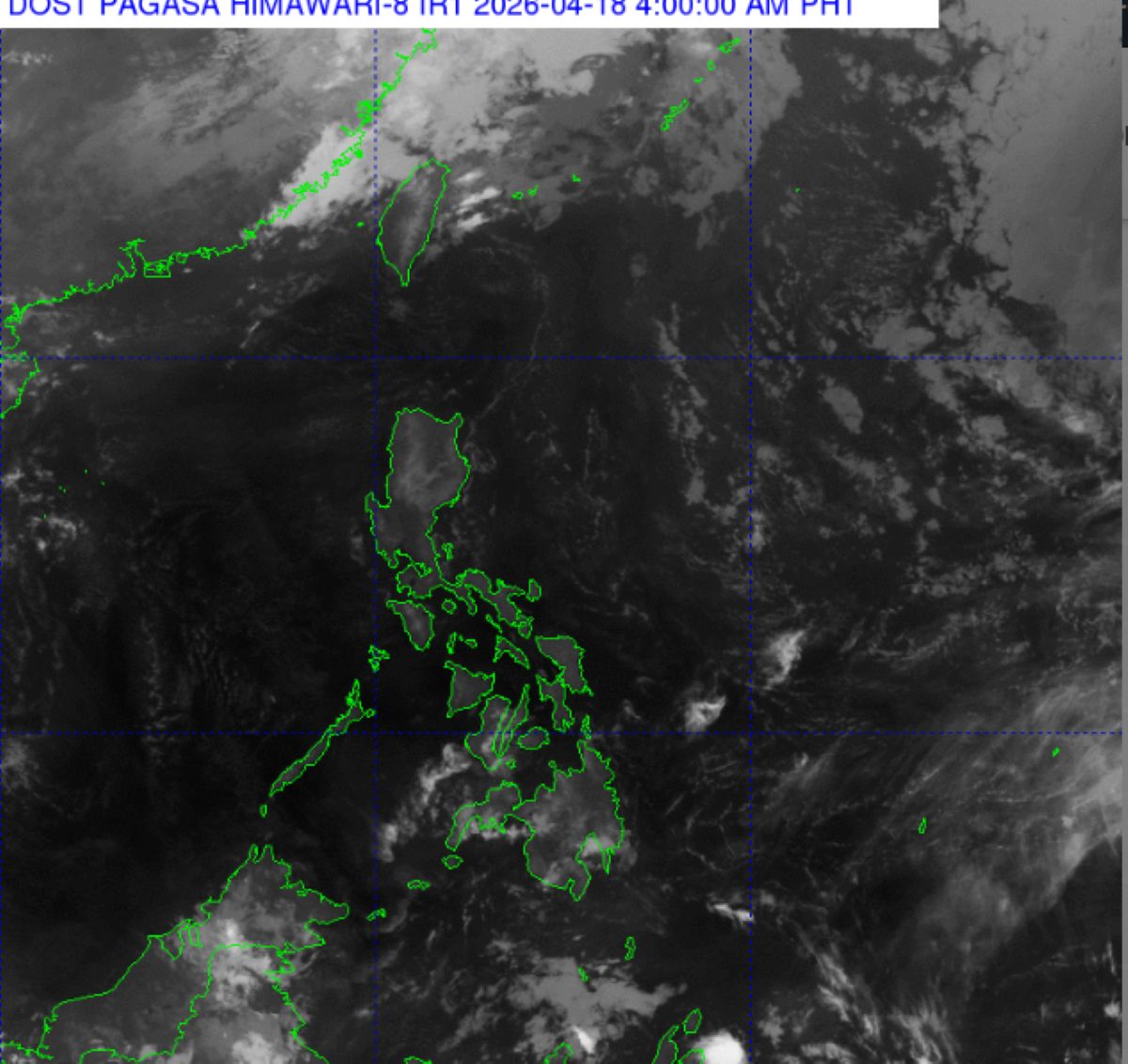
The Philippines will continue to experience localized thunderstorms in the next 24 hours, according to the early Saturday morning forecast.
In particular, partly cloudy to cloudy skies with isolated rain showers or thunderstorms will prevail across the country.
Meanwhile, Typhoon Sinlaku was spotted 2,570 kilometers east of extreme northern Luzon or outside the Philippine Area of Responsibility as of 3 a.m. Moving north northeastward at 15 km/h, Sinlaku has maximum sustained winds of 120 km/h near the center and gustiness of up to 150 km/h.
Winds and coastal waters in the eastern sections of Southern Luzon, Visayas, and Mindanao as well as the eastern sections of Northern and Central Luzon will be moderate.
The rest of the country will have light to moderate winds and slight to moderate coastal waters.
Sunrise in Metro Manila will be at 5:41 a.m. Sunset is expected at 6:10 p.m.
Philippines
The Philippines is an archipelagic nation in Southeast Asia with a rich history shaped by centuries of Spanish colonization (1565-1898), followed by American rule, before gaining full independence in 1946. Its culture is a vibrant fusion of indigenous Malay traditions with significant Hispanic, American, and Asian influences, evident in its festivals, cuisine, and historic sites like the Baroque churches and the ancient rice terraces of Banaue.
Luzon
Luzon is the largest and most populous island in the Philippines, home to the capital city of Manila. Historically, it has been a major center of political power and trade for centuries, from pre-colonial kingdoms like Tondo, through Spanish colonization beginning in the 16th century, to its pivotal role in the country’s modern development. The island features significant cultural sites like the UNESCO-listed Baroque churches and the ancient Banaue Rice Terraces.
Visayas
The Visayas is a central island group in the Philippines, historically significant as the first area colonized by Spain following Ferdinand Magellan’s arrival in 1521. It is a culturally vibrant region known for its festivals like Sinulog, pristine beaches, and as the homeland of pre-colonial chiefdoms that engaged in trade throughout Southeast Asia.
Mindanao
Mindanao is the second-largest island in the Philippines, known for its rich cultural diversity and natural landscapes, including Mount Apo, the country’s highest peak. Historically, it has been home to various indigenous groups like the Lumad and the Muslim Moro sultanates, which resisted Spanish colonization for centuries. Today, it is a region of significant economic importance and cultural heritage, though it has also faced challenges related to conflict and development.
Northern Luzon
Northern Luzon is the largest island region of the Philippines, renowned for its dramatic Cordillera mountain ranges, ancient rice terraces, and unique indigenous cultures. Its history is deeply rooted in pre-colonial societies, most famously illustrated by the 2,000-year-old Banaue Rice Terraces built by the Ifugao people, and it includes the historic Spanish colonial city of Vigan, a UNESCO World Heritage site. The region played a significant role during WWII and remains a vibrant center of Filipino traditions distinct from the lowland and southern parts of the country.
Central Luzon
Central Luzon is a key administrative region of the Philippines located north of Manila, historically known as the fertile plains that fueled the nation’s agricultural economy. It is most famous for the Clark Freeport Zone, a former major U.S. air base, and the Mount Pinatubo volcano, whose catastrophic 1991 eruption reshaped the landscape and global climate. The region also holds deep historical significance as a major center of resistance during both the Philippine Revolution against Spain and the later guerrilla campaigns of World War II.
Southern Luzon
Southern Luzon is a major geographical region of the Philippines, historically significant as a heartland of early Philippine revolutions against Spanish rule. It is renowned for its natural wonders, including the iconic Mayon Volcano and numerous beaches, as well as cultural festivals like the Pahiyas in Lucban. The area also encompasses important historical provinces such as Cavite, a cradle of the 1896 Philippine Revolution.
Metro Manila
Metro Manila is the bustling capital region of the Philippines, a dense urban agglomeration of 16 cities and one municipality. It was formally established in 1975 to administer the growing metropolitan area, but its core, the city of Manila, has a much longer history as a major trading port under Spanish colonial rule for over 300 years before becoming the center of the modern Philippine government.