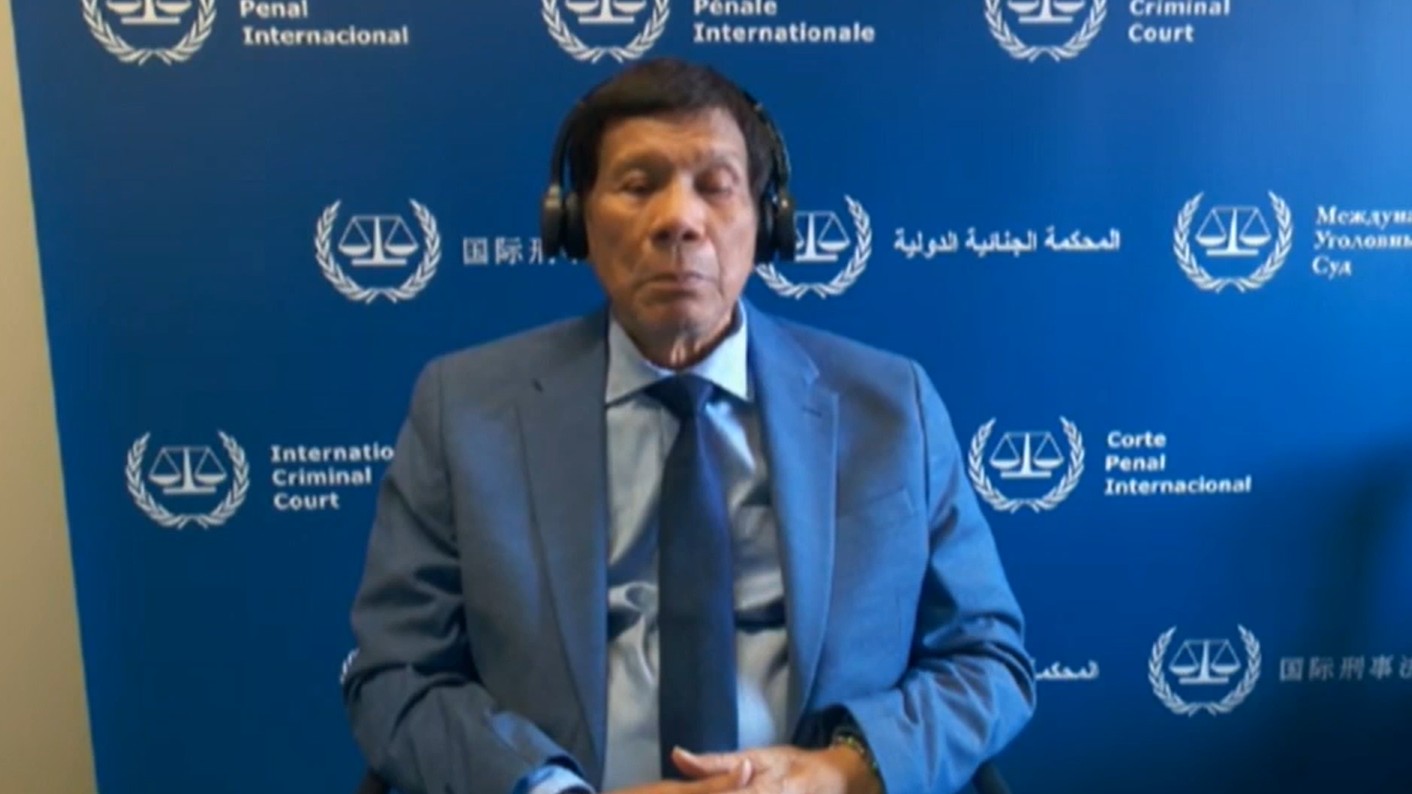
Former President Rodrigo Duterte has waived his right to be present during the reading of the judgment on his appeal regarding the International Criminal Court’s earlier rejection of his request for interim release.
The ICC Appeals Chamber is scheduled to read its ruling on Duterte’s appeal in open court on Friday, November 28 at 10:30 a.m.
According to a notification dated November 27 filed by Duterte’s legal counsel, the defense placed on record Duterte’s “signed waiver of his right to be present” during the reading of the judgment on the defense appeal in open court.
“I, Rodrigo Roa Duterte, respectfully waive my right to appear before the Appeals Chamber on 28 November 2025 at 10:30 and, consequently, instruct my lawyers to hear the judgment that will be rendered on my appeal against Pre-Trial Chamber I’s decision on interim release – ICC-01/21-01/25-282,” the document stated.

The 80-year-old former President will be represented in court by his legal counsel.
On November 20, the ICC Appeals Chamber released its schedule for the delivery of its decision on Duterte’s appeal of the ICC Pre-Trial Chamber I’s rejection of his request for interim release.
Duterte is facing charges of crimes against humanity for murder and attempted murder before the ICC in connection with his war on illegal drugs.
The ICC said the reading of the ruling will be available online.
On October 14, an appeal was lodged stating that the ICC Pre-Trial Chamber I erred in finding that the former President posed a risk, in rejecting state guarantees, and in failing to take into account humanitarian considerations.
The ICC Pre-Trial Chamber I denied Duterte’s bid for interim release as it found his continued detention necessary, noting that Duterte’s family not only physically resisted Duterte’s arrest but demanded that he be brought back to the Philippines.
“The foregoing illustrates Mr. Duterte’s rejection of the proceedings against him before the Court, and the will of his close family to help him elude detention and prosecution,” the tribunal said.
It added that Duterte appears to have the “necessary political contacts” and benefits from a network of support in the country that may help him abscond.