The Loaf of the Poor: Between Rising Costs and Authority’s Silence
Bread in Libya is no longer just a basic food commodity; it has gradually turned into a mirror reflecting the depth of the economic and social imbalances the country is experiencing. The loaf, which for decades was a symbol of relative stability in the life of the Libyan citizen, is now besieged by rising production costs and the deterioration of the food supply system, at a time when the executive authority appears either unable or unwilling to intervene to save one of the most important pillars of food security.
Recent statements have once again highlighted a crisis that is worsening in silence, confirming that bakeries are still committed to the old price despite a significant increase in production costs, while warning that the continuation of this situation may eventually push bakery owners to raise the price of the loaf.
But behind these statements lies a much deeper crisis than just a rise in raw material prices; it is a crisis of economic management and the absence of a clear vision for food security in a country that possesses one of the largest oil reserves in Africa.

Silent Inflation Hits Life’s Essentials
Available figures point to notable increases in bread production costs: the price of flour has risen by 25 percent, yeast by 45 percent, while the prices of improvers and oil have increased by about 25 percent.
The biggest jump, however, was in packaging materials and bags, which rose by nearly 94 percent, an increase that clearly reflects the extent of the disruption that has affected supply chains and supporting services in the Libyan market.
Prices for butter also rose by 44 percent and sugar by 35 percent, materials that are used directly or indirectly in bakery production.
On the surface, these increases do not appear to be mere economic numbers; in reality, they represent enormous pressure on the bakery sector, which operates in an unstable economic environment where prices change suddenly with every international crisis or market disturbance.
While costs are rising at this pace, the price of the loaf remains at its old level, meaning bakery owners are bearing a large part of the losses to maintain market stability.
Bakeries: Between Social Commitment and Accumulated Losses
Bakery owners confirm that their continued commitment to the old price is no longer an economic decision as much as it is a social stance.
Bakers understand that any increase in the price of the loaf will directly impact citizens’ lives, especially low-income groups who depend almost entirely on bread as a staple food.
However, this commitment carries significant risks for the continuity of the profession itself.
Rising labor costs have increased pressure on bakeries, with wages rising by about 25 percent, while monthly labor and cleaning worker wages jumped by 40 percent.
For bakery owners, these numbers simply mean that the profit margin is gradually eroding and may, in many cases, turn into a direct loss.
A bakery owner in Tripoli says:
“We are bearing the losses because we know the citizen cannot bear any increase, but the question is: how long can we continue?”
The Libyan Citizen: Bread as the Last Line of Defense for Livelihood
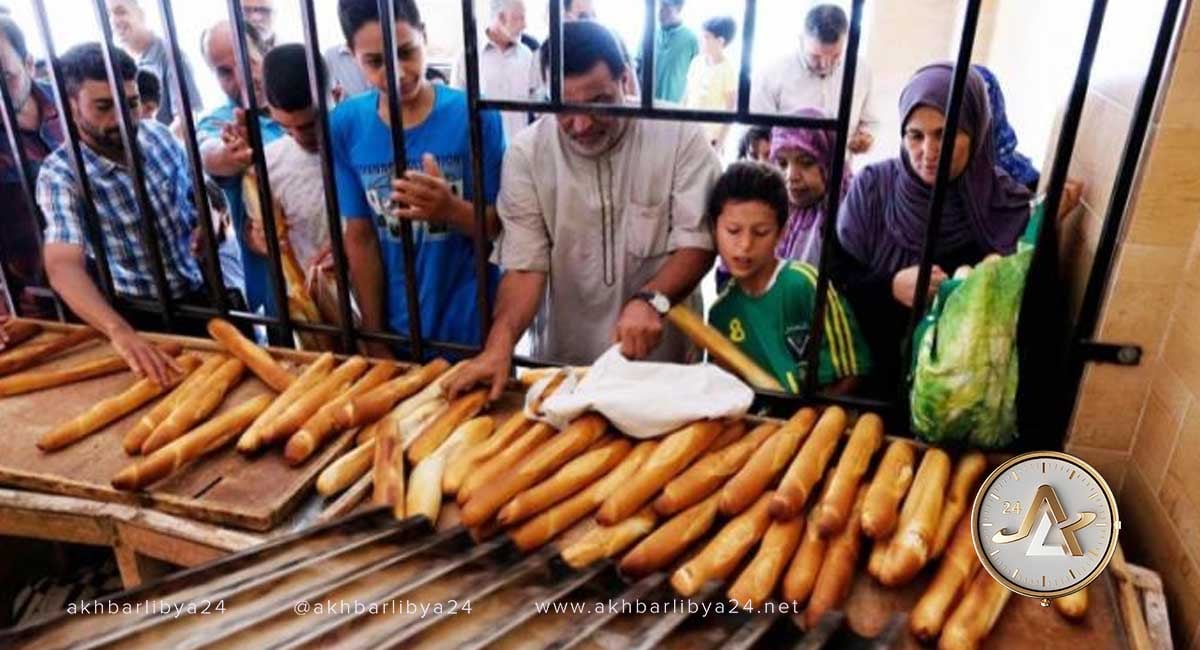
In popular neighborhoods in Tripoli, Benghazi, and Misrata, the bread crisis appears more evident than any economic report.
The citizen, who faces rising prices for meat, vegetables, and fuel, no longer has many food choices.
A government employee says of the crisis:
“My salary is not enough for half the month, and bread is the only thing we can rely on daily.”
A mother of three in the suburbs of Tripoli says:
“If the price of bread