
Recent Comments
-
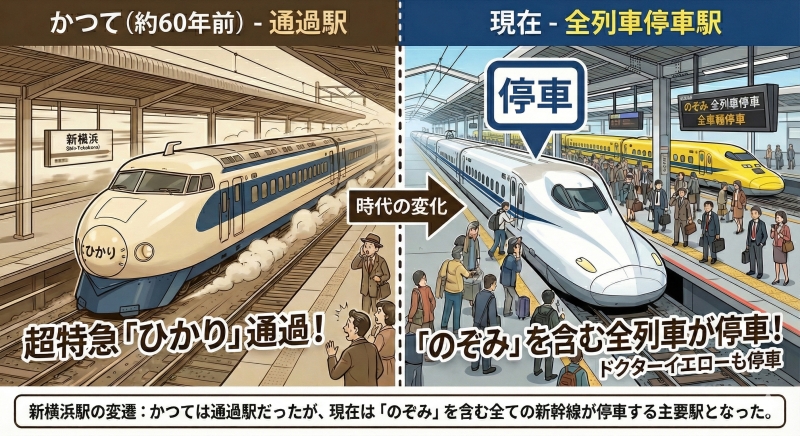
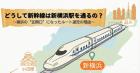
I posted the other day. According to the JR announcement article from December 12, starting March 14 next year, the ‘Nozomi’ stopping at Shin-Yokohama Station…
-
I recently experienced the kind of history described here. In the past, with the timetable (the National Railways timetable, and after privatization, the JTB and Kōsai…)
-
In the old days (around 1964 to 1965), from Shin-Yokohama Station to Shin-Osaka Station, it took about 5 hours with one ‘Kodama’ train per hour…
Nozomi
“Nozomi” is not a widely recognized specific place or cultural site. However, it is a common Japanese word meaning “hope” or “wish,” and it is famously the name of the **Shinkansen (bullet train) service** connecting Tokyo with Osaka and Hakata. Introduced in 1992, the Nozomi is the fastest train category on the Tokaido and Sanyo Shinkansen lines, representing Japan’s post-war technological advancement and economic hope.
Shin-Yokohama Station
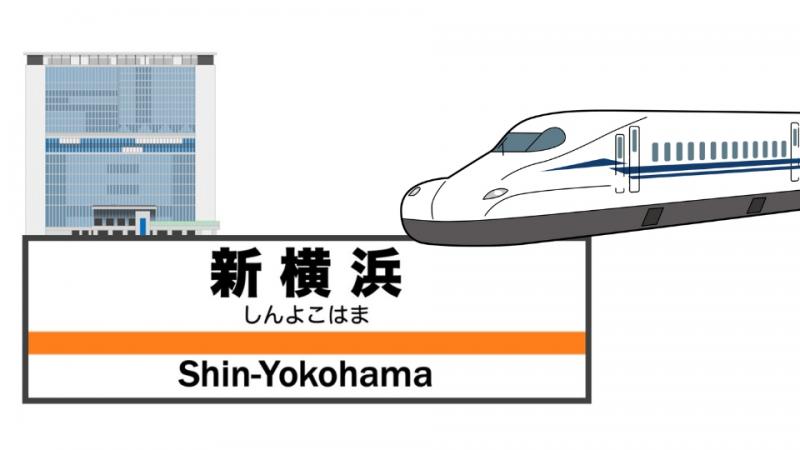
Shin-Yokohama Station is a major railway hub in Yokohama, Japan, which opened in 1964 to serve the new Tōkaidō Shinkansen (bullet train) line. It was constructed primarily as a through-station for high-speed rail, helping to connect Tokyo with western Japan, and spurred the development of the surrounding commercial and business district.
Tokaido Shinkansen
The Tokaido Shinkansen, which opened in 1964 just before the Tokyo Olympics, is Japan’s first and the world’s original high-speed railway line. It connects Tokyo and Osaka, revolutionizing domestic travel with its speed, safety, and punctuality, and became a powerful symbol of Japan’s post-war economic recovery and technological advancement.
JR Central
JR Central, officially Central Japan Railway Company, is one of Japan’s major railway operators, formed in 1987 after the privatization and breakup of the Japanese National Railways. It is most famous for owning and operating the Tokaido Shinkansen (bullet train) line between Tokyo and Osaka, the world’s first and busiest high-speed rail line which opened in 1964. The company plays a vital role in Japan’s transportation infrastructure and is also known for its advanced technology, including the development of the next-generation maglev train, the Chuo Shinkansen.
National Railways
The National Railways, often referring to a country’s state-owned rail network, have historically been vital to industrial development and national unity. For example, in many nations like the UK or Japan, their establishment in the 19th century revolutionized transport, connected regions, and fueled economic growth. Today, these systems often symbolize both historical engineering heritage and modern public infrastructure.
JTB
“JTB” is most commonly recognized as **JTB Corporation**, Japan’s largest and oldest travel company. Founded in 1912 as the Japan Tourist Bureau, it initially focused on promoting inbound tourism and facilitating travel for foreign visitors. Today, it is a global travel services conglomerate, playing a foundational role in the development of Japan’s modern tourism industry.
Kōsai
“Kōsai” is a city located in Shizuoka Prefecture, Japan, on the western shore of Lake Hamana. Historically, the area was known for its fishing and salt production industries, and it developed significantly in the modern era with the establishment of automotive and musical instrument manufacturing plants. Today, it is also recognized for its scenic lakeside views and hot spring resorts.
Shin-Osaka Station
Shin-Osaka Station is the primary shinkansen (bullet train) terminal in Osaka, Japan, opening in 1964 to coincide with the launch of the Tokaido Shinkansen line. It serves as a major transportation hub connecting western Japan to Tokyo and other regions, with conventional rail and subway lines integrated into the complex. While primarily a modern transit center, its history is tied to Japan’s post-war economic growth and the development of its iconic high-speed rail network.