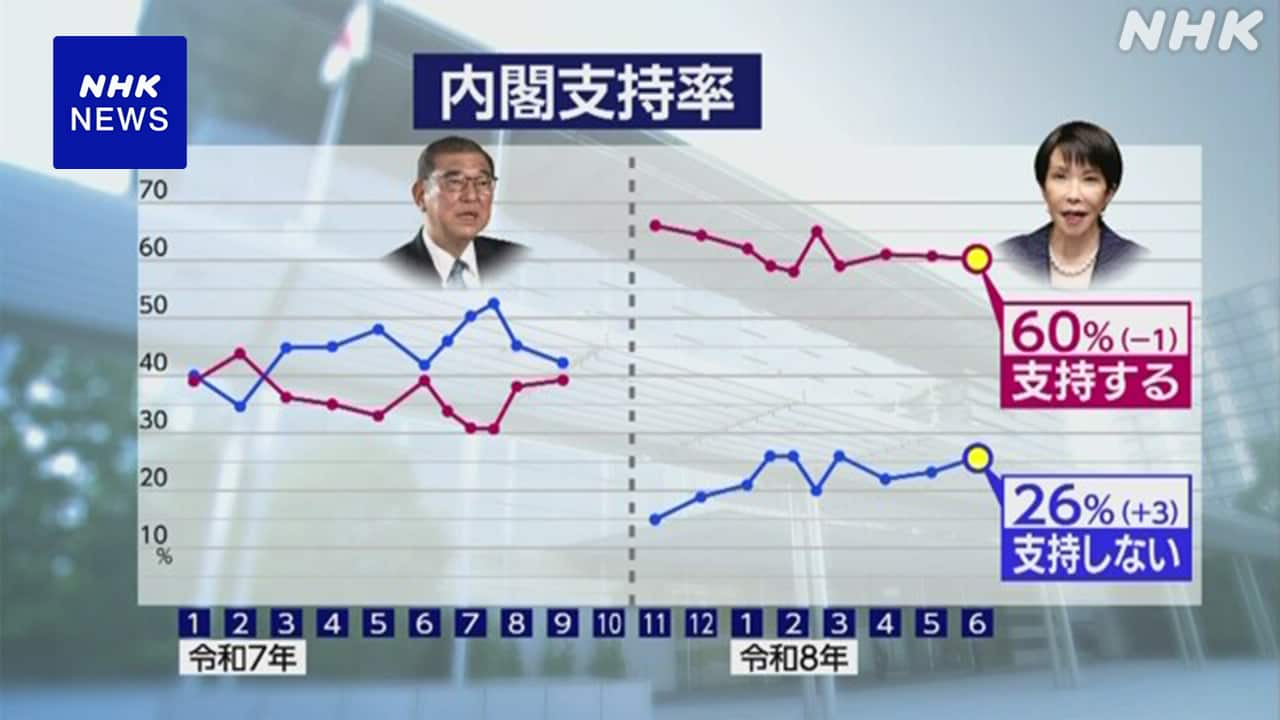
According to a public opinion poll by NHK, the percentage of people who said they “support” the Takai Cabinet fell by 1 point from the May survey to 60%, while those who said they “do not support” rose by 3 points to 26%.
Also read
Takai Cabinet
The Takai Cabinet, located in Japan, is a historic wooden cabinet known for its intricate craftsmanship and use in traditional Japanese interiors. Its history dates back to the Edo period, when it was often used by wealthy merchants and samurai to store important documents, tea utensils, or ceremonial items. The cabinet reflects the refined aesthetics and functional design of Japanese furniture from that era.
Takai Cabinet
The Takai Cabinet is a historical furniture piece from Japan, originally crafted in the late Edo period (1603–1868). It is a type of tansu, or traditional Japanese cabinet, known for its intricate woodwork and iron fittings, often used to store valuable items. The cabinet reflects the craftsmanship and aesthetic values of its era, serving as a cultural artifact that showcases Japan’s rich history of woodworking and design.
Japan
Japan is an island nation in East Asia known for its rich cultural heritage, blending ancient traditions with modern innovation. Its history spans thousands of years, from early feudal eras ruled by samurai and shoguns to its rapid modernization during the Meiji Restoration in the late 19th century. Today, Japan is famous for its temples, shrines, tea ceremonies, and iconic cities like Tokyo and Kyoto.
Edo period
The Edo period (1603–1868) was a time of peace, stability, and cultural flourishing in Japan under the rule of the Tokugawa shogunate. During this era, the country was largely isolated from the outside world, allowing unique art forms like ukiyo-e woodblock prints and kabuki theater to thrive. The period ended with the Meiji Restoration, which restored imperial rule and opened Japan to modernization.