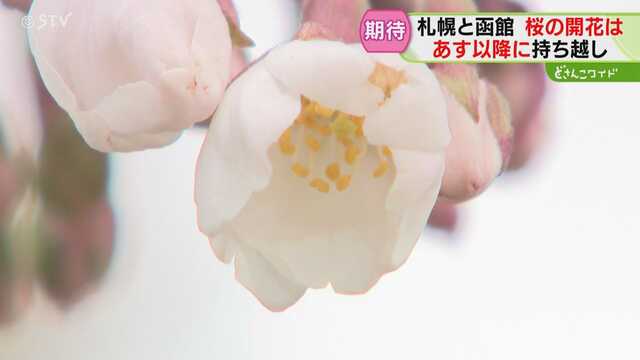
The cherry blossom front has reached Hokkaido, and daily anticipation for blooming in Sapporo and Hakodate continues, but the official announcement of flowering has been postponed until after April 18th.
At the Sapporo District Meteorological Observatory in Chuo Ward, Sapporo. An announcement on the 17th was anticipated, but…
“In this morning’s observation, there was only one flower, but the afternoon observation showed two. As the standard of 5 to 6 flowers for declaring blooming has not been met, it is not yet considered in bloom.”
The announcement of flowering has been postponed until the 18th or later.
In Hakodate City as well, flowers on the verge of opening were seen, but an announcement for the 17th was not made.
“The flowers have not yet bloomed. They might bloom as early as this weekend.”
Meanwhile…
“This is Obihiro. While the official declaration hasn’t been made yet, here they are in full bloom!”
Vibrant double-flowered cherry blossoms, blooming beautifully a step ahead. People coming to take photos could also be seen.
“They’ve bloomed so beautifully. Other places still only have buds.”
Temperatures on the 18th are expected to rise to 18°C in Sapporo and 16°C in Hakodate, and cherry blossom observations are scheduled to continue.
Hokkaido
Hokkaido is Japan’s northernmost and second-largest island, historically the homeland of the indigenous Ainu people. Its modern development accelerated in the late 19th century during the Meiji era, when the Japanese government officially established it as a prefecture and promoted large-scale settlement and industrialization. Today, it is renowned for its vast natural landscapes, major cities like Sapporo, and distinct seasonal attractions.
Sapporo
Sapporo is the capital city of Hokkaido, Japan, founded officially in 1868 during the Meiji era as part of a planned development of Japan’s northern frontier. It is now internationally famous for hosting the 1972 Winter Olympics and its annual Sapporo Snow Festival, which began in 1950. The city’s modern grid layout and beer-brewing history, marked by the founding of the Sapporo Brewery in 1876, reflect its origins as a planned settlement influenced by Western ideas.
Hakodate
Hakodate is a historic port city located on the southern tip of Hokkaido, Japan. It was one of the first Japanese ports to open to international trade in 1854 following the Convention of Kanagawa, which led to the establishment of foreign settlements and a unique blend of Western and Japanese architecture. Today, it is famous for its spectacular night view from Mount Hakodate, its star-shaped Goryokaku Fort, and its well-preserved Motomachi district.
Sapporo District Meteorological Observatory
The Sapporo District Meteorological Observatory, established in 1881, is Japan’s third oldest weather station and a symbol of modern meteorological science in Hokkaido. Originally built in a Western-style wooden structure, it played a crucial role in the agricultural and industrial development of the region by providing essential weather data. Today, the preserved historic building serves as a museum, while modern forecasting operations have moved to a new facility.
Chuo Ward
<div class="text-gray
Hokkaido
Hokkaido is Japan’s northernmost and second-largest island, historically inhabited by the indigenous Ainu people before significant Japanese settlement began in the late 19th century during the Meiji period. Today, it is renowned for its vast natural landscapes, major cities like Sapporo, and distinct seasonal attractions, blending its unique cultural heritage with modern development.
Sapporo
Sapporo is the capital city of Hokkaido, Japan, founded officially in 1868 during the Meiji era as part of a planned development of Japan’s northern frontier. It is now internationally famous for hosting the 1972 Winter Olympics and its annual Sapporo Snow Festival, which began in 1950. The city’s modern grid layout and its historical beer brewing industry, starting with the Sapporo Beer Brewery in 1876, reflect its unique blend of Western-inspired planning and Japanese culture.
Hakodate
Hakodate is a historic port city located on the southern tip of Hokkaido, Japan. It was one of the first Japanese ports to open to international trade in 1854 following the Convention of Kanagawa, which led to the establishment of foreign settlements and a unique blend of Western and Japanese architecture. Today, it is famous for its star-shaped Goryōkaku Fort, its spectacular night view from Mount Hakodate, and its vibrant morning seafood market.
Sapporo District Meteorological Observatory
The Sapporo District Meteorological Observatory, established in 1882, is Japan’s second oldest weather station and a symbol of modern meteorology in Hokkaido. Its iconic white, neo-baroque brick building, completed in 1939, is a Registered Tangible Cultural Property. It continues to operate as an active weather station while serving as a historical landmark in the city.
Chuo Ward
Chuo Ward is one of Tokyo’s 23 special wards, located at the heart of the city and home to major financial and commercial districts like Ginza and Nihonbashi. Historically, much of the area was reclaimed from Tokyo Bay during the Edo Period (1603-1868), and it later became the center of Japan’s modernization following the Meiji Restoration. Today, it is a vibrant mix of upscale shopping, historic temples, and towering corporate headquarters.
Obihiro
Obihiro is a city located in the Tokachi region of eastern Hokkaido, Japan, primarily known as a modern agricultural and commercial center. It was officially founded in 1933, but its planned development began in the late 19th century as part of Hokkaido’s systematic colonization during the Meiji era. Today, it serves as a gateway to the surrounding Tokachi plains and is famous for its local cuisine, including *butadon* (pork rice bowl), and its annual winter festival.
Mount Hakodate
Mount Hakodate is a 334-meter volcanic mountain located on the southern tip of Hokkaido, Japan, famous for its spectacular panoramic night view of Hakodate city. Historically, it was the site of the Goryōkaku star fort during the Boshin War (1868-1869) and later became one of Japan’s first international ports after the country opened to foreign trade. Today, it is a popular tourist destination accessible by ropeway, road, or hiking trails.
Goryokaku Fort
Goryokaku Fort is a star-shaped, Western-style citadel built in Hakodate, Japan, in the final years of the Edo period (completed in 1864) to defend against potential foreign threats. It is most famous as the site of the last battle of the Boshin War (1868-1869), where the pro-Tokugawa shogunate forces made their final stand against the new Imperial army. Today, the fort’s grounds are a public park famous for their cherry blossoms, and the restored central citadel serves as a museum.