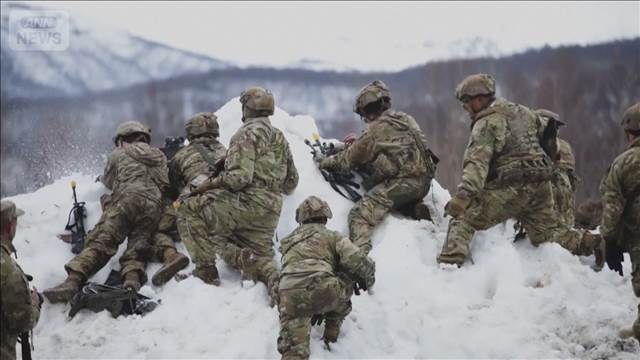
As the conflict between the United States and Iran prolongs, reports indicate the U.S. Department of Defense is considering deploying up to an additional 10,000 ground troops to the Middle East region. It was reported that, amid peace negotiations, President Trump is seeking to secure more military options, leading the Pentagon to review the potential dispatch of these additional forces. This contingent is expected to join approximately 5,000 Marines and several thousand troops from the 82nd Airborne Division who have already been ordered to deploy to the region. While the specific deployment locations have not been disclosed, it is highly likely they will be positioned within striking range of Kharg Island, a crucial oil export hub for Iran.
United States
The United States is a federal republic founded in 1776 after declaring independence from Great Britain, with its modern government established by the Constitution in 1789. Culturally, it is a vast and diverse nation shaped by waves of immigration, its history of westward expansion, and significant global influence in areas like technology, entertainment, and politics. Key historical sites range from colonial landmarks like Independence Hall to monuments of its civil rights movement and expansive national parks.
Iran
Iran, historically known as Persia, is a country in Western Asia with one of the world’s oldest continuous major civilizations, dating back to the Elamite kingdoms of the 4th millennium BCE. It is home to numerous UNESCO World Heritage sites, including the ancient ruins of Persepolis, the capital of the Achaemenid Empire founded in the 6th century BCE. Today, Iran’s rich cultural heritage is reflected in its architecture, poetry, and traditions, shaped by its pivotal role along the Silk Road and its successive empires.
Middle East
The term “Middle East” refers to a transcontinental region centered on Western Asia and parts of North Africa, historically known as the “Cradle of Civilization” for the rise of ancient Mesopotamian, Egyptian, and Persian empires. It is the birthplace of major world religions—Judaism, Christianity, and Islam—and has a complex history shaped by trade routes, caliphates, and, more recently, the discovery of oil and modern geopolitical conflicts. Today, it encompasses numerous countries with diverse cultures, languages, and significant global historical and economic influence.
Pentagon
The Pentagon is the headquarters of the United States Department of Defense, located in Arlington, Virginia. Constructed during World War II and completed in 1943, it was built rapidly to consolidate the nation’s military offices. It remains one of the world’s largest office buildings and a global symbol of the U.S. military.
82nd Airborne Division
The 82nd Airborne Division is a highly elite airborne infantry division of the United States Army, activated in 1917 during World War I and earning the nickname “All-Americans” from its members hailing from all 48 states at the time. It gained legendary status during World War II for its parachute assaults into Normandy on D-Day and later into the Netherlands during Operation Market Garden. Today, based at Fort Liberty (formerly Fort Bragg), North Carolina, it remains the U.S. military’s strategic rapid-response force, ready to deploy anywhere in the world within 18 hours.
Kharg Island
Kharg Island is a small, strategically located island in the Persian Gulf, historically used as a trading and fishing outpost. It gained major significance in the 20th century as Iran’s primary crude oil export terminal, with its facilities heavily damaged during the Iran-Iraq War in the 1980s. Today, it remains a vital hub for Iran’s petroleum industry.