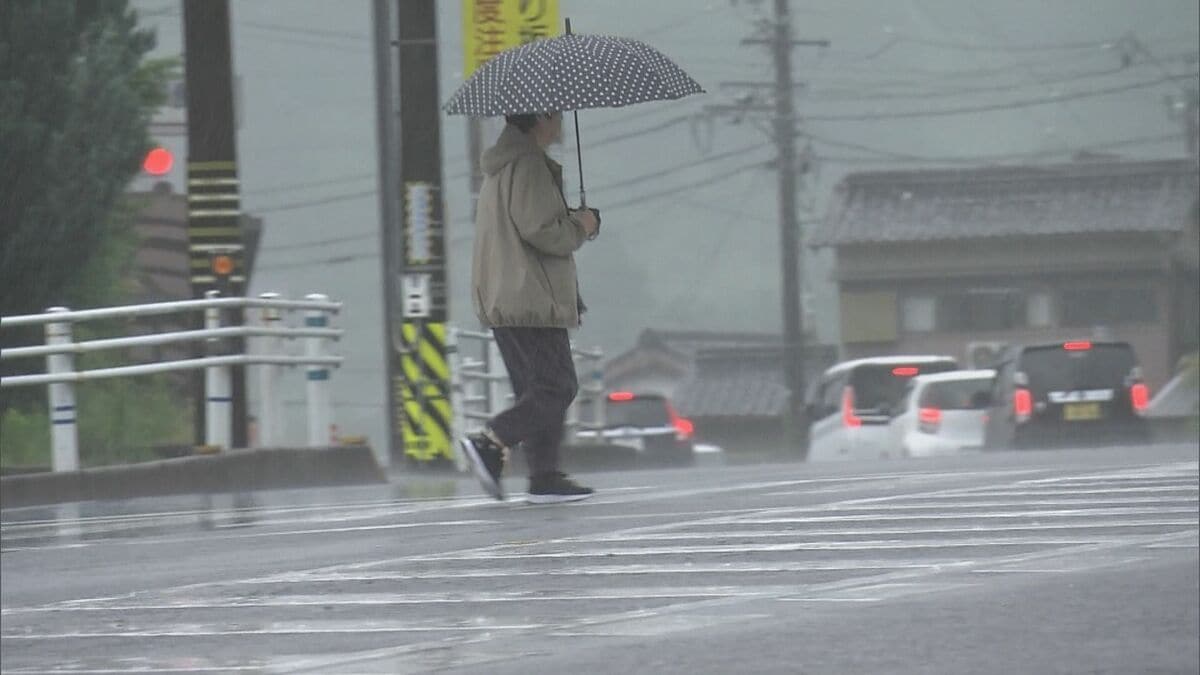
The Nagoya Local Meteorological Office announced on the 7th that the Tokai region has likely entered the rainy season. This is one day later than the average year.
In Owase City, Mie Prefecture, rain has been falling intermittently since early morning on the 7th.
The Tokai region is expected to have mostly cloudy or rainy weather over the next week, and the Nagoya Local Meteorological Office announced on the 7th that the region has likely entered the rainy season.
This is one day later than the average year and 21 days later than last year.
Right at the start of the rainy season, there is a risk of heavy rain in Mie Prefecture. The expected 24-hour rainfall by 6 a.m. on the 8th is 120 millimeters in the north-central part and 200 millimeters in the southern part.
In areas that experienced heavy rain from Typhoon No. 6, the risk of landslides may increase, and the meteorological office is urging caution and vigilance.
Nagoya Local Meteorological Office
The Nagoya Local Meteorological Office, established in the late 19th century, is a key facility for weather observation and forecasting in the Chubu region of Japan. It has played a crucial role in monitoring typhoons, earthquakes, and other natural disasters, contributing to public safety and disaster preparedness. The office also preserves historical meteorological data, reflecting the evolution of weather science in the area.
Tokai region
The Tokai region is a major industrial and cultural area in central Japan, encompassing Aichi, Gifu, Mie, and Shizuoka prefectures. Historically, it was a key route along the ancient Tōkaidō road connecting Tokyo (Edo) to Kyoto, fostering trade and cultural exchange. Today, it is known for cities like Nagoya, Toyota’s automotive industry, and landmarks such as Ise Grand Shrine, reflecting its blend of historical significance and modern economic power.
Owase City
Owase City, located in Mie Prefecture, Japan, is a coastal city known for its scenic ria coastline and deep, natural harbors. Historically, it thrived as a key port for the timber trade during the Edo period, with its lumber being highly valued for construction. Today, it is also recognized for its vibrant traditional festival, the Owase Matsuri, which features spectacular boat parades and has been celebrated for over 400 years.
Mie Prefecture
Mie Prefecture, located on Japan’s Kii Peninsula, is historically significant as the home of the sacred Ise Grand Shrine, one of Shinto’s most important and ancient sites, which has been rebuilt every 20 years for over a millennium. The region was also a center of power during the feudal era, with the city of Iga being famous for its ninja tradition. Today, Mie is known for its natural beauty, including the scenic Shima Peninsula, and for producing high-quality pearls and Matsusaka beef.