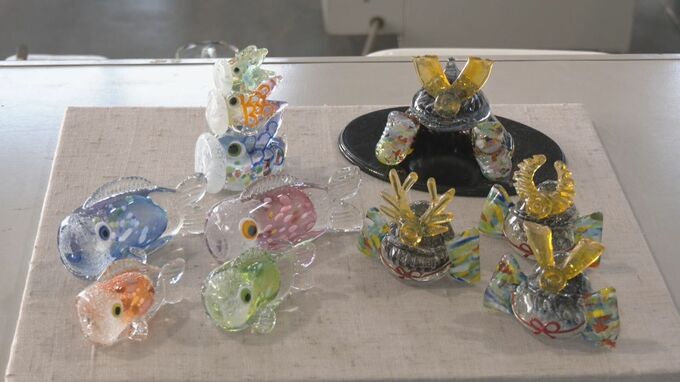
At a workshop in Okazaki City, Aichi Prefecture, the production of Children’s Day ornaments using recycled glass is in full swing.
“Okazaki Glass Studio Aoi” in Okazaki City creates seasonal works using glass made from recycled bottles collected as resource waste, and now the production of items related to Children’s Day is at its peak.
Okazaki City
Okazaki City, located in Aichi Prefecture, Japan, is historically significant as the birthplace of Tokugawa Ieyasu, the founder and first shogun of the Tokugawa shogunate. The city is home to Okazaki Castle, a reconstructed castle that played a key role during the Sengoku period and now serves as a museum. Today, Okazaki is also known for its production of Hatcho miso, a traditional fermented soybean paste that has been made in the area for centuries.
Aichi Prefecture
Aichi Prefecture, located in central Japan, is historically significant as the home of the samurai warlord Tokugawa Ieyasu, who unified Japan and founded the Edo shogunate. The region flourished as a cultural and industrial hub, with Nagoya Castle serving as a key landmark from the feudal era. Today, Aichi is known for its advanced manufacturing, including Toyota’s global headquarters, while preserving traditional crafts like pottery and samurai heritage.
Children’s Day
Children’s Day is a global observance dedicated to celebrating and honoring the well-being, rights, and happiness of children. Its history traces back to the early 20th century, with the first official celebration in 1925 during the World Conference on Child Welfare in Geneva, and it is now observed on various dates worldwide, such as June 1st in many countries. The day often features special events, activities, and gifts aimed at promoting children’s joy and highlighting the importance of their care and education.
Okazaki Glass Studio Aoi
Okazaki Glass Studio Aoi is a traditional glassblowing studio located in Okazaki City, Aichi Prefecture, Japan, known for its handcrafted glassware and artistic workshops. The studio continues the region’s long-standing glassmaking tradition, which dates back to the late 19th century when local artisans began producing glassware using local sand. Visitors can observe skilled craftspeople at work and even participate in hands-on glassblowing experiences.