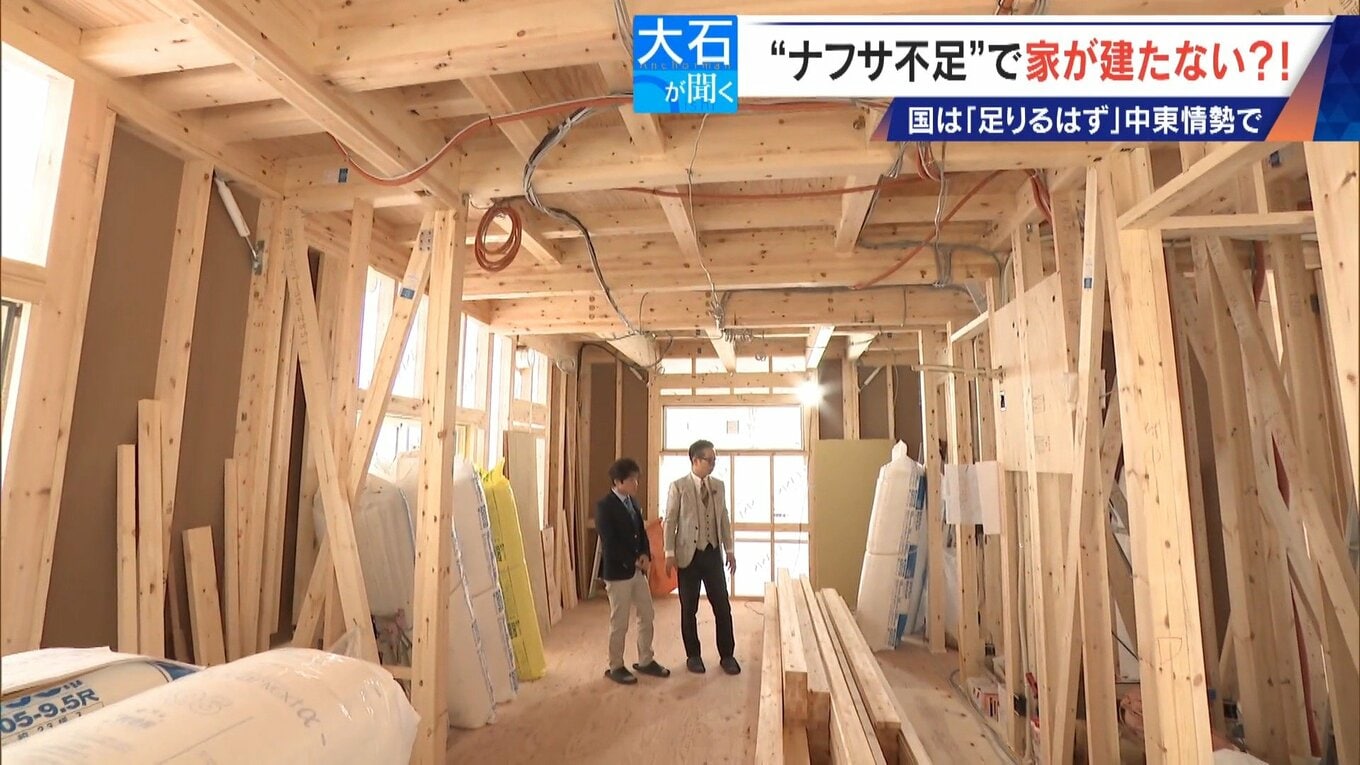
The “naphtha shock” occurring amid ongoing tensions in the Middle East. It is feared that housing construction may also come to a halt, highlighting once again the difficulties of a society dependent on oil.
Classis Home, a housing manufacturer headquartered in Nagoya. With the worsening situation in the Middle East leading to shortages of naphtha, a raw material for all kinds of petroleum-based products such as vinyl and plastics, the impact is now reaching the housing sector.
“For resin-based products, things like vinyl cloth and flooring materials (such as cushion floors) are also resin. We haven’t been told they are unavailable yet, but around mid-April, various manufacturers notified us of price increases of 20-30%, so we expect prices to rise from around mid-July.”
Sangetsu, a major trading company handling interior products, has announced that due to soaring raw material prices and rising manufacturing and logistics costs, it will raise prices on wallpaper and flooring materials by 18-30% starting with July orders.
Nagoya
Nagoya is a major industrial and cultural hub in Japan, with a history rooted in the feudal era as the seat of the powerful Owari branch of the Tokugawa clan. The city is famous for Nagoya Castle, originally built in 1612, which was largely destroyed during World War II but has been partially reconstructed. Today, it blends modern industry with historic sites like Atsuta Shrine, one of Shinto’s most important shrines.
Nagoya
Nagoya is a major industrial and cultural hub in central Japan, with its history deeply rooted in the feudal era as the site of Nagoya Castle, built in 1612 by the Tokugawa shogunate. The city flourished as a key post town on the Tokaido road and later became a center for manufacturing, notably ceramics and automobiles. Today, it blends historic landmarks like the castle with modern attractions, including the Nagoya City Science Museum and the Osu shopping district.
Nagoya Castle
Nagoya Castle, originally built in 1612 by the Tokugawa shogunate, served as a key military and political center in central Japan. The castle was heavily damaged in World War II air raids, but its iconic main keep was reconstructed in 1959 using modern materials. Today, it stands as a popular tourist attraction, renowned for its golden shachihoko (tiger-fish) ornaments and surrounding park.
Atsuta Shrine
Atsuta Shrine is one of Japan’s most important Shinto shrines, located in Nagoya. It is renowned for housing the sacred sword Kusanagi no Tsurugi, one of the three Imperial Regalia of Japan, which has been enshrined there since ancient times. The shrine’s history dates back over 1,900 years, and it has been a central site for imperial worship and cultural heritage, despite suffering damage during World War II and being subsequently reconstructed.