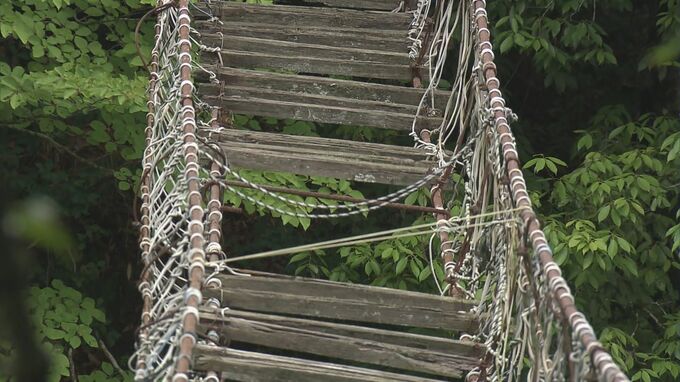
There are more than 30 bridges in Gifu Prefecture that have been deemed “dangerous,” known as so-called unauthorized bridges, whose origins are unknown.
“The bridge over the Neo River has a sign that says ‘dangerous,’ and looking at it, some of the planks underfoot have come off, making it extremely dangerous.”
These unauthorized bridges are deteriorating without maintenance and pose a risk of accidents, so the national government is urging local municipalities to identify the builders of these bridges.
Neo River
The Neo River is a fictional or lesser-known waterway, as no major river by this name exists in prominent geographical records. If referring to a specific cultural or historical site, additional context would be needed to provide an accurate summary. Please clarify the location or origin of the “Neo River” for a more precise description.
Gifu Prefecture
Gifu Prefecture, located in central Japan, is historically significant as the heart of the Sengoku period, where warlords like Oda Nobunaga and Tokugawa Ieyasu once vied for power. It is home to iconic sites such as the restored Gifu Castle, perched atop Mount Kinka, and the UNESCO World Heritage site of Shirakawa-go, known for its traditional gassho-zukuri farmhouses. Today, Gifu is celebrated for its scenic beauty, traditional crafts like Mino-washi paper, and cultural events such as cormorant fishing on the Nagara River.
Neo River
The Neo River is a fictional or lesser-known river, often associated with speculative or fantasy contexts, and does not have a documented historical or cultural significance in real-world geography. Without further details, it cannot be accurately described as a specific place or cultural site. If you are referring to a specific work of fiction or a local name, please provide additional context for a more precise summary.
Gifu Prefecture
Gifu Prefecture, located in central Japan’s Chubu region, is historically significant as a crossroads of ancient trade routes and a key site during the Sengoku period. It is home to the iconic Gifu Castle, originally built by the warlord Saitō Dōsan and later expanded by Oda Nobunaga, who used it as a base for unifying Japan. Today, the prefecture is famous for its traditional crafts, scenic mountains, and the historic town of Takayama, which preserves Edo-period architecture.
Gifu Castle
Gifu Castle, originally built by the Saito clan in the 13th century, is a historic mountaintop fortress in Gifu Prefecture, Japan. It gained prominence in the 16th century when the warlord Oda Nobunaga renovated it as his base for unifying Japan. Today, the reconstructed castle offers panoramic views and exhibits artifacts from Nobunaga’s era.
Mount Kinka
Mount Kinka is a 329-meter-tall mountain located in Gifu City, Japan, known for its striking, steep slopes and the iconic Gifu Castle perched atop its summit. Historically, the mountain served as a strategic defensive site, with the original castle built by the Saito clan in the 13th century and later expanded by Oda Nobunaga in the 16th century during Japan’s Warring States period. Today, it is a popular tourist destination offering panoramic views of the Nagara River and city below, accessible via a ropeway or hiking trails.
Shirakawa-go
Shirakawa-go is a historic village in Japan known for its traditional Gassho-zukuri farmhouses, which feature steep thatched roofs designed to withstand heavy snowfall. Designated a UNESCO World Heritage Site in 1995, the village dates back to the Edo period and reflects the region’s unique agricultural and communal lifestyle. Today, it remains a well-preserved cultural landmark, offering visitors a glimpse into rural Japanese life from centuries past.
Nagara River
The Nagara River, located in Gifu Prefecture, Japan, is famous for its centuries-old tradition of cormorant fishing (ukai), which dates back over 1,300 years. This scenic river flows from the Hida Mountains to Ise Bay, and its clear waters are also known for producing high-quality ayu (sweetfish). The river and its fishing practices are deeply tied to Japanese cultural heritage, with the cormorant fishing season being a major tourist attraction.