The 24th China Shanghai International Arts Festival Concludes
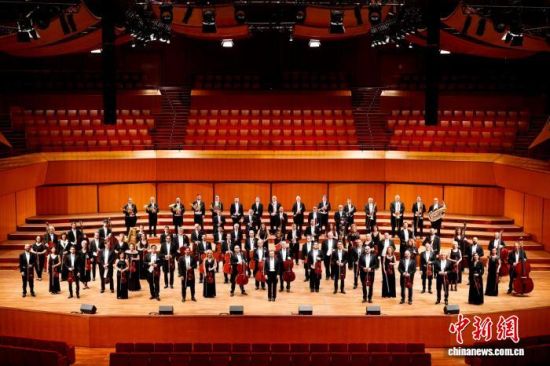
On the evening of November 27th, the Orchestra dell’Accademia Nazionale di Santa Cecilia, hailed as Italy’s “national symphonic treasure,” took the stage at the Shanghai Symphony Hall under the baton of renowned conductor Daniel Harding, performing the closing concert for the 24th China Shanghai International Arts Festival.
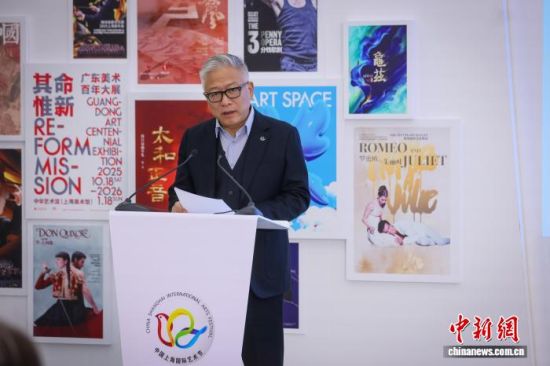
Over the past month, nearly 20,000 artists from over 80 countries and regions gathered in Shanghai, presenting more than 500 programs and over 1,400 performances and exhibitions. These events attracted a total of 14.4374 million online and offline attendees, weaving a multi-dimensional, rich, and tangible map of world art.
The 55 main-stage productions, comprising 132 performances, generated nearly 66 million yuan in ticket sales, with the average per-show revenue increasing by 15,700 yuan compared to the previous edition. Eleven international productions, including the Bavarian State Opera’s classic “The Flying Dutchman” and the Stuttgart Ballet’s signature “Romeo and Juliet,” made Shanghai their only stop in China, with many shows selling out immediately upon ticket release.
Simultaneously, the “Art Sky” public benefit program brought 118 performances from 38 countries and regions to Shanghai’s landmarks, commercial districts, waterfronts, and green spaces, creating a “theater without walls.” Approximately 500 performing arts institutions and around 2,000 industry representatives, including members from the European Festivals Association, ISPA (International Society for the Performing Arts), Lincoln Center for the Performing Arts, and the China Association of Performing Arts, gathered for the International Performing Arts Conference and dialogues. Nearly 600 cooperation intentions were reached within four days.
As “a grand gathering of art and a festival for the people,” this edition of the festival also used performances as an artistic link and ticket stubs as a consumption link. It collaborated with nearly 300 merchants across 43 commercial complexes in Shanghai to launch an “Art Life Guide,” creating a one-stop consumption experience integrating “art appreciation with dining, accommodation, transportation, tourism, shopping, and entertainment.” This comprehensively drove consumption exceeding 4.425 billion yuan, a 10.2% increase from the previous festival.
It was stated that while this edition of the arts festival has concluded, the brilliance of art never fades. “The festival will carry the expectations of the international performing arts industry, using art as the vessel and innovation as the sail, to contribute solid Chinese strength to the prosperity of global performing arts.”
Orchestra dell’Accademia Nazionale di Santa Cecilia
The Orchestra dell’Accademia Nazionale di Santa Cecilia is one of Italy’s oldest and most prestigious musical institutions, founded in Rome in 1908. It evolved from the even older Accademia Nazionale di Santa Cecilia, which received its first papal charter as a musicians’ guild in 1585. Today, it is celebrated worldwide for its exceptional performances and recordings under renowned conductors.
Shanghai Symphony Hall
The Shanghai Symphony Hall, opened in 2014, is the permanent home of the Shanghai Symphony Orchestra, which was founded in 1879 as the first orchestra in Asia. Designed by Japanese architect Arata Isozaki with renowned acoustician Yasuhisa Toyota, this modern concert hall was built to provide world-class acoustics and has become a premier venue for classical music in China.
China Shanghai International Arts Festival
The China Shanghai International Arts Festival (CSIAF), launched in 1999, is a major annual government-sponsored event showcasing world-class performances in theater, music, and dance. It serves as a premier platform for cultural exchange, featuring both renowned international artists and outstanding Chinese productions. The festival aims to elevate Shanghai’s status as a global cultural capital while making high arts accessible to the public.
Bavarian State Opera
The Bavarian State Opera, based in Munich’s National Theatre, is one of Germany’s most prestigious and historic opera companies, with origins dating back to 1653. It gained international renown in the 19th and 20th centuries under influential conductors like Richard Strauss and has continued to be a leading institution for opera and ballet, known for its ambitious repertoire and high artistic standards.
Stuttgart Ballet
The Stuttgart Ballet is a world-renowned German ballet company based in Stuttgart, founded in 1609, making it one of the oldest and most significant ballet troupes in Europe. It achieved international fame in the 1960s and 70s under the direction of John Cranko, who developed a distinctive dramatic style and cultivated major stars. Today, it remains a leading force in classical and contemporary ballet, celebrated for its artistic innovation and technical excellence.
European Festivals Association
The European Festivals Association (EFA) is a network founded in 1952 to unite and promote music, dance, theatre, and multidisciplinary festivals across Europe. Historically, it was established in Geneva by renowned festival directors to foster cultural exchange and artistic excellence in the post-war period. Today, it represents hundreds of festivals, advocating for the arts and facilitating collaboration within the cultural sector.
Lincoln Center for the Performing Arts
The Lincoln Center for the Performing Arts is a 16-acre performing arts complex on Manhattan’s Upper West Side, which opened in stages beginning in 1962. It was a major urban renewal project that transformed a blighted neighborhood into a world-renowned cultural hub, housing iconic venues like the Metropolitan Opera, New York Philharmonic, and New York City Ballet.
China Association of Performing Arts
The China Association of Performing Arts (CAPA) is a national industry organization established in 1987 to oversee and promote China’s performing arts sector. It operates under the supervision of the Ministry of Culture and Tourism, serving as a bridge between the government, institutions, and artists to regulate the market and foster development. Its history is tied to the reform and professionalization of China’s cultural industries following the country’s period of reform and opening-up.