TANGERANG — The Tangerang City Cultural Festival 2025 successfully captivated the attention of tens of thousands of visitors. The annual event, opened on Friday at the Tangerang Parking Lot, carried the theme Benteng Culture Festival. The event took place from December 5 to 7, 2025.
Thousands of cultural activists and residents poured in, crowding the opening ceremony. The Mayor of Tangerang emphasized in his speech that this festival is not merely an arts celebration, but also a tangible manifestation of a shared commitment to preserving the most valuable cultural heritage: the spirit of mutual cooperation.
“Through this festival, we safeguard the values of togetherness, mutual assistance, and social concern. This attitude inherited from our ancestors has become our community’s identity amidst modern life while remaining relevant,” he stated.
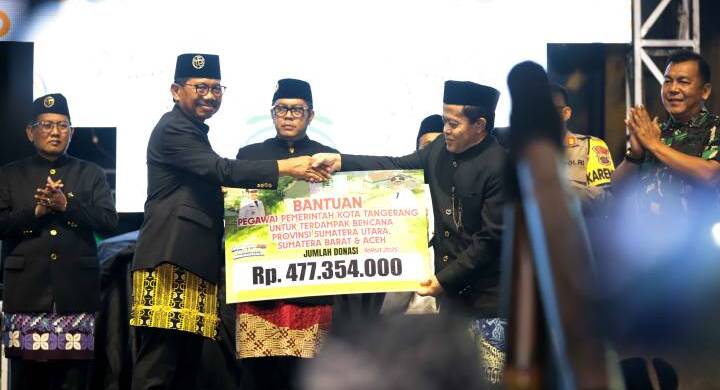
He noted that this is the strength of Tangerang City as a heterogeneous city that grows through the solidarity of its citizens. In line with these values of mutual cooperation, he expressed deep concern over the floods and landslides that hit the Sumatra and Aceh regions.
The Tangerang City Government has organized a humanitarian fundraising drive and successfully collected IDR 477 million to assist the victims. “As part of this festival series, we have also opened donation posts so all visitors can participate in expressing their care,” he added.
The Spirit of Humanitarian Solidarity
Meanwhile, the Deputy Mayor of Tangerang also appreciated the spirit of humanitarian solidarity and the ongoing efforts in cultural preservation, which continue to develop and serve as a platform for collaboration and innovation in Tangerang City.
“Enjoy the artistic and cultural offerings of Tangerang City. We should be proud of the cultural heritage that always brings honor to Tangerang City on national and international stages,” he said.
This year’s Cultural Festival not only showcased the diverse arts and culture typical of Tangerang City but also featured arts from other regions such as South Tangerang City, Cilegon City, and Ponorogo. The opening festivities were further enlivened by a performance from the national musician group D’Masiv.
Over the three days of the event, the festival successfully attracted 24,150 visitors who were treated to various artistic and cultural attractions typical of Tangerang City, as well as performances by well-known bands, including Indonesia’s top band, D’Masiv.
The Deputy Mayor of Tangerang emphasized at the closing ceremony that the Benteng Culture Festival is not merely entertainment, but also a manifestation of love and pride for the nation’s cultural heritage.
A Celebration of Humanitarian Values
“The Benteng Culture Festival is also a celebration of humanitarian values. A place where we celebrate togetherness, mutual cooperation, diversity, and the spirit of mutual respect as one nation,” he explained.
It was stated that the Tangerang City Government is committed to continuously advancing regional treasures and culture. “This effort is important to strengthen cultural resilience while contributing to the development of Indonesian culture amidst world civilization. The values of mutual cooperation and solidarity are the soul we always preserve,” he said.
Regarding the success of organizing the largest cultural festival in Tangerang City, he expressed appreciation to all involved parties. These include the committee, artists, cultural figures, sponsors, the community, and all supporting elements.
“It is hoped that after this event concludes, the spirit of cultural preservation will continue to live within the community, strengthening pride in Tangerang City’s identity and inspiring more positive activities in the future,” he concluded.
Meanwhile, the Head of the Tangerang City Culture and Tourism Office reported that this festival not only served as a stage for cultural practitioners to connect but also acted as an economic driver for MSMEs (Micro, Small, and Medium Enterprises).
“During the three days of the event, the Tangerang City Cultural Festival generated MSME transactions totaling IDR 287,500,000. Furthermore, traders, business actors, and tenants in and around the Metropolis Town Square area also recorded a revenue increase of 30–50% compared to regular days,” he explained.