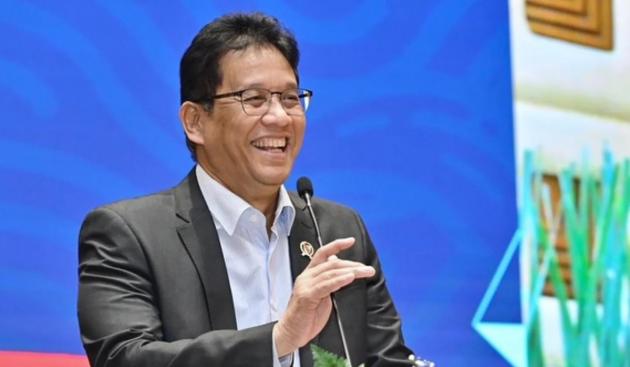
Finance Minister Purbaya Yudhi Sadewa has officially amended the regulations for village fund disbursement through Minister of Finance Regulation No. 81 of 2025.
This regulation took effect on Tuesday, November 25, 2025, and revises Minister of Finance Regulation No. 108/2024. A key provision mandates that village fund disbursement must be linked to the establishment of Red and White village cooperatives or sub-district cooperatives (KDMP/KKMP).
“To enhance the effectiveness of village fund distribution governance for the 2025 fiscal year, in line with the policy of the President of the Republic of Indonesia to support the establishment of Red and White village/sub-district cooperatives, it is necessary to establish a Minister of Finance Regulation amending Minister of Finance Regulation No. 108 of 2024,” states Minister of Finance Regulation 81/2025.
Under this new regulation, the village fund disbursement pattern remains divided into two stages.
The first stage amounts to 60 percent of the total village fund allocation and must be distributed by June at the latest.
The second stage remains at 40 percent and can commence in April.
The requirements for the first stage distribution remain unchanged. Villages must still establish their Village Budget (APBDes), submit a fund transfer authorization letter, and designate recipients of the Village Direct Cash Assistance (BLT Desa) if budgeted.
A significant change applies to the requirements for the second stage. Whereas the previous regulation only required villages to report the previous year’s fund absorption and output achievements, along with the first stage achievements, Minister of Finance Regulation 81/2025 now adds a new requirement under Paragraph 3, Article 24.
This additional requirement includes the deed of establishment for the KDMP/KKMP legal entity or proof of submission of cooperative formation documents to a notary, as well as a statement letter of commitment from the Village Budget to support the establishment of the cooperative.
This regulation also introduces new rules regarding the format of the statement letter through Article 29A, and provisions for the postponement of the second stage village fund disbursement through Article 29B.
The regulation explains that the second stage village funds will be postponed if the requirements are not fulfilled by September 17, 2025. This postponement applies to funds with both designated and non-designated usage.
Postponed funds can only be redistributed if the regent or mayor fulfills all requirements by the end of the year deadline.
If the requirements are still not met by the year’s end, the second stage village funds will not be distributed.
This budget can be reallocated to support government priorities or fiscal control policies established through a ministerial decree.
If the funds remain unused for any purpose by the end of the fiscal year, they will become remaining village funds in the State Treasury Account (RKUN) and will not be distributed in the following year.
Through this new regulation, the government also revokes provisions related to the distribution of second stage village funds with non-designated usage from Minister of Finance Regulation 145/2023.
“Upon the enactment of this Ministerial Regulation, the provisions regarding the distribution of second stage Village Funds with non-designated usage as regulated in Article 22 and Article 23 of Minister of Finance Regulation No. 145 of 2023…, are revoked and declared invalid,” quoted from Minister of Finance Regulation 81/2025.