Medan –
Police are still collecting several CCTV recordings related to the accident that killed former Metro Jaya Deputy Police Chief Brigadier General (Ret.) Raziman Tarigan (75) in Medan City. Currently, police have not found any CCTV that directly recorded the moment of the accident.
“Not yet (found), we are utilizing CCTV from residents’ houses, we are tracing them,” said the Head of Traffic Unit of the Medan City Police, AKBP Widodo, when confirmed on Friday (4/24/2026).
Widodo said there are about 3 CCTV recordings around the location that have been taken by his team. These CCTVs only cover the period before the accident occurred.
In the first CCTV, the victim is seen riding an ATV. Then, at that time, there were two motorcycles behind Raziman.
Then, said Widodo, in the next CCTV, the two motorcycles are seen overtaking the victim and no accident had occurred yet.
The mid-ranking police officer said his team is still trying to collect CCTV footage, including any that directly recorded the accident. The police are also still investigating whether the victim had a single-vehicle accident or was involved with another vehicle.
“We will first confirm based on the facts,” he explained.
Widodo said that from the CCTV check results, the victim was driving the ATV slowly. The speed was estimated at only about 20 km/h.
“From the CCTV, the speed was slow, about 20 km/h, roughly that,” said Widodo.
Based on family information, said Widodo, Raziman initially went to buy fried snacks and was about to return to his business place. At that time, Raziman came from the direction of Simpang Pemda.
“The family said he went out to buy fried snacks, after that he was about to go home. Yes (from the direction of Simpang Pemda), he was about to enter his alley,” he explained.
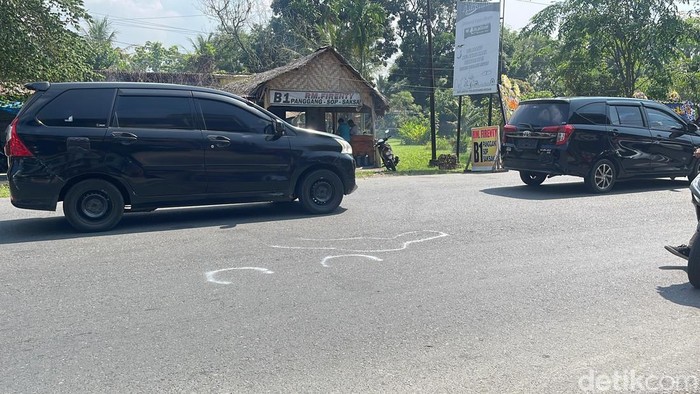
It is known that the accident occurred on Jalan Melati Raya, Medan Selayang District, on Saturday (4/18) afternoon. The location is only a few meters from Raziman’s business premises.
Medan
Medan is the capital of North Sumatra, Indonesia, and a major economic hub known for its multicultural heritage. Historically, it grew rapidly in the late 19th century as a center for the Dutch colonial tobacco trade, attracting Chinese, Indian, and Malay migrants. Today, it is famous for landmarks like the Maimun Palace and the Great Mosque of Medan, reflecting its diverse cultural and colonial past.
Simpang Pemda
Simpang Pemda is a notable intersection located in the heart of Jayapura, the capital of Papua, Indonesia. It serves as a central hub for government and administrative activities, with the name “Pemda” referring to the nearby regional government offices (Pemerintah Daerah). Historically, the area has developed alongside Jayapura’s growth as a key urban center, reflecting the region’s post-independence governance and cultural integration.
Jalan Melati Raya
Jalan Melati Raya is a well-known street located in the Pademangan
Medan
Medan is the capital of North Sumatra, Indonesia, and serves as a major economic and cultural hub. Its history is deeply tied to the Deli Sultanate and the Dutch colonial era, when it grew rapidly as a center for the tobacco and rubber trade in the late 19th and early 20th centuries. Today, the city is known for its diverse population and landmarks like the Maimun Palace and the Great Mosque of Medan.
Simpang Pemda
Simpang Pemda is a well-known intersection in the city of Bandung, Indonesia, situated near the West Java provincial government complex (Pemda stands for Pemerintah Daerah, or Regional Government). Historically, it developed as a key traffic hub connecting important administrative and commercial areas, reflecting Bandung’s growth as a planned colonial city. Today, it remains a bustling landmark, often recognized for its distinctive roundabout and proximity to Gedung Sate, the iconic governor’s office.
Jalan Melati Raya
Jalan Melati Raya is a notable street located in the Kelapa Gading area of North Jakarta, Indonesia. It is known as a hub for automotive parts and accessories, often referred to as a “car enthusiast’s paradise” due to the numerous shops and workshops lining the road. The street’s development grew alongside the expansion of the Kelapa Gading residential and commercial district in the late 20th century, becoming a key destination for car and motorcycle modifications.
Medan Selayang District
Medan Selayang District is a neighborhood located in the northern part of Medan, Indonesia, known for its diverse community and commercial activity. Historically, it developed as a suburban area during the city’s expansion in the late 20th century, with its name possibly derived from the local Malay term “selayang” (meaning “to glance”). Today, the district is recognized for its markets, residential areas, and proximity to Medan’s main transportation routes.
Maimun Palace
Maimun Palace, located in Medan, North Sumatra, Indonesia, is a historic royal palace of the Deli Sultanate, built in the late 19th century (completed in 1891). The palace blends Malay, Islamic, Spanish, and Dutch architectural styles, reflecting the region’s diverse cultural influences. Today, it serves as a museum and cultural site, offering visitors a glimpse into the sultanate’s royal heritage and history.
Great Mosque of Medan
The Great Mosque of Medan, also known as Masjid Raya Al-Mashun, is a historic mosque in Medan, Indonesia, built between 1906 and 1909 during the era of the Sultanate of Deli. Its architecture uniquely blends Middle Eastern, Indian, and Spanish styles, reflecting the region’s cultural diversity. The mosque remains a prominent religious and tourist landmark, symbolizing the city’s rich Islamic heritage.
Jayapura
Jayapura is the capital city of Papua Province in eastern Indonesia, located on the northern coast of the island of New Guinea. Originally known as Hollandia during Dutch colonial rule, it served as a key administrative and military post before being renamed Sukarnopura in the 1960s and eventually Jayapura. Today, the city is a vibrant cultural and economic hub, known for its scenic harbor, diverse indigenous communities, and proximity to Lake Sentani.
Pademangan
Pademangan is a district in North Jakarta, Indonesia, historically known as a swampy area that was part of the early development of Batavia (now Jakarta) during the Dutch colonial era. Its name is believed to derive from the word “pademangan,” referring to a place where deer (menjangan) were once abundant or kept. Today, it is a densely populated residential and industrial area, reflecting Jakarta’s rapid urbanization.