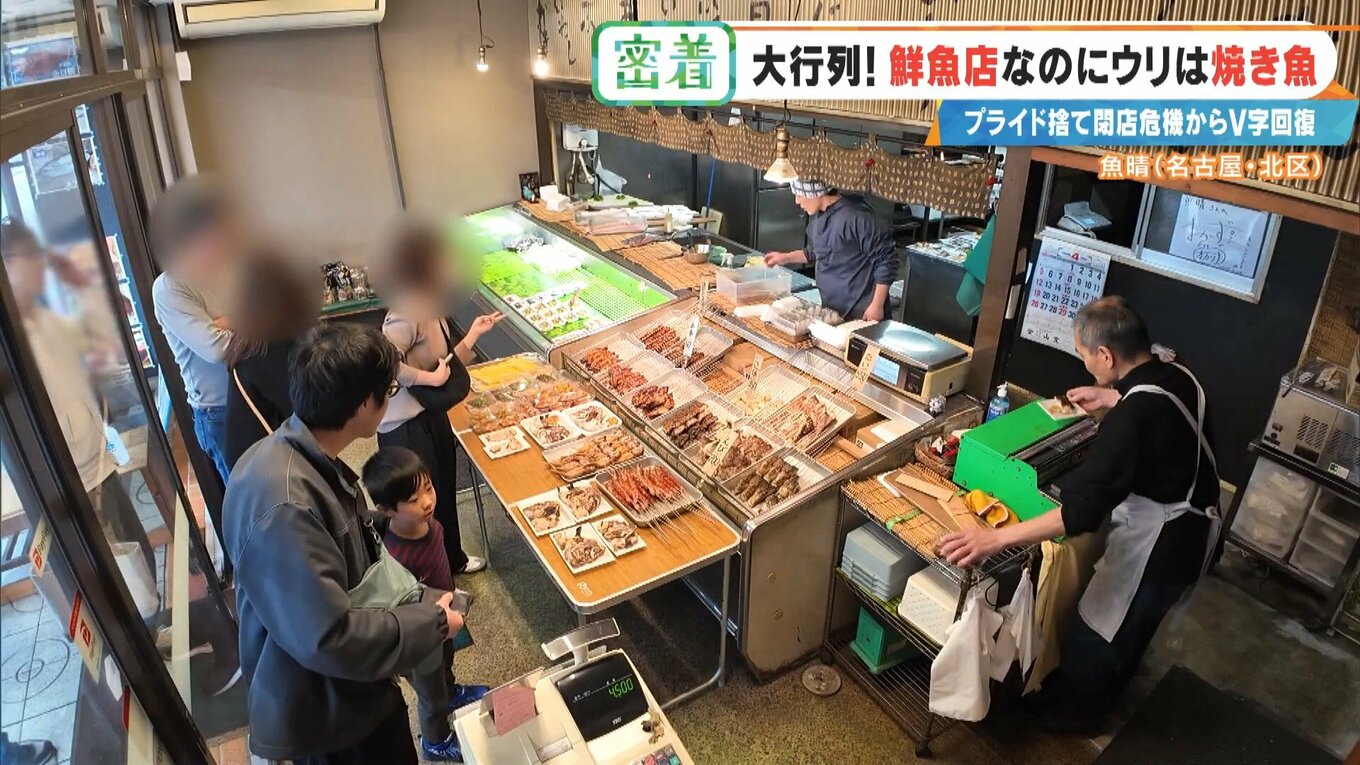
A fish shop located in a public housing complex in Nagoya. Ten years ago, it faced the brink of closure, but the secret behind its dramatic V-shaped recovery through an unexpected method, along with the family bonds, is explored.
In Kita Ward, Nagoya, at the popular fish shop “Uoharu” in the Mizukusa housing complex, a line forms by 3:00 PM.
(Customer)
“The fish is fresh and delicious.”
“I basically only buy fish here.”
“Buy some and take it home! It’s tasty.”
The backbone of this popularity is the owner, who has 40 years of experience in this trade.
(Owner)
“I buy fish based on experience, choosing what I believe is good.”
He visits the market every day, sourcing fish with a seasoned eye for quality.
(Market worker)
“(The owner) is very particular about fish. It’s impressive that he can sell even this much after buying it.”
Nagoya
Nagoya is a major city in Japan’s Aichi Prefecture, historically known as a key industrial and cultural hub during the Edo period. The city is home to Nagoya Castle, built in 1612 by the Tokugawa clan, which played a significant role in Japan’s unification and later became a symbol of the region. Today, Nagoya blends its rich samurai-era heritage with modern attractions, including museums and the famous Nagoya TV Tower.
Kita Ward
Kita Ward is one of the 23 special wards of Tokyo, Japan, known for its blend of residential areas and historical sites. It is home to the famous Rikugien Garden, a beautiful landscape garden built in the early 18th century, and the Asukayama Park, a historic cherry blossom viewing spot established in the Edo period. The ward also contains the Oji Shrine, which has a long history tied to the region’s development and hosts the annual Oji Inari Festival.
Mizukusa housing complex
The Mizukusa housing complex is a historic public housing estate in Japan, known for its distinctive architectural design and role in post-war urban development. Built in the mid-20th century, it reflects the country’s efforts to address housing shortages through large-scale, modern residential projects. Over time, it has become a notable example of Japanese collective housing, preserving a sense of community and mid-century aesthetic.
Uoharu
Uoharu is a historic hot spring district located in the city of Kakegawa, Shizuoka Prefecture, Japan. Known for its traditional ryokan inns and tranquil atmosphere, the area’s hot springs have been enjoyed for centuries, with a history dating back to the Edo period. Uoharu offers visitors a peaceful retreat, combining natural thermal waters with a glimpse into Japan’s cultural heritage.
<div class="my-4 p-4 rounded-lg shadow-md bg
Nagoya
Nagoya is a major city in central Japan, historically significant as the seat of the powerful Owari branch of the Tokugawa clan during the Edo period. Its most famous landmark, Nagoya Castle, was built in 1612 and largely destroyed in World War II, but has since been partially reconstructed. Today, Nagoya is a thriving industrial and cultural hub, known for its automotive industry, traditional crafts, and cuisine.
Kita Ward
Kita Ward is one of the 23 special wards of Tokyo, located in the northern part of the city. It is historically significant as the home of the Oji Shrine, which dates back to the 8th century, and was once a center for paper manufacturing during the Edo period. Today, it is a residential and commercial area known for its parks, the Asukayama Park, and its connection to the Shōwa era through the preserved Jōnan Canal.
Mizukusa housing complex
The Mizukusa housing complex is a historic public housing project in Japan, originally built in the mid-20th century to address post-war housing shortages. Located in a suburban area, it is notable for its distinctive architectural style and communal layout, which reflected early efforts in urban planning. Over time, the complex has become a symbol of Japan’s social housing history and a subject of preservation interest.
Uoharu
Uoharu is a historic hot spring district in Beppu, Japan, known for its traditional atmosphere and therapeutic waters. Its development dates back over a century, with the area flourishing as a key part of Beppu’s renowned spa culture during the Meiji and Taisho periods. Today, Uoharu retains its old-town charm, featuring retro bathhouses and ryokan inns that offer visitors a nostalgic glimpse into Japan’s bathing heritage.