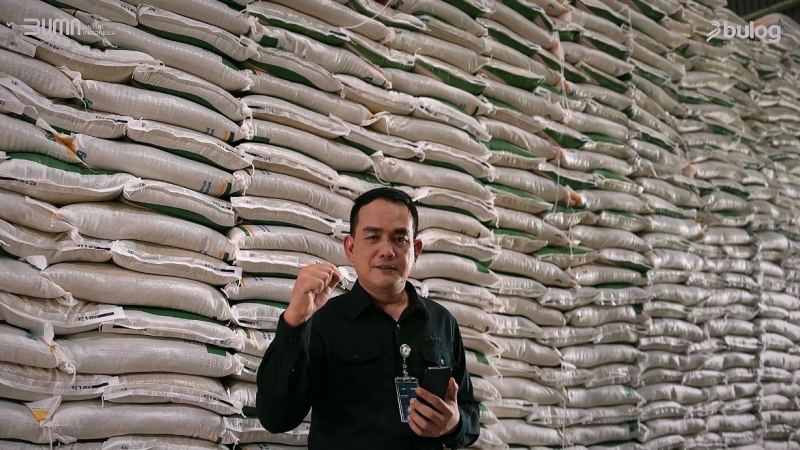
Medan. The Government Rice Reserve stock in North Sumatra has reached the highest level in history. As of April 23, 2026, Perum Bulog for the North Sumatra region stored 63,000 tons of rice, while nationally it reached 5 million tons.
The Regional Head of Perum Bulog North Sumatra, Budi Cahyanto, said this achievement is proof of the success of food self-sufficiency in Indonesia.
“The rice stock in Bulog warehouses throughout Indonesia has indeed reached 5 million tons, and for the North Sumatra region it is 63,000 tons. This is the highest rice stock in history since Indonesia’s independence,” said Budi on Friday (April 24, 2026).
He explained that the high rice stock is the result of collaboration among various parties in supporting national food security. With strong reserves, Bulog not only acts as a stabilizer but also as a key driver in the food ecosystem.
According to him, this rice stock serves as a strategic instrument to curb price volatility, anticipate emergency conditions, and support various government programs such as the Supply and Price Stabilization program, food assistance, and disaster management.
“These rice stocks are now evenly distributed across the North Sumatra region,” he said.
Bulog also continues to purchase grain from farmers at a price of Rp 6,500 per kilogram. This grain is then processed into rice to meet the needs of government programs.
Grain Absorption from Farmers
Budi revealed that so far, the agency has absorbed 20,820 tons of grain from farmers, an increase of 15 percent compared to the same period last year which was 18,120 tons.
This high absorption also impacts storage capacity. Several Bulog warehouses in various areas such as Medan, Pematang Siantar, and Asahan are reported to be full, so Bulog has had to rent additional warehouses.
“We are optimistic that the absorption achievement in North Sumatra will continue to increase compared to last year,” he said.
Amid uncertain global conditions that could potentially trigger food price increases, Budi assured that rice availability in North Sumatra is safe and abundant.
“The public does not need to worry. Bulog rice is ready to be used according to government regulations in the Supply and Price Stabilization program and food assistance,” he emphasized.