The Astra Honda Motor Foundation (AHM Foundation) reaffirmed its commitment to sustainable development by engaging the younger generation through the Astra Honda SDGs Future Leaders 2025 (SFL) program.
Carrying the theme “Synergy for Sustainability,” the Astra Honda SDGs Future Leaders 2025 program was enthusiastically followed by 259 student teams from 116 universities across 29 provinces through ideas for social contributions that have an impact on communities in their respective regions.
The series of Astra Honda SDGs Future Leaders programs held from July to November 2025 selected the 3 best teams based on creativity, program benefits, and sustainability potential.
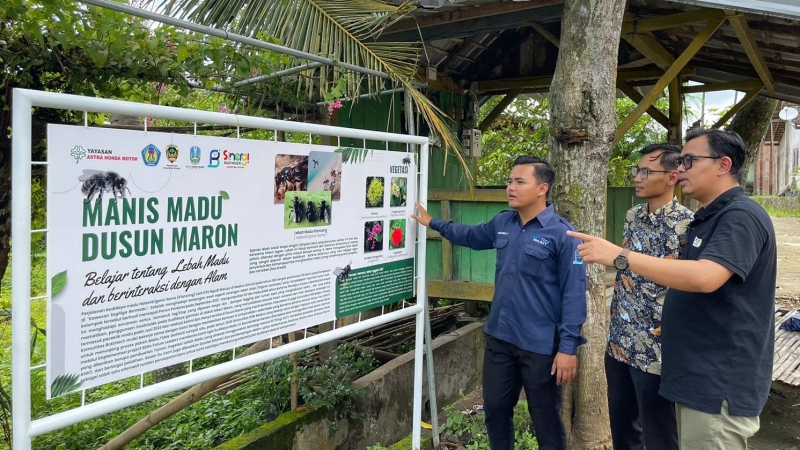
The implementation of the winning three teams’ ideas is supported by the AHM Foundation with total program funding of Rp 126 million. The Honey Farmer Empowerment Program in Maron Hamlet, Madiun, led the Pemuda Berkarya team from PGRI Madiun University to be named the best in Astra Honda SDGs Future Leaders 2025. This participant project can benefit dozens of honey farmers.
In the best work of Astra Honda SDGs Future Leaders 2025, the Pemuda Berkarya team provided solutions needed by the local community. This is reflected in the positive welcome from the Maron Hamlet Farmers Group in Madiun towards the program’s implementation. This East Java-based team designed a bee food source by planting various types of flowering trees.
The creation of a modern honey harvesting tool supported by the application of the Internet of Things (IoT) for watering the flowering trees as a bee food source greatly assisted farmers in cultivating Klanceng Bees as a source of local honey.
As a form of sustainability, the initiation of educational tourism about bee empowerment became a new alternative source of income for farmers, in addition to honey harvests.
Another notable team, the Gehu team from Diponegoro University, also received funding for its program to Convert Tofu Waste into Liquid Biofertilizer in Gogik Village, Semarang, which can benefit dozens of farmers.
The Arunika Berdaya team from Gadjah Mada University also had the opportunity to receive program funding through the Conservation Action for Energy and Water Sustainability program on Kayu Arum Beach, Gunungkidul, Yogyakarta, which can benefit hundreds of visitors each month.
In addition to program funding for all the best teams, participants also received intensive mentoring from professional mentors during the implementation period.
Astra Honda SDGs Future Leaders 2025 is a competition of ideas implemented directly during Community Service Programs (KKN) to provide social contributions from university-level students.
This event encourages students to design creative and innovative solutions to various social issues based on SDGs in the fields of education, environment, health, and community economic empowerment. The program aims to foster social concern while preparing a generation of young leaders who are excellent and globally competitive.
In addition to receiving program funding, the three best teams that successfully completed their project implementation also received appreciation in the form of educational scholarships based on a comprehensive final evaluation assessment.
The Pemuda Berkarya team from PGRI Madiun University successfully achieved 1st Best and is entitled to an educational scholarship worth Rp 10 million. 2nd Best was achieved by the Gehu Team from Diponegoro University, which received an educational scholarship worth Rp 7.5 million. An educational scholarship worth Rp 6 million was won by the Arunika Berdaya Team from Gadjah Mada University, which placed 3rd Best.
In the Astra Honda SDGs Future Leaders event, participants were challenged to address social concerns occurring in society to be assessed by competent judges. Throughout the series of activities, participants followed a process of selection, project proposal assessment, presentations, and field assessment of implementation impact in the community. All these stages ensure that each initiative runs in a measurable, collaborative, and long-term impactful manner.