Jakarta –
A Fortuner was surrounded and damaged by residents in Tanah Abang, Central Jakarta, triggered by a horn dispute involving a motorcyclist. The police revealed that the motorcyclist had rammed into the Fortuner, then shouted.
“There was a quarrel while driving (between the driver and the motorcyclist). The motorcyclist rammed his motorcycle into the Fortuner,” said Tanah Abang Police Chief AKBP Dhimas Prasetyo in a written statement on Sunday (June 7, 2026).
“Subsequently, the motorcyclist kept chasing while shouting ‘hit and run,’ which attracted more people to chase and commit vandalism,” he added.
The Fortuner driver was stopped again by the crowd, leading to another quarrel. The driver then fled to Tanah Abang with the car damaged and a head injury.
“Later, the car was stopped again on the road, and another disturbance occurred, resulting in injuries and damage to the vehicle. The Fortuner driver then fled toward Tanah Abang, stopping at the scene with the car already damaged by the crowd and a head injury,” he said.
Dhimas stated that the Fortuner driver was then secured by the police. When questioned, the driver was uncooperative and still agitated.
“When secured, the Fortuner driver was uncooperative, rambling, and shouting incoherently. Subsequently, the driver and the car were secured and taken to the Tanah Abang Metro Police station,” said Dhimas.
“Upon arrival at the station, when questioned, the driver answered incoherently, was still angry, and refused to file a report or undergo a medical examination or have his injuries treated,” he added.
Later, the Fortuner driver’s parents came to pick him up. Meanwhile, the damaged car was to be taken to a workshop in the Bekasi area, West Java.
Triggered by a Horn
The incident occurred on Saturday (June 6) at around 4:30 PM local time. The Fortuner driver initially had a quarrel with a motorcyclist in the Tebet area, South Jakarta.
The Fortuner driver honked repeatedly because he felt his path was blocked. The driver then cut off the motorcyclist and cursed at him.
“Shortly after, two people on a motorcycle approached and reprimanded the Fortuner driver for cursing at the motorcyclist blocking the road,” he said.
A quarrel between the motorcyclist and the Fortuner driver then occurred at the location. Based on the Fortuner driver’s account, the motorcyclist then rammed into the Fortuner while shouting ‘hit and run,’ which immediately drew a response from nearby residents.
“The Fortuner driver was displeased and began cursing the motorcyclists who reprimanded him,” said Dhimas.
Tanah Abang
Tanah Abang is a bustling district in Central Jakarta, Indonesia, best known for its massive textile market, Pasar Tanah Abang, which is one of the largest in Southeast Asia. Historically, the area dates back to the 17th century, originally serving as a resting place and later developing into a key trading hub under Dutch colonial rule. Today, it remains a vibrant commercial center, attracting shoppers and traders from across the region.
Central Jakarta
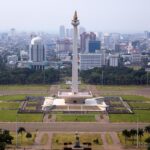
Central Jakarta is the administrative and economic heart of Indonesia’s capital, known for landmarks like the National Monument (Monas) and Merdeka Square. Historically, it was the center of Dutch colonial power, with buildings such as the Jakarta History Museum (formerly the Stadhuis) reflecting its 17
Tanah Abang
Tanah Abang is a bustling district in Central Jakarta, Indonesia, historically known as one of the city’s oldest settlements with roots dating back to the colonial era. Its name, meaning “red land” in Indonesian, refers to the reddish soil found there, and it is most famous for hosting the largest textile market in Southeast Asia. This market has made Tanah Abang a vital commercial hub, attracting traders and shoppers from across the archipelago.
Central Jakarta
Central Jakarta is the political and economic heart of Indonesia, serving as the location of the national government, major offices, and landmarks such as the National Monument (Monas). Historically, it was the center of the colonial Batavia (present-day Jakarta) and has since evolved into a bustling hub that blends Dutch colonial architecture with modern skyscrapers. Key cultural sites include the Istiqlal Mosque, Jakarta Cathedral, and Merdeka Square, reflecting the area’s diverse heritage and significance.
Tebet
Tebet is a subdistrict in South Jakarta, Indonesia, known for its residential areas and the Tebet Eco Park, a popular green space revitalized in 2022. Historically, the name “Tebet” is believed to derive from the Betawi word “tabet,” meaning a type of bamboo, reflecting the area’s past as a bamboo forest before urban development. Today, it blends modern city life with community-focused parks and local culinary spots.
South Jakarta
South Jakarta is a major administrative city within the Jakarta metropolitan area, known for its upscale residential neighborhoods, commercial centers, and green spaces like the Ragunan Zoo. Historically, it developed as Jakarta expanded southward during the 20th century, transforming from agricultural land into a hub for business and affluent living. Today, it serves as a key area for embassies, shopping malls, and modern high-rise offices.
Bekasi
Bekasi is a city in West Java, Indonesia, with a history dating back to the 5th century as part of the Tarumanagara kingdom, one of the earliest Hindu kingdoms in the archipelago. Today, it is a rapidly growing satellite city of Jakarta, known for its industrial zones and residential areas, though it retains cultural sites like the Bekasi Tomb complex honoring early Muslim scholars.
West Java
West Java is a province in Indonesia known for its rich cultural heritage and stunning natural landscapes, including volcanoes and tea plantations. Historically, it was part of the ancient Sunda Kingdom, and later became a center of Dutch colonial administration and the fight for Indonesian independence. Today, it is famous for its unique Sundanese culture, traditional arts, and the bustling capital city of Bandung.
Pasar Tanah Abang
Pasar Tanah Abang is one of Indonesia’s largest and busiest traditional markets, located in Central Jakarta. Established in the 18th century during the Dutch colonial era, it has evolved from a small trading post into a massive textile and garment center. Today, it remains a key economic hub, attracting both local and international traders.
National Monument (Monas)
The National Monument (Monas) is a 132-meter tower located in Merdeka Square, Jakarta, Indonesia, symbolizing the country’s struggle for independence. Construction began in 1961 under President Sukarno and was completed in 1975, with its gold-plated flame representing the spirit of the Indonesian people. The monument houses a museum and an observation deck, offering visitors insight into Indonesia’s history and panoramic views of the city.