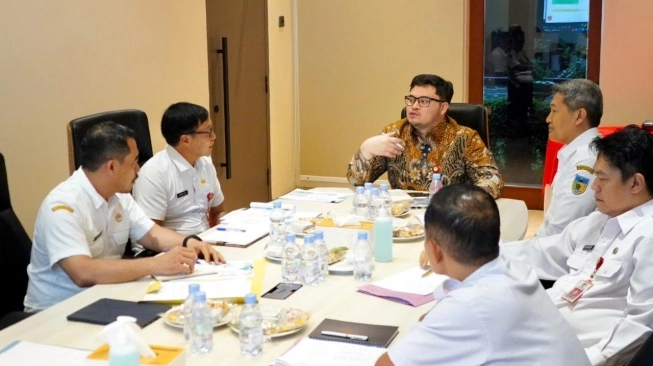
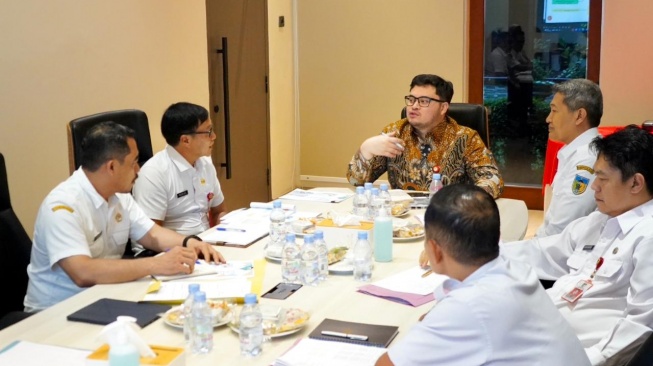
The Kediri Regency Government through the Environmental Agency (DLH) has proposed the construction of Integrated Waste Processing Facilities (TPST) in Sekoto and Branggahan villages to the Ministry of Public Works.
The construction of these TPSTs is expected to be a solution for handling waste, the volume of which always increases every year. This is similar to what is currently happening at the Sekoto Final Disposal Site (TPA).
“The condition of the Sekoto TPA, which was launched in October 2021 with a technical lifespan until 2027, is prone to overload, so further TPA preparation is necessary,” said the Head of the Kediri Regency DLH, Putut Agung Subekti, on Monday (18/5/2026).
In Kediri Regency, Putut explained, the waste pile issue so far is that only 58.18 percent per day can be managed, while 40.82 percent remains unmanaged.
On the other hand, the Ministry of Environment currently prohibits open dumping of waste. Open dumping is considered to have an impact on pollution and environmental damage.
The two proposed TPSTs, Putut continued, are different from the existing landfill TPA. This is because the waste piles will be processed using technology to become Refuse Derived Fuel (RDF) products that have economic value.
“Now, landfill TPAs like those before are no longer being developed; instead, there must be environmentally friendly processing technology,” he explained.
The planned location for the Sekoto TPST in Badas Sub-district is next to the Sekoto TPA, covering an area of 0.68 hectares. Meanwhile, the Branggahan TPST in Ngadiluwih Sub-district will cover 0.29 hectares.
Observing the current condition of the Sekoto TPA and regardless of the proposed TPST construction, Kediri Regent Hanindhito Himawan Pramana asked the Kediri Regency DLH to map and audit waste piles per sub-district.
Mas Dhito, as he is known, reminded of the importance of waste management from upstream. For this reason, the DLH is expected to encourage villages willing to serve as pilot projects and commit to waste processing, even zero waste.
“We must touch the upstream first, find 5-10 villages that are willing and committed to zero waste,” Mas Dhito advised.
Sekoto
Branggahan
Sekoto Final Disposal Site (TPA)
Sekoto
Branggahan
Sekoto Final Disposal Site (TPA)
Related news
![Showroom BYD di Ciputat, Tangsel disegel petugas Satpol PP. [IST/Bantennews]](https://asiacity.news/wp-content/uploads/2025/07/92921-showroom-byd-di-ciputat-tangsel-disegel-petugas-satpol-pp-istbantennews-150x150.webp)
BYD showroom in Ciputat, South Tangerang, sealed by officials over alleged permit issues
Here is the cleaned and translated title: Jakarta Special Region

“Photo: All About Discounts at Indofest 2025”
Two Police Officers Face Dismissal from National Police for Running Over Affan