Jakarta –
The Constitutional Court has ruled that Jakarta remains the capital of the country after rejecting a material judicial review petition of Law Number 3 of 2022. So what about the fate of the new capital in East Kalimantan?
Constitutional Judge Adies Kadir stated that moving the capital from Jakarta to the new capital requires a Presidential Decree. The Court assessed that if the Presidential Decree has been signed, then the decision regarding the capital can take effect and have binding force.
“That means, in the context of the petition, the timing of the capital’s move to the Archipelago Capital depends on the stipulation and enforcement of the said presidential decree,” he said as reported on the Court’s website, Tuesday (5/12/2026).
Meanwhile, according to the spokesperson for the Archipelago Capital Authority, Troy Pantouw, the new capital will become the political capital in 2028. This determination is in accordance with Presidential Decree No. 79 of 2025.
“According to Presidential Decree No. 79 of 2025, it is stated that the direction of the Archipelago Capital as the Political Capital is in 2028,” he said, Wednesday (5/20/2026).
He said the construction of the new capital will also continue normally and according to target. According to him, no projects are hindered or stalled.
What the new capital is facing has been faced by several countries when moving their new capitals. However, some countries are considered to have failed due to slow processes and citizens unwilling to move.
Countries Considered to Have Failed in Moving Their New Capitals
Although the fate of the new capital is not yet certain, history records several countries that have moved their capitals. However, these moves are considered failures for various reasons, ranging from few citizens wanting to move, the economic center remaining in the old capital, and so on.
Here are countries considered to have failed in moving their new capitals:
Myanmar – Yangon to Naypyidaw
Myanmar’s capital changed from Yangon to Naypyidaw since the end of 2005. To this day, Yangon’s fame still makes people think that Myanmar’s capital is still there.
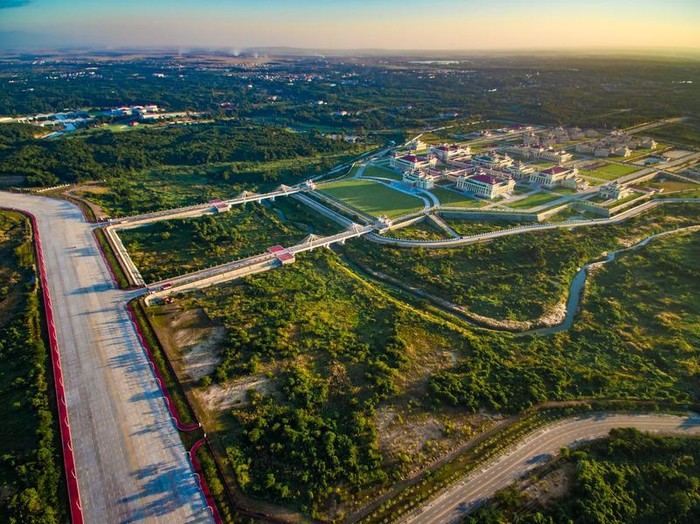
According to Britannica, Naypyidaw is located in a remote area 320 kilometers north of Yangon. This ‘new’ city was built grandly with very wide highways, golf courses, a safari park, a zoo, and luxurious pagodas.
Even so, this capital move is considered a failure because Naypyidaw is sparsely populated. Residents prefer to stay in Yangon as it remains the trade and economic center. Meanwhile, Naypyidaw is known only as an administrative and government center.
Kazakhstan – Almaty to Astana
Kazakhstan’s capital was originally Almaty. However, in 1997 it moved to Astana or Nur-Sultan.
According to the Economic Times, the reason for the move was Almaty’s geographical condition, which is prone to earthquakes and too close to neighboring countries. Astana was chosen because it is considered more strategic and resilient to natural disasters.
At the beginning of the move, many citizens did not want to go to Astana because Kazakhstan’s economy was in a slump at the time. Infrastructure reasons were also a consideration.
However, gradually, the move improved until the 2000s. Even so, it took 22 years since the move to the new capital to achieve significant economic growth for Kazakhstan.
Tanzania – Dar es Salaam to Dodoma
Tanzania began moving its capital from Dar es Salaam to Dodoma in 1973. This move was made to reduce population density in Dar es Salaam.
However, the capital move took a very long time. After 50 years of many delays, precisely in 2023, the relocation process reached its peak with the opening of a new State Palace building in Chamwino, Dodoma.
According to The Conversation, the long relocation process was caused by a combination of various factors, ranging from political, economic, to logistical. On the other hand, national and government leaders were
Jakarta
Jakarta is the capital city of Indonesia, located on the northwest coast of Java. Originally a small port town called Sunda Kelapa, it was renamed Batavia by the Dutch during their colonial rule in the 17th century and became a major trading hub. After Indonesia’s independence, it was renamed Jakarta and has since grown into a bustling metropolis, serving as the country’s political, economic, and cultural center.
East Kalimantan
East Kalimantan is a province on the Indonesian side of Borneo, known for its vast rainforests and rich biodiversity. Historically, it was part of the powerful Sultanate of Kutai Kartanegara, one of the oldest Hindu kingdoms in Indonesia, before becoming a Dutch colonial territory. Today, the region is a hub for mining and oil extraction, while also hosting the future site of Indonesia’s new capital, Nusantara.
Archipelago Capital
The “Archipelago Capital” is a strategic and cultural hub located in an island nation, often referring to a city like Jakarta (Indonesia) or Manila (Philippines). These capitals historically served as centers for trade, colonial administration, and cultural exchange, shaped by centuries of maritime activity and diverse influences from Europe, Asia, and local traditions. Today, they remain dynamic metropolises that balance rapid modernization with rich historical heritage.
Yangon
Yangon, the largest city in Myanmar, served as the country’s capital until 2006. It is renowned for its rich colonial-era architecture, including the iconic Shwedagon Pagoda, a 2,500-year-old Buddhist stupa covered in gold. The city was a major administrative center under British rule from the 19th century until Myanmar’s independence in 1948.
Naypyidaw
Naypyidaw is the capital city of Myanmar, built in the early 2000s to replace Yangon as the administrative center. The government began relocating ministries in 2005, and the city was officially named the capital in 2006. Known for its vast, sprawling layout and wide boulevards, Naypyidaw was designed to reflect the military government’s power and control during a period of political transition.
Almaty
Almaty is the largest city in Kazakhstan, serving as the country’s former capital until 1997. Founded in 1854 as a Russian military fortification, it grew into a major cultural and economic hub, known for its scenic location at the foot of the Trans-Ili Alatau mountains. Today, it remains a vibrant center of commerce, education, and tourism, featuring landmarks like the Zenkov Cathedral and the Medeu skating rink.
Astana
Astana, now officially known as Nur-Sultan, is the capital city of Kazakhstan, located on the banks of the Ishim River. Originally founded as a military fort in the early 19th century, it was later designated as the capital in 1997, replacing Almaty, and underwent rapid development with futuristic architecture. The city symbolizes Kazakhstan’s modern ambitions and is known for landmarks like the Bayterek Tower and the Palace of Peace and Reconciliation.
Dar es Salaam
Dar es Salaam is the largest city and former capital of Tanzania, located on the country’s eastern coast along the Indian Ocean. Originally a small fishing village, it grew significantly during the 19th century under the rule of the Sultan of Zanzibar, and later became a key administrative and commercial hub during German and British colonial rule. Today, it remains Tanzania’s primary economic and cultural center, known for its vibrant port, diverse population, and mix of modern and historical architecture.
Dodoma
Dodoma is the capital city of Tanzania, designated as the official capital in 1974 to replace Dar es Salaam. Its history as a settlement dates back to the 19th century when it served as a trading post for caravans traveling between the coast and Lake Tanganyika. Today, Dodoma is known for its government buildings, agricultural significance as a center for grape and peanut farming, and its role in the country’s political administration.