- The crew member named Fandi Ramadhan is facing the death penalty for smuggling nearly two tons of methamphetamine.
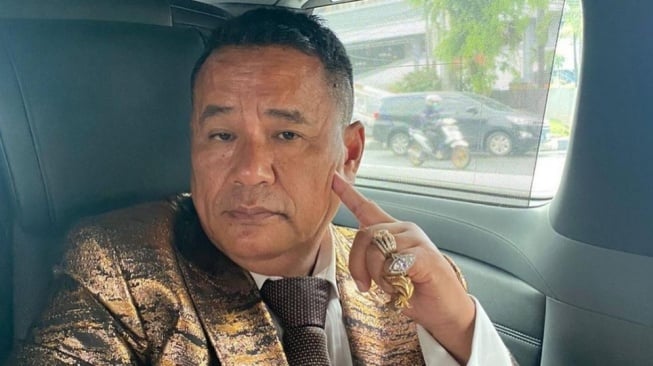
- Fandi’s parents have officially requested legal assistance from the famous lawyer Hotman Paris Hutapea.
- This case has drawn national attention, especially after the prosecutor’s heavy demands were presented in court.
The case involving nearly 2 tons of methamphetamine that has ensnared Fandi Ramadhan, a crew member of the tanker Sea Dragon, is now entering a new phase. After the Public Prosecutor demanded the death penalty, Fandi’s mother officially requested legal assistance from the famous lawyer Hotman Paris Hutapea.
This move immediately drew public attention. Here are seven important points to know behind this major case.
1. Evidence of Nearly 2 Tons of Meth
This case has come under the spotlight because the amount of narcotics seized reached 1,995,130 grams or nearly 2 tons. In the context of Indonesian law, a figure that large falls into the category of large-scale narcotics trafficking which can carry the maximum penalty.
2. Death Penalty Demand from the Prosecutor
The prosecutor considers the criminal elements under Law Number 35 of 2009 concerning Narcotics to be fulfilled. With evidence of a very large quantity, the death penalty was demanded for Fandi.
However, it is important to note that the demand is not the final verdict. The panel of judges will still decide based on the trial facts.
3. Fandi’s Status as a Crew Member
Fandi is known to have the status of a crew member. This position has sparked public debate regarding the extent of his role and responsibility in the alleged smuggling.
Was he a core part of the syndicate or just a field worker? The answer to this question is an important part of the legal defense.
4. Tears and Prostration in the Courtroom
A previous court session was marked by an emotional moment when Fandi cried and prostrated at his mother’s feet after hearing the prosecutor’s demand. This scene received wide attention and strengthened the humanitarian dimension of this major case.
5. Mother Officially Requests Hotman Paris’s Help
Unable to accept her son’s situation, the mother approached Hotman Paris Hutapea’s team and requested legal assistance. This information was confirmed via a post on the official account @hotmanparisofficial.
6. Planned Press Conference
Hotman Paris’s team has scheduled a press conference with Fandi’s biological mother in Kelapa Gading, North Jakarta. This step indicates that the legal team is ready to handle the case openly and transparently.
7. National Spotlight and Public Questions
The involvement of a prominent lawyer has caused this case to develop from a regional spotlight into a national concern. On one hand, Indonesia is known for being strict against narcotics crimes. On the other hand, the public is also questioning the proportionality of punishment for each individual within a large network.
This case is now not only about the figure of 2 tons of meth, but also about the legal process, defense, and the final decision of the panel of judges that is awaited.
The Sea Dragon case is still ongoing. The final verdict has not been handed down. What is certain is that the family’s step of enlisting Hotman Paris is an important phase in Fandi Ramadhan’s legal journey.
Sea Dragon
Hotman Paris Hutapea
Fandi Ramadhan
If you have a different name or more context, I would be happy to try again.