Mission to Top 10: 744 Depok Athletes Secure Tickets to West Java Provincial Sports Week XV/2026
Depok – The National Sports Committee of Indonesia (KONI) of Depok City has officially secured its full roster of athletes heading to the XV/2026 West Java Provincial Sports Week (Porprov). A total of 744 athletes from various sports have passed the Qualification Round and are ready to compete in the finals, which will be held across three regions: Bogor City, Depok City, and Bekasi City.
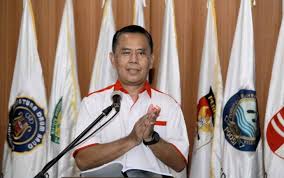
The head of KONI Depok City stated that this achievement validates the effectiveness of the intensive athlete development program that ran throughout 2025.
Host Infrastructure and a Golden Opportunity
The hosting of Porprov 2026 is a crucial moment for Depok City. In addition to sending hundreds of delegates, Depok is also entrusted with hosting 10 sports (13 sub-disciplines).
“Being one of the host cities is a special opportunity. This is not just a ceremony, but a moment to accelerate sports progress in Depok City,” the head stated. It was emphasized that synergy between the readiness of the City Government’s infrastructure and the technical preparation of athletes under KONI is the key to a dual success: successful event management and successful achievements.
Development Strategy: Specialized Physical Support
To convert athlete qualification into medal wins, KONI Depok is implementing a more specific development structure. The roles were detailed in a measurable division between the Sports Branch Administrators and KONI:
Role of Branch Administrators: Focus on continuous technical development at the basic and intermediate levels.
Role of KONI: Provide reinforcement through support programs, including the provision of specialized physical trainers for athletes in the potential or elite categories.
“Achievements do not appear instantly. KONI will continue to guide athletes through various events at the provincial and national levels as a warm-up before the peak at the upcoming Porprov,” it was added.
Top 10 Target: A Commitment in Action
With the asset of 744 athletes proven in the qualification round, KONI Depok is optimistic about breaking into the top 10 of the overall standings of the XV West Java Porprov. This target is affirmed not as administrative talk, but as a performance goal that must be achieved through real work in the field.
“Success in the qualification round is the initial capital. Now our task is to maintain that performance so that the top 10 target is no longer just a hope, but a reality we achieve through discipline and targeted development,” the statement concluded.
This optimism is now fueling the spirit in Depok’s athlete training centers, alongside intensive preparations that continue to be monitored to ensure the physical and mental condition of these sports warriors remains at the highest level until 2026.
Depok City
Depok City is a city in West Java, Indonesia, originally established in the 17th century as a private agricultural estate by Cornelis Chastelein, a Dutch East India Company official. It later evolved into a significant center for Christian education and community before being integrated into the Bogor Regency and finally gaining its status as an independent city in 1999. Today, it is a major residential and university satellite city, part of the greater Jakarta metropolitan area.
Bogor City
Bogor is a city in West Java, Indonesia, historically known as “Buitenzorg” during the Dutch colonial era when it served as the summer capital of the Dutch East Indies. It is most famous for the Bogor Botanical Gardens (Kebun Raya Bogor), founded in 1817, which remains a major scientific and tourist attraction today. The city’s cool, rainy climate and its presidential palace, originally built for colonial governors, continue to define its character.
Bekasi City
Bekasi City is a rapidly growing industrial and residential hub located in West Java, Indonesia, directly adjacent to the capital, Jakarta. Historically, it was part of the ancient Tarumanagara kingdom, with evidence of its early significance found in inscriptions like the Tugu inscription. Today, it is known more for its modern development as a key satellite city supporting the Jakarta metropolitan area.
West Java Provincial Sports Week (Porprov)
The West Java Provincial Sports Week (Porprov) is a multi-sport event held regularly to promote sports development and select athletes at the provincial level within West Java, Indonesia. Historically, it serves as a key qualifying competition for athletes aiming to advance to the national Pekan Olahraga Nasional (PON), fostering regional talent and unity through sport.
National Sports Committee of Indonesia (KONI)
The National Sports Committee of Indonesia (KONI) is the official governing body for all sports in Indonesia, established in 1946 to develop and promote sports nationwide. It oversees national sports organizations, selects athletes for international competitions like the Olympics, and plays a central role in coordinating Indonesia’s major sporting events and policies.
KONI Depok City
“KONI Depok City” refers to the local branch of the Indonesian National Sports Committee (KONI) in Depok, West Java. It is not a historical or cultural site, but an administrative sports organization responsible for coordinating, developing, and promoting sports and athletic competitions within the city. Its history is tied to the national KONI structure, established to foster sports excellence across Indonesia.
Depok’s athlete training centers
Depok, a city in West Java, Indonesia, is home to several national athlete training centers, most notably the Gelora Bung Karno Sports Complex and the Indonesian National Sports Committee (KONI) training facilities. These centers were developed to support Indonesia’s athletic programs following the country’s hosting of major events like the 1962 Asian Games, providing modern infrastructure for elite athletes to train and prepare for international competitions. They play a crucial role in nurturing Indonesia’s sporting talent across various disciplines.
City Government’s infrastructure
The term “City Government’s infrastructure” broadly refers to the foundational systems and facilities managed by a municipal authority, such as roads, water supply, and public buildings. Its history is tied to urbanization, evolving from basic Roman aqueducts and roads to today’s complex networks of utilities and transit, reflecting a city’s growth and technological progress. Modern infrastructure aims to provide essential services, ensure public health, and support economic activity for its residents.