Ministry of Religious Affairs in Depok strengthens the “Murur” scheme for Hajj 2026 to protect vulnerable pilgrims.
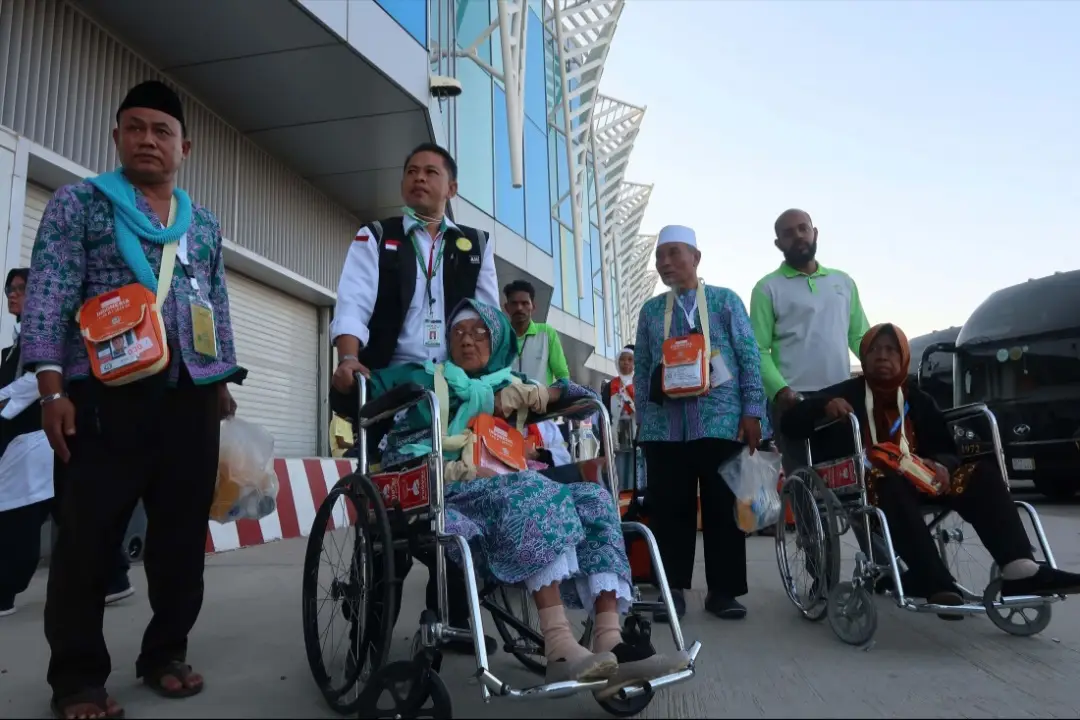
DEPOK (19/05/2026) – Regional Hajj organizing authorities are beginning to finalize protection strategies for vulnerable groups of pilgrims ahead of the peak of the 1447 H / 2026 M Hajj pilgrimage. The Ministry of Religious Affairs in Depok emphasized that clusters of elderly pilgrims, people with disabilities, and female pilgrims will receive special priority service escorts to ensure physical safety in the holy land.
Various technical preparations are continuously being coordinated between the Saudi Arabian government and the Hajj Organizing Officers to anticipate crowd density and extreme weather.
Optimizing Management of Disability Aids
The head of the Depok City Ministry of Religious Affairs office urged families and pilgrims categorized as high-risk not to worry about mobility during the pilgrimage. The Hajj Organizing Officers are said to have made systematic improvements, learning from operational evaluations of previous years.
“For pilgrims with disabilities, the entire management and zoning of wheelchair use in health facilities and worship complexes has been very strictly regulated by the Saudi Arabian Hajj Organizing Officers,” he explained on Tuesday (19/05).
Although the main mode of transportation for movement between holy sites remains bus fleets, the government is preparing mechanical contingency options for pilgrims with specific clinical indications who cannot participate in regular mass physical activities.
Murur Mechanism: A Solution to Prevent Dehydration and Extreme Fatigue
One crucial mitigation measure to be massively implemented this year is the activation of the Murur program. This scheme prioritizes elderly pilgrims, people with disabilities, high-risk pilgrims, and their official companions.
Technical Definition: What is the Murur Scheme? Murur is a system for moving pilgrims after completing the wukuf vigil at Arafah towards Mina. In this scheme, groups of vulnerable pilgrims will only slowly pass through the Muzdalifah area by bus, without being dropped off to stay overnight in that open expanse.
“The Murur scheme is implemented as a protective solution. If a pilgrim’s physical condition is deemed unsuitable or high-risk if forced to get off at Muzdalifah, they are directly included in this program,” he explained.
This intervention is considered vital to protect the immune systems of vulnerable pilgrims from exposure to extreme fatigue, the threat of acute dehydration, or fatal risks due to crowding among millions of global pilgrims filling the Muzdalifah area.
Target Achievement of Worship
Through this strengthening of a service architecture that is friendly to the elderly and people with disabilities, the Depok Ministry of Religious Affairs hopes that all stages of the pillars and obligations of Hajj can be fully completed by the pilgrims without neglecting the aspect of life safety.
“Our great hope is that all the series of worship undertaken by the pilgrims from Depok are accepted by Allah SWT, given smoothness from departure to return, and return to the homeland with the title of a blessed Hajj,” he concluded.
Arafah
Arafah, also known as Mount Arafat, is a granite hill located about 20 kilometers east of Mecca in Saudi Arabia. It holds profound religious significance in Islam as the site where the Prophet Muhammad delivered his final sermon and where pilgrims gather on the ninth day of Dhul Hijjah for the most essential rite of the Hajj pilgrimage. This standing, or “Wuquf,” at Arafah is considered the climax of Hajj, symbolizing a day of prayer, repentance, and spiritual renewal.
Mina
Mina is a tent city located near Mecca in Saudi Arabia, best known for its role in the annual Hajj pilgrimage. It is historically significant as the site where the Prophet Muhammad performed the symbolic stoning of the devil, a ritual now reenacted by pilgrims at the Jamarat Bridge. Today, Mina accommodates millions of pilgrims in temporary tents, serving as a key stop during the multi-day pilgrimage.
Arafah
Arafah is a plain located about 20 kilometers east of Mecca in Saudi Arabia, holding immense significance in Islam as the site where Prophet Muhammad delivered his Farewell Sermon. It is central to the Hajj pilgrimage, as pilgrims gather here on the 9th day of Dhul Hijjah for the “standing” (Wuquf), considered the most essential rite of the pilgrimage. Historically, it is also believed to be where Adam and Eve reunited after their expulsion from paradise.
Mount Arafat
Mount Arafat, also known as Jabal al-Rahmah (the Mount of Mercy), is a granite hill located about 20 kilometers east of Mecca, Saudi Arabia. It is the most important site of the Hajj pilgrimage, where Prophet Muhammad is said to have delivered his final sermon in 632 CE. Pilgrims gather here on the ninth day of Dhul Hijjah for the Day of Arafat, a key ritual of Hajj that involves prayer and reflection, believed to be essential for the pilgrimage’s completion.
Mina
Mina is a valley located near Mecca in Saudi Arabia, best known for its role in the annual Hajj pilgrimage. Historically, it is the site where the Prophet Abraham is believed to have been commanded by God to sacrifice his son, a story commemorated by the ritual of stoning the devil. Today, it serves as a massive tent city where millions of pilgrims stay during the Hajj, making it one of the largest temporary human settlements in the world.
Muzdalifah
Muzdalifah is a significant open area located between Mina and Arafat in Saudi Arabia, playing a crucial role in the annual Hajj pilgrimage. It is historically known as the place where the Prophet Muhammad paused and prayed during his final pilgrimage, and pilgrims today spend the night there after sunset on the 9th of Dhul Hijjah. There, they collect pebbles for the symbolic stoning of the devil at Mina, following a tradition that dates back to the time of the Prophet Ibrahim.
Jamarat Bridge
The Jamarat Bridge is a pedestrian bridge in Mina, Saudi Arabia, used during the Hajj pilgrimage for the symbolic stoning of the devil ritual. Originally a simple structure, it has undergone several expansions and redesigns to improve safety and accommodate the millions of pilgrims, including a multi-level modern bridge completed in 2010. Its history is deeply tied to Islamic tradition, representing the site where the Prophet Abraham is believed to have stoned Satan.