Global Biodiversity Day at UIII: Ministry of Environment Calls for Cross-Sector Collective Action to Protect Biodiversity
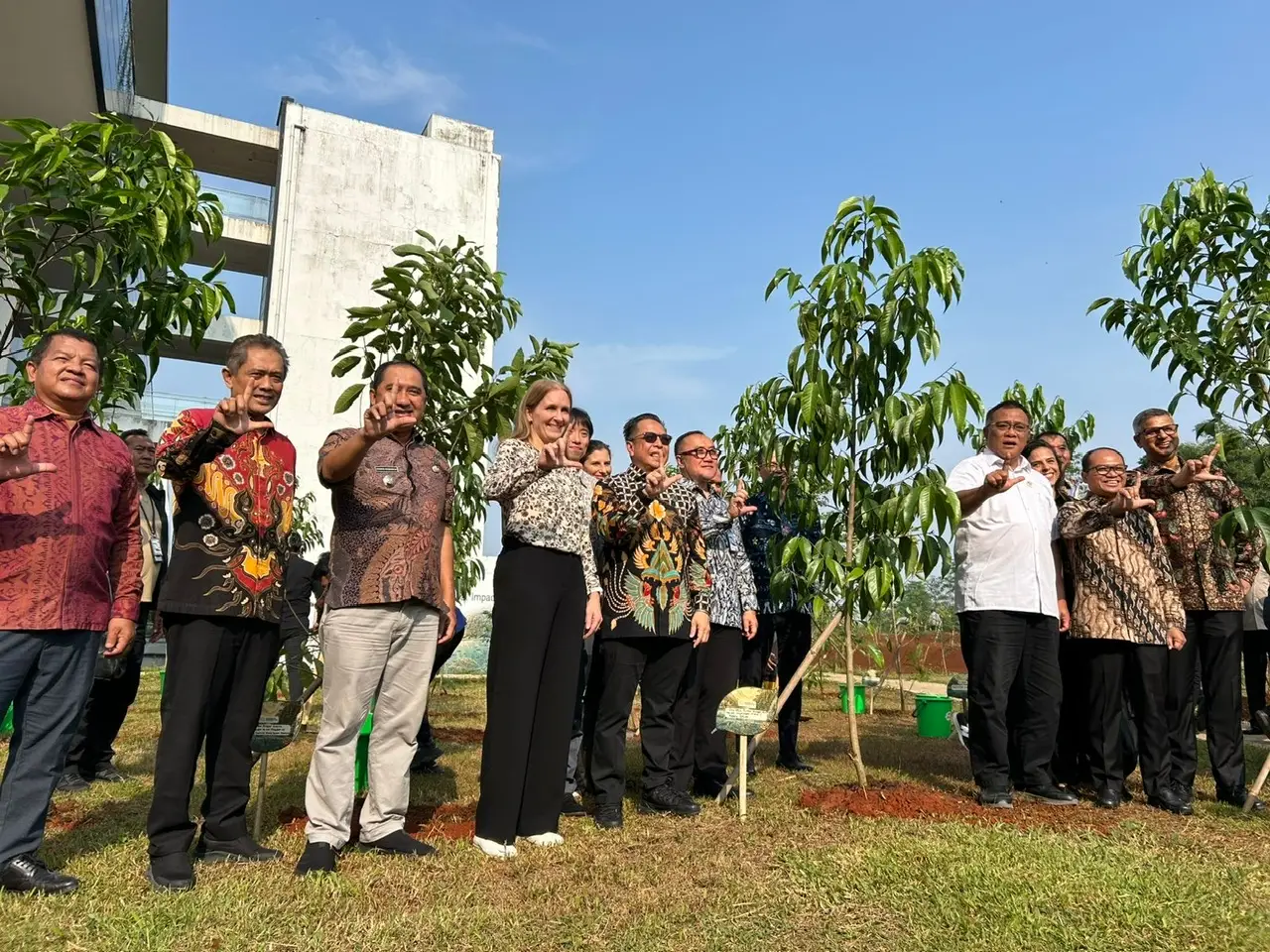
DEPOK (22/05/2026) – The Ministry of Environment of the Republic of Indonesia consolidated commitments to national ecosystem conservation through the 2026 International Biodiversity Day event. This global-scale agenda, centered at the campus of the Indonesian International Islamic University (UIII) in Depok City on Thursday (22/05), carried the main theme “Acting Locally for Global Impact”.
This forum served as a strategic moment to evaluate and strengthen the draft biodiversity conservation policy amid the threat of the global climate crisis.
Call for Cross-Country Ecological Diplomacy
This high-level meeting was attended by the Indonesian Minister of Environment Mohammad Jumhur Hidayat, Deputy Mayor of Depok Chandra Rahmansyah, Rector of UIII Jamhari Makruf, and diplomatic corps from several friendly countries’ ambassadors.
In his keynote speech, Minister of Environment Mohammad Jumhur Hidayat emphasized that Indonesia’s position as one of the world’s largest megabiodiversity countries carries massive responsibilities. Protecting biological wealth can no longer rely solely on top-down government regulations.
“Maintaining biodiversity is an absolute priority. This task requires active involvement from all elements of society, from the younger generation, media actors, to environmental organizations. We all consume resources and inhabit the same planet, so the balance of the ecosystem must be maintained together,” said Jumhur Hidayat.
National Conservation Report Card and Green Mitigation Actions
At the same location, Deputy Mayor of Depok Chandra Rahmansyah expressed appreciation for the designation of Depok City as the hub for this year’s global biodiversity day commemoration.
Two Main Substances of the Biodiversity Forum at UIII:
Evaluation of Achievements: Analyzing the draft progress report and tactical achievements of biodiversity conservation governance executed by the Indonesian government.
Symbolic Implementation: Conducting a joint tree planting action by state officials and foreign delegates as a real commitment to expanding green open spaces.
Chandra added that the Depok City Government has a direct interest in the outcomes of this international forum. They hope that agreements reached at UIII can be implemented into local policy drafts.
“The long-term output we expect is the establishment of a strong upstream-downstream synergy between the central government, regional authorities, academia, and civil society in protecting vegetation and biodiversity in the Depok City area,” concluded Chandra.
Indonesian International Islamic University (UIII)
The Indonesian International Islamic University (UIII) is a public university located in Depok, West Java, established in 2016 to serve as a center for Islamic studies and international scholarship. It was founded with the goal of promoting moderate Islamic thought and fostering global academic collaboration, offering graduate-level programs in fields such as Islamic studies, economics, and social sciences. The university’s establishment reflects Indonesia’s commitment to integrating Islamic values with modern education and international engagement.
Depok City
Depok City, located just south of Jakarta in West Java, Indonesia, has a history rooted in the colonial era, when it was established as a private estate by Cornelis Chastelein, a Dutch VOC official, in the 18th century. Known for its diverse religious and ethnic communities, it later developed into a modern satellite city and educational hub, home to the prominent University of Indonesia. Today, Depok is a rapidly growing urban center known for its mix of residential areas, universities, and commercial developments.
Indonesian International Islamic University (UIII)
The Indonesian International Islamic University (UIII) is a graduate-level institution located in Depok, West Java, established to promote moderate Islamic scholarship and international academic collaboration. Officially inaugurated in 2020, it was founded under the auspices of the Indonesian government to serve as a center for Islamic studies and global dialogue, building on the country’s tradition of religious tolerance. The university brings together students and scholars from around the world, emphasizing multidisciplinary research and the integration of Islamic values with modern knowledge.
Depok City
Depok City, located just south of Jakarta, Indonesia, has a unique history rooted in the colonial era, as it was originally established as a private estate by Cornelis Chastelein, a Dutch East India Company official, in the early 18th century. He freed his slaves and granted them land, leading to a distinct Christian community known as the “Depok people.” Today, it has grown into a bustling suburban city and a major educational hub, home to the University of Indonesia.
University of Indonesia
The University of Indonesia (UI) is a prestigious public university located in Depok, West Java, and Salemba, Jakarta. Established in 1849 as a Dutch colonial medical school, it was officially inaugurated as a university in 1950 after Indonesia’s independence. Today, UI is recognized as one of the country’s leading institutions for higher education and research.