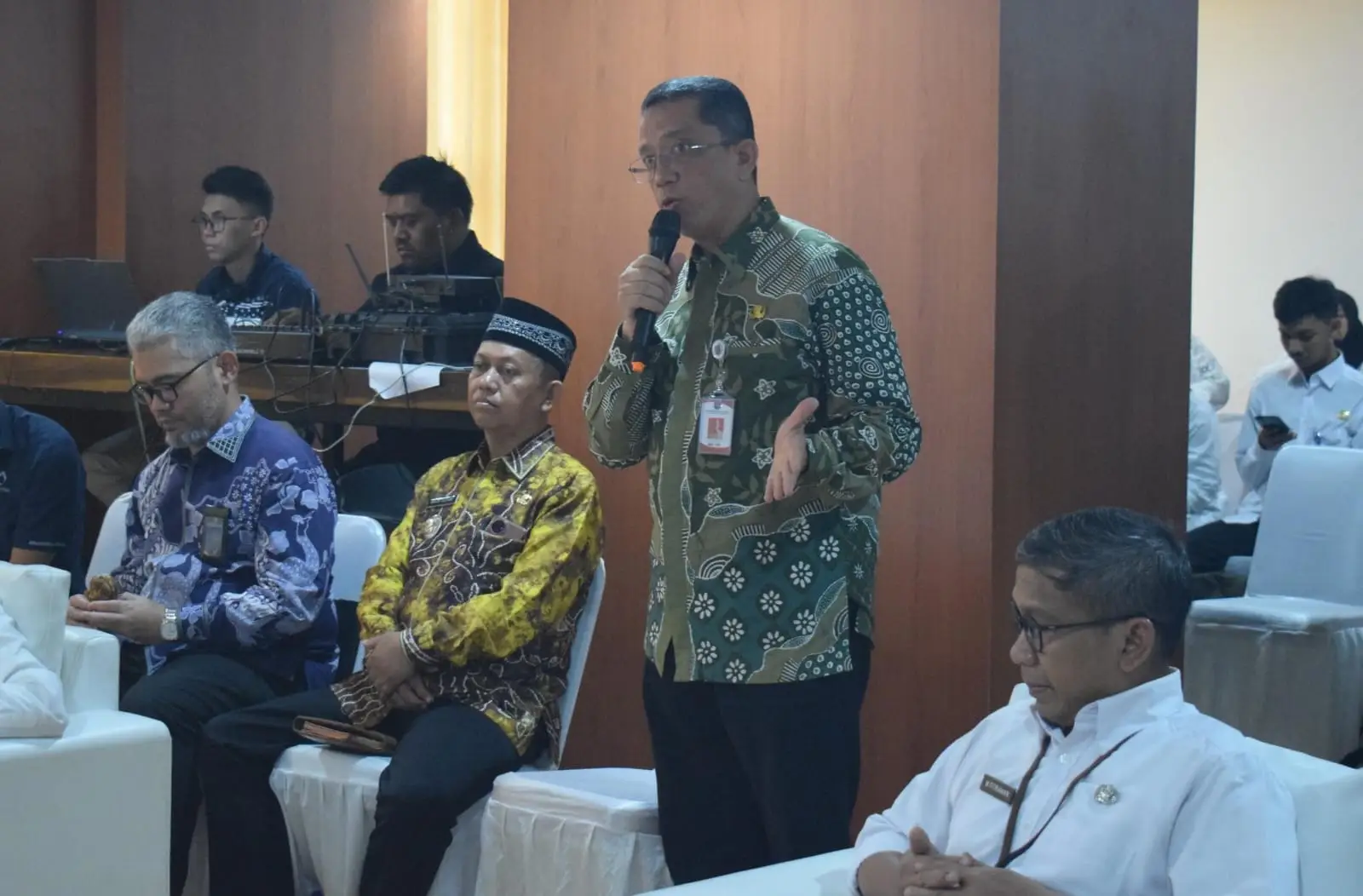
The development structure of an integrated mass transit-based area in Depok City has entered a reorganization phase. A specific working visit was held to thoroughly evaluate the implementation of the Transit Oriented Development (TOD) apartment project in the Pondok Cina Station area, Beji District.
During the review, the Depok City Government officially submitted a draft proposal for affirmative policy intervention, demanding a special allocation of housing ownership slots for residents with Depok ID cards in the future expansion phase of the project.
Occupancy Report of Perumnas Tower Network
The portrait of vertical spatial planning integrated with the commuter line train station recorded very high market interest.
Currently, two residential towers built on the site are operating with an occupancy rate reaching 90 percent. Functionally, the concept of non-private vehicle urban movement at this point is claimed to be running according to technical corridors.
“Today’s evaluation and monitoring are focused on mapping the concept of housing that is directly integrated with mass transportation and public activity hubs. Along with plans for the construction of two additional towers, we urge that the next development allocation prioritize local communities more,” an official explained.
Formulation of a 30 Percent Quota for Residents with Depok ID Cards
Support for the protection of local residents was also emphasized. The team is currently refining the formulation of vertical coordination so that Depok residents get an adequate portion of housing rights amidst the onslaught of urbanization.
“If the expansion of these towers is realized, we will submit a written proposal so that around 30 percent of the total available housing capacity is allocated specifically for Depok residents. We will strictly oversee this proposal together with the local sub-district head and management,” an official explained.
Three Main Objectives of the Parliamentary Evaluation (Pondok Cina TOD):
Pollution & Congestion Reduction: Ensuring the transition between transportation modes runs smoothly without triggering an increase in private vehicles.
Social Inclusion: Guaranteeing that local communities are not marginalized or displaced from city center development.
Geographical Accessibility: Improving the entry-exit circulation system of the area, which is currently considered a new bottleneck point.
Parliamentary Criticism: Area Entry and Exit Access Still Congested
Critical notes and a stern warning were provided to corporate developers and relevant ministries. Parliament emphasized that the fundamental purpose of TOD architecture is to solve urban problems, not just to build commercial properties.
“Do not let this infrastructure development actually marginalize Depok residents themselves. We are here to ensure that this TOD effectively reduces traffic congestion, lowers the pollution index, and guarantees the comfort of public mobility,” a parliamentary representative asserted.
The logistics hub and entry-exit gate access in the Pondok Cina area are currently still in a bumper-to-bumper condition and at risk of experiencing gridlock. This road circulation problem was emphasized as the main homework that must be geometrically resolved before the operational permits for the two additional towers are issued, so that transportation integration does not trigger new congestion externalities on the main roads.
Pondok Cina Station
Beji District
Pondok Cina Station
Beji District
Perumnas Tower Network
Pondok Cina area
Depok City
Beji Traditional Market
West Java
Jakarta
Related news

Navy Prepares Medical Fleet: Three Hospital Ships Ready for Humanitarian Mission in Gaza

Residents Willingly Queue Early to Buy Viral Donuts at Depok Car-Free Day

British National Dies in Bathroom of Depok Immigration Detention Room After Only One Day in Custody

The 2025 Depok City Junior High School Achievement Track Admissions Officially Open