In response to the increasing rates of domestic violence and exploitation, the Depok City Government launched a capacity-building program for frontline law enforcement officers through the Agency for Women’s Empowerment, Child Protection, Population Control, and Family Planning (DP3AP2KB).
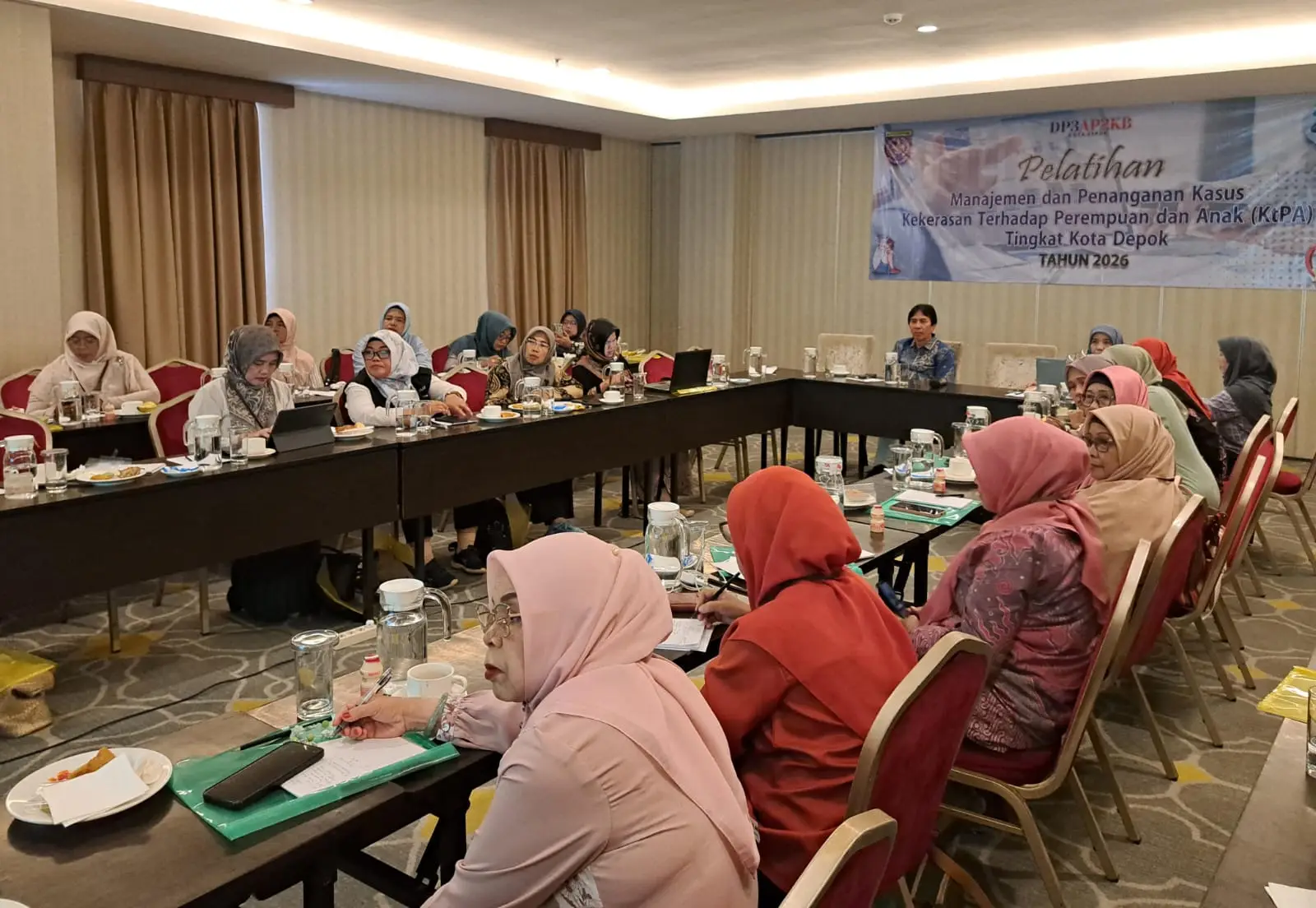
A training session on tactical management and handling of Violence against Women and Children (KtPA) cases was held at the Savero Hotel in Depok City on Friday. This agenda focused on developing standard operating procedures for protection that are more responsive and victim-centered.
The training consolidated 40 personnel acting as frontline responders in the field, consisting of members of the Task Force for the Prevention of Domestic Violence (PKDRT) and the Task Force for the Crime of Trafficking in Persons (TPPO), representing sub-districts and urban villages throughout Depok City.
Red Flag on Violence Cases Throughout 2025
Official data from the UPTD for the Protection of Women and Children (PPA) of Depok City for the 2025 period was presented, highlighting the urgency for a complete overhaul of the handling system at the grassroots level:
Cluster of Violence Against Children (Total: 143 Cases)
-
Sexual Violence: 92 cases (Dominating at 64.33%)
Cluster of Violence Against Women (Total: 114 Cases)
-
Psychological Violence: 50 cases (43.85%)
-
Physical Violence: 40 cases (35.08%)
“These numbers reflect the major challenges we face. The destructive impact of violence does not only leave visible anatomical or physical wounds, but also deep psychological trauma that could potentially cripple the victim’s future in the long term,” it was explained on the sidelines of the event.
Network Architecture and Handling Protocols
Through the intervention of this training curriculum, DP3AP2KB demands fast, precise, and empathetic service integration from field officers upon receiving initial reports. Four main pillars were accelerated in the forum:
-
Response Speed: Streamlining handling bureaucracy so case reports can be followed up instantly.
-
Cross-Sector Connectivity: Strengthening vertical coordination networks between village task forces and law enforcement officers (Police/Prosecutor’s Office), medical personnel, clinical psychologists, and the UPTD PPA.
-
Victim Perspective: Ensuring interrogation and assistance mechanisms do not cause secondary trauma for victims.
-
Trauma Restoration: Ensuring the rehabilitation and psychosocial support process continues until the victim is declared mentally recovered.
This agenda was also attended by the Chair of the TP-PKK of Depok City, who provided institutional strengthening motivation to the humanitarian volunteers to remain consistent in maintaining regional social stability.
Adoption of Electronic-Based Child Protection Regulations
To equip participants with the latest legal instruments, the training featured two national experts as main speakers.
Fundamental material on the architecture of Case Management and Handling was thoroughly discussed by a representative from the international humanitarian organization Save The Children.
Meanwhile, in the secular legal session, the Chair of the Regional Child Protection Commission (KPAD) of Depok City conducted extensive outreach regarding the Government Regulation on the Governance of Electronic System Implementation in Child Protection (PP Tunas). This educational step was deemed crucial to protect Depok’s children from the threats of cybercrime, cyberbullying, and online child sexual exploitation.
Savero Hotel
<div class="my-4 p-4 rounded-lg shadow-md bg-blue-50 border-l-4 border