West Java Province has once again proven its strength as a prime investment destination in Indonesia. In the first quarter of 2026, realized investment in West Java reached Rp76.8 trillion. This achievement contributed about 15.4% to the total national investment, a significant figure amid dynamic global economic challenges.
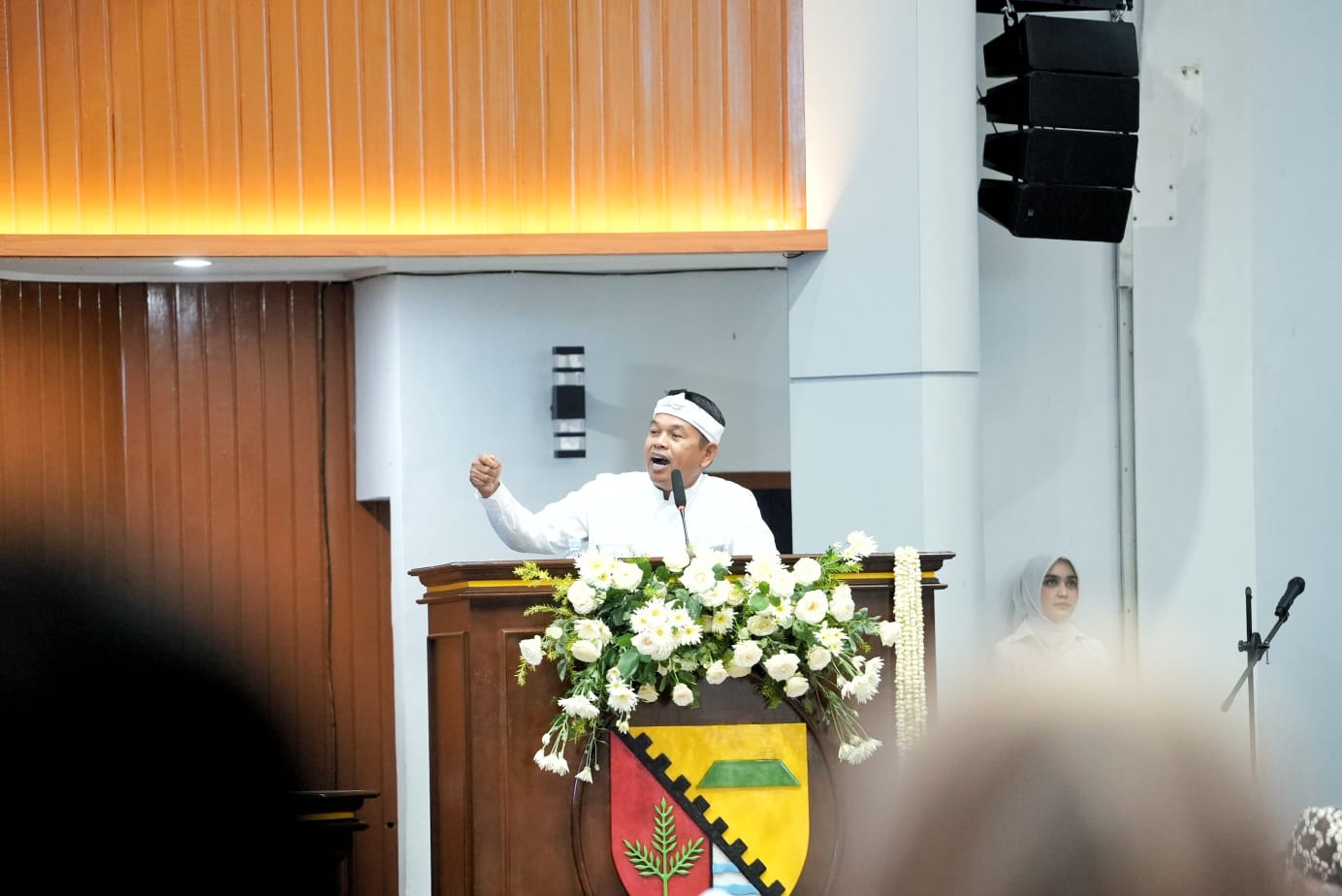
Governor of West Java, Dedi Mulyadi, emphasized that this impressive performance must be maintained by ensuring a conducive and business-friendly investment climate. He positions the West Java Provincial Government not only as a regulatory body for permits but also as a catalyst and companion for investors.
“If there are obstacles, I personally accompany entrepreneurs to communicate with various agencies, including meeting with ministers to discuss solutions to existing problems,” stated Dedi Mulyadi at Gedung Pakuan, Bandung, on Thursday (April 23, 2026).
One crucial point in this report is the investment achievement in the downstream sector, which reached Rp13.0 trillion. This figure places West Java in third place nationally in the list of regions with the largest downstream investment, behind Central Sulawesi (Rp24.1 trillion) and North Maluku (Rp18.6 trillion).
Although nationally downstream investment is still dominated by regions outside Java with a 75.5% share, West Java remains superior compared to other strategic regions such as West Nusa Tenggara (Rp12.9 trillion) and Riau Islands (Rp9.6 trillion). This reinforces West Java’s role as the most competitive manufacturing and processing industry center in Indonesia.
Dedi Mulyadi stressed that investment sustainability in his region heavily depends on three main factors: infrastructure connectivity, security stability, and ease of licensing.
“The hope is to continue promoting infrastructure and security. Licensing should not be complicated. Now it is relatively better, the level of licensing violations is decreasing and not like in the early years,” he said. He also mentioned tightening permits for mining and housing construction in disaster-prone areas as part of efforts to maintain investment quality.
The Head of the West Java Investment and One-Stop Integrated Services Office (DPMPTSP), Dedi Taufik, added that his office has been instructed to provide stimulus in the form of stable roads and inter-regional connectivity to attract investor interest.
Interestingly, West Java will offer a “red carpet” or priority service for investors who show a commitment to environmental protection and conservation. Besides the processing industry, the tourism sector will be the main offering after road connectivity reaches a high level of stability.
“West Java remains committed to attracting investment. In addition to ease of licensing, the main stimulus provided by the Governor is building stable road connectivity,” concluded Dedi Taufik.