The Community Service Team from the Design Ethnography Laboratory, Faculty of Art and Design at Bandung Institute of Technology has developed a plan to strengthen the educational space at the Kedungbenda Village Museum in Kemangkon District, Purbalingga Regency.
The team leader stated that the research focused on educational spaces, cultural documentation, and creating new tourist attractions for a village rich in traditional arts and natural potential.
Kedungbenda Village has agricultural resources, livestock farming, and cultural wealth including puppet shows, macapat poetry, ebeg dance, and lengger dance. Various art studios and community activities have long been an important part of the village’s identity.
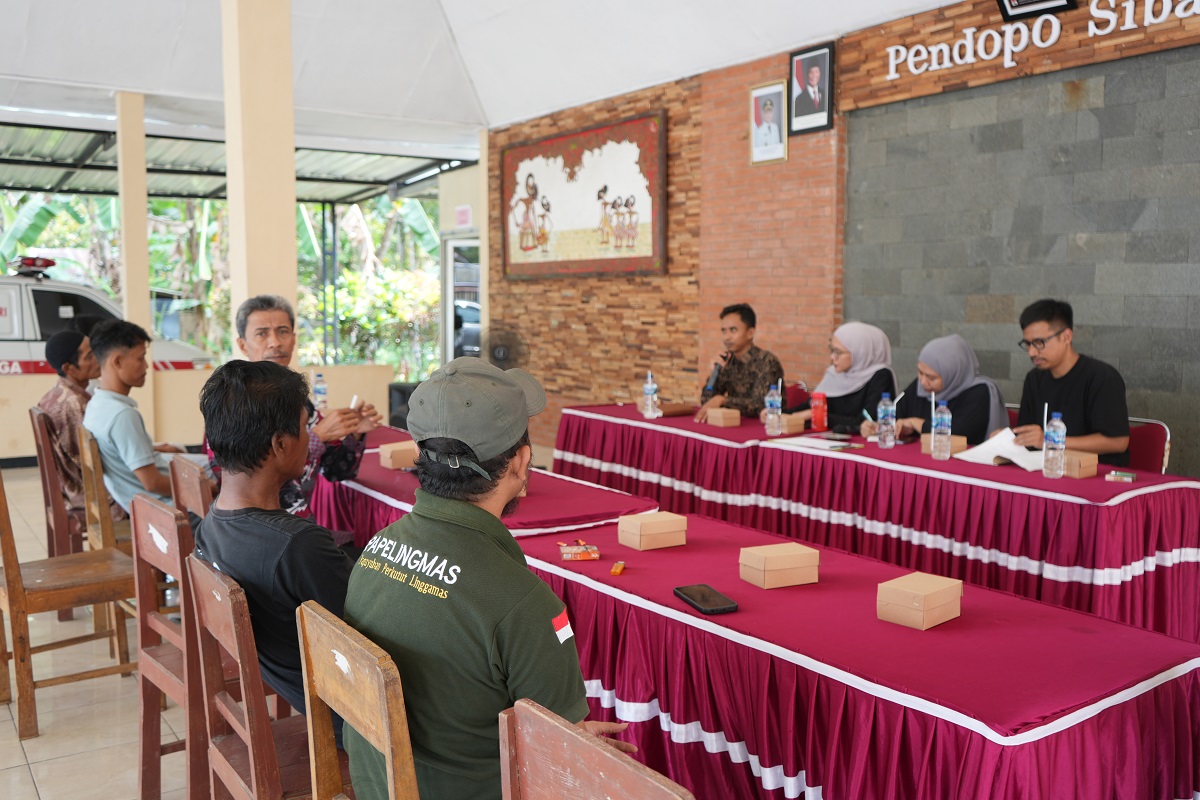
Additionally, the local tourism awareness group actively develops cultural tourism packages, Klawing River tourism, and visits to archaeological sites. “We involved village officials, the tourism group, local communities, and cultural practitioners in every research process, including focus group discussions and workshops. The goal is to ensure the results are relevant to local community needs,” the team leader explained.
“Everything was developed based on field research findings regarding space conditions, community needs, and the growing tourism potential in Kedungbenda,” the team leader continued.
The Community Service Team identified several challenges faced by the village, including limited exhibition facilities, disconnected cultural information, and the need for interpretation spaces that could enhance the tourist experience.
Based on this information, the team designed a knockdown concept pop-up museum display system aimed at strengthening the educational and cultural interpretation space for Kedungbenda Village’s tourism group.
The design was prepared to be easily assembled and disassembled quickly, flexible, and simple for villagers to operate. In addition to the display structure, the research team also developed graphic designs, captions, posters, and signage systems as main elements to help visitors understand Kedungbenda’s historical context, culture, and local uniqueness.
The final product, a complete pop-up display prototype including panels, layouts, graphics, and supporting equipment, was handed over to the community and village government. This step is expected to provide a new foundation for Kedungbenda Village to strengthen tourism village initiatives, provide educational media for residents and visitors, and serve as sustainable cultural documentation.
“The knockdown system was chosen because it allows for storage efficiency, high mobility, and the ability to adjust exhibition themes according to village activity schedules,” the team leader clarified.
“We hope the research results and designed products can enhance cultural literacy, extend tourist visit durations, and open opportunities for further collaboration in education, research, and tourism village promotion,” the team leader stated.
The team has been conducting research for five years since 2020. This activity is also part of activating the museum objects project. The team leader expressed hope that what has been produced could be applied in other Indonesian villages with diverse cultural characteristics.
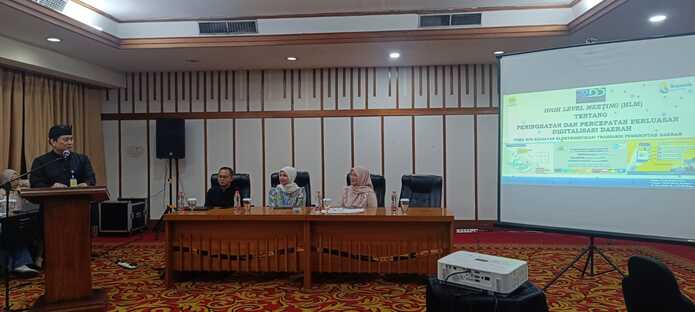
Bandung City Government held a High Level Meeting of the Regional Digitalization Acceleration and Expansion Team as part of efforts to strengthen coordination regarding the implementation of Regional Government Transaction Electronification.
This meeting also serves as one of the requirements assessed by the central government in measuring digitalization performance in regions.
During the meeting, significant achievements in government digital transactions were presented. While the previous year’s transaction value was only around hundreds of millions of rupiah, the figure has now surged to reach 7 billion rupiah.
“This increase shows that transactions are increasingly shifting to cashless systems. We have been using many cashless schemes, including the utilization of Indonesian Government Credit Cards,” stated an official present at the High Level Meeting.
The use of government credit cards is considered more effective compared to manual transfer payments. Besides speeding up the process, all transactions are digitally recorded, making supervision easier.
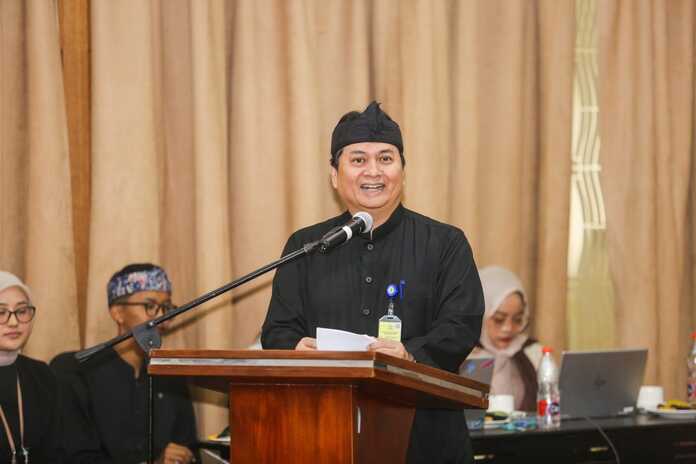
“With credit cards, all transaction trails are automatically recorded. This minimizes potential leakage since there are no longer unrecorded payments,” the official explained.
In terms of evaluation, several regions including West Java and other regencies/cities such as Bogor and Nganjuk are also used as comparisons in the central government’s assessment.
Regarding the impact on society, officials emphasized that the call to expand digital transactions aligns with