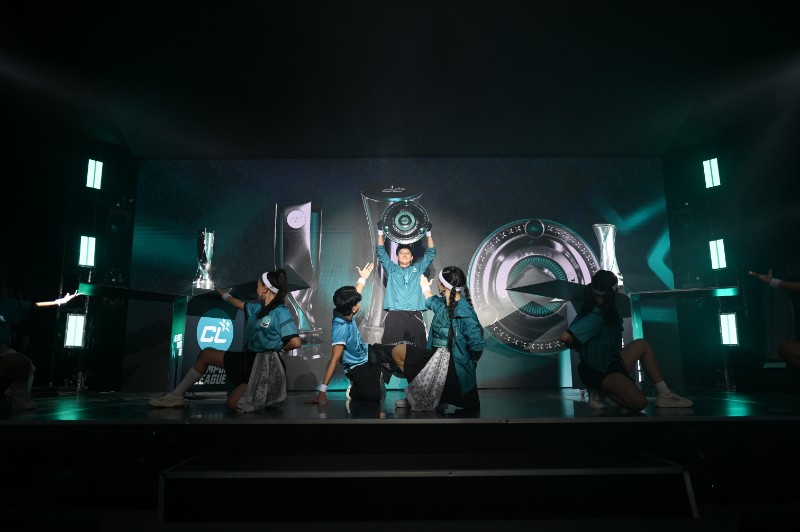
The inter-university sports competition, Campus League, officially launched Season 1 with a grand event at the Thamrin Nine area in Jakarta on Monday (4/20). The arrival of this league marks the first step in building a more structured and sustainable campus sports ecosystem in Indonesia.
The CEO of Campus League stated that this competition focuses not only on matches but is also designed as a means of self-development for students active in sports.
According to him, most student athletes do not pursue careers as professional athletes. However, the experience of competing still holds important value in shaping character.
“Statistics show that 99 percent of student athletes will not become professional athletes. But they have great potential to become outstanding professionals in various sectors,” he said.
He added that sports competitions can develop various non-technical skills such as time management, discipline, teamwork, and leadership.
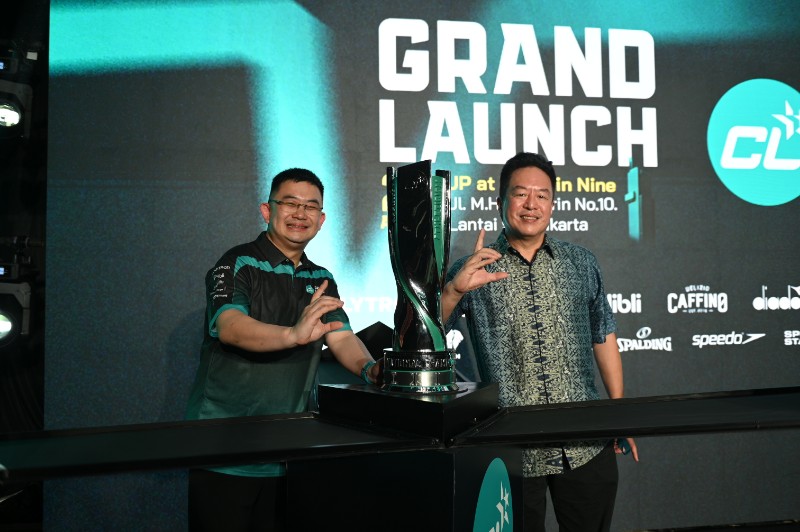
The launch of Campus League also received support from various parties, including the industrial sector. A director from PT Bayan Resources Tbk noted that this collaboration is important for creating a sustainable sports ecosystem, especially for young talent in the regions.
“We believe the best investment is human development. Structured competitions like this not only produce athletes but also build character and sportsmanship among the younger generation,” she said.
Meanwhile, the Commercial Director of Polytron described campus sports as a reflection of the professional world. He emphasized that strengthening infrastructure, including technology, is an important part of supporting student activities.
“Most student athletes will pursue careers outside of sports. Therefore, we want to accompany their journey, both on the field and in the academic world,” he said.
Campus League is built on three main pillars: academics, athleticism, and social affinity. These are designed to shape students who are not only physically excellent but also possess intellectual quality and social awareness.
In its development, Campus League follows a long-term roadmap divided into three phases, from building the ecosystem foundation to global expansion in 2030–2034.
This competition is also inspired by the campus sports system in the United States, which integrates education and athletic achievement.
In Season 1 of 2026, Campus League has undergone significant expansion compared to the previous season, which was only held in Jakarta and Yogyakarta.
The competition is now held in five cities: Jakarta, Samarinda, Bandung, Semarang, and Surabaya, featuring three main sports: basketball, badminton, and futsal.
The series of competitions will conclude with the UniGames event held at Pelita Harapan University (UPH), Karawaci, Tangerang. This event adopts a multi-event concept with various additional sports.
As the opener for Season 1, the Surabaya regional basketball competition will take place from April 22 to 29, 2026, at the GOR Basketball venue at Surabaya State University (Unesa).
A total of 16 men’s teams and 8 women’s teams from 17 universities are confirmed to participate. Interestingly, participants come not only from East Java but also include universities from outside the island, such as Cenderawasih University in Jayapura and Ciputra University in Makassar.
A team official from the University of Surabaya stated that his team is targeting maximum results in the regional phase.
“We have big ambitions to win at the national level. Here in Surabaya, we will fight for first place,” he said.
In the women’s sector, the competition is also predicted to be tight. A home player from Unesa acknowledged that the group she faces is quite competitive.
“There is caution because we are in a group with strong teams,” she said.
The Head of Competition for Campus League explained that there are regulatory updates this season. Each team is allowed to register one professional player and one foreign player under certain conditions.
“The goal is to provide broader playing opportunities, especially for players who get minimal playing time at clubs,” he said.
He emphasized that foreign players must be full-time active students and meet